Search “sky dancer,” “tube man,” “air dancer,” “wacky waving inflatable arm-flailing tube man,” or “wind dancer” and you’ll land on nearly identical product listings. If you’re a first-time buyer, that’s confusing — are these different products, or the same one? They’re the same product. The name just depends on who’s selling it, where they’re based, and which era of internet meme culture they picked their marketing language from.
Here’s what the names actually mean, where they came from, and — more usefully — what to actually look at when you’re comparing suppliers instead of getting hung up on terminology.
One Product, Five Names
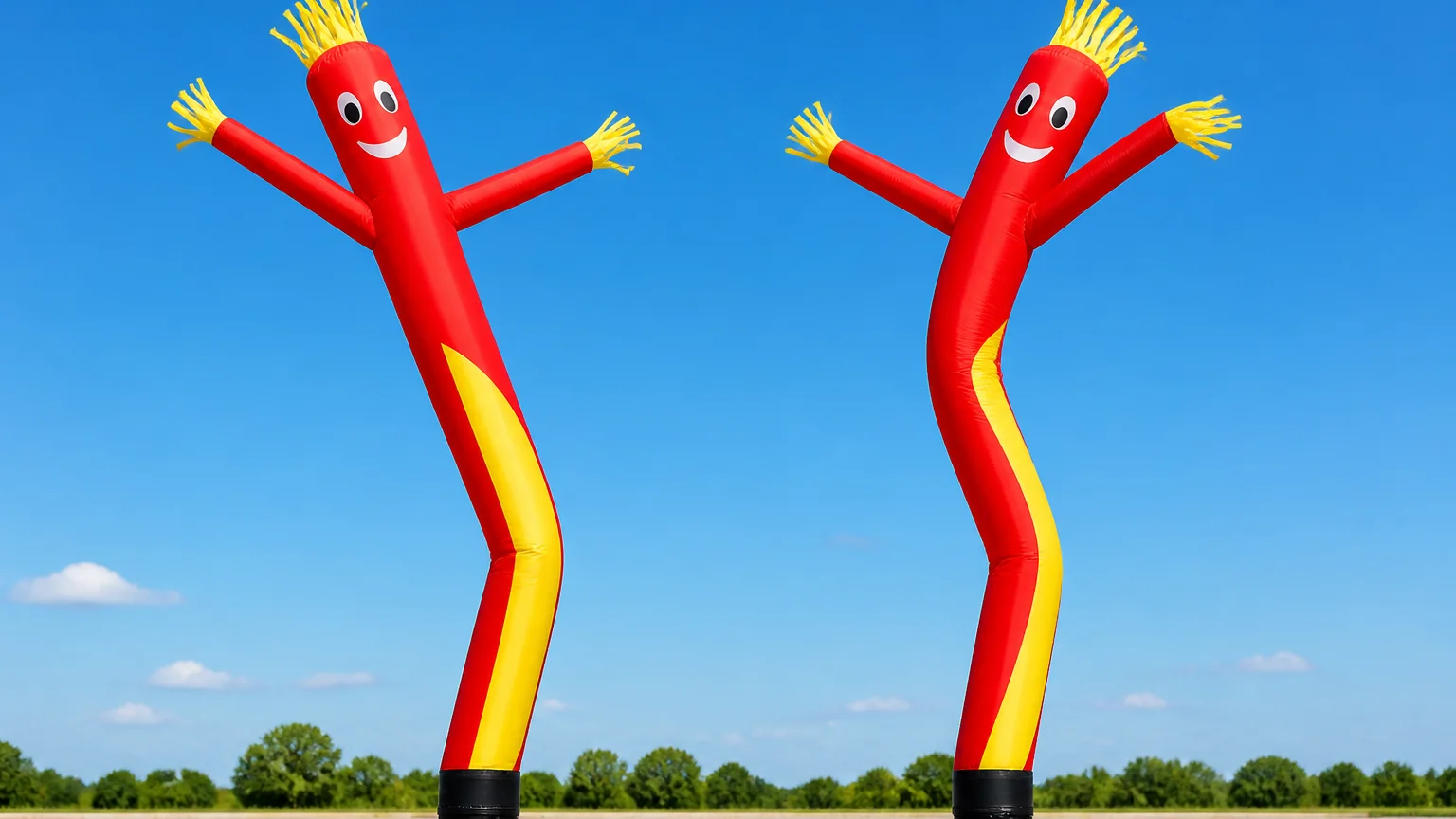
All of these terms describe the same core product: a lightweight fabric tube, open at the bottom, with a blower continuously pushing air through it so the tube whips, twists, and “dances” unpredictably. The names split roughly by origin:
- Air dancer — the most common commercial/industry term, widely used by manufacturers and B2B suppliers. This is the term you’ll see on spec sheets and trade listings.
- Sky dancer — a popular alternate name, especially in US retail and rental markets, sometimes used interchangeably with air dancer with no product difference.
- Tube man or tube guy — a casual, descriptive name that took off in used-car-lot and roadside-marketing contexts, later amplified by internet meme culture.
- Wacky waving inflatable arm-flailing tube man (WWIAFTM) — the joke-length version of “tube man,” popularized by a well-known TV reference. It’s the same product wearing a longer name for comic effect.
- Wind dancer or sky puppet — less common regional variants, occasionally used by smaller suppliers to differentiate their listings in search.
None of these names indicate a different construction, material, or mechanism. If a supplier lists “sky dancer” and another lists “air dancer” at a similar size and price, you’re very likely looking at functionally the same product.
Why the Naming Got So Fragmented
Two separate things happened. First, the product category grew organically across different markets — car dealerships, event rental companies, and advertising agencies each adopted their own working name before any single term standardized. Second, the “wacky waving inflatable arm-flailing tube man” name went viral through pop culture, which pushed casual buyers to search using that phrase even when shopping from commercial suppliers who use “air dancer” internally.
The result: search demand is split across half a dozen near-identical terms, and suppliers optimize their listings for whichever term their target buyer is most likely to type. None of it reflects a real product distinction — it’s a naming quirk of a product category that scaled faster than its terminology.
What Actually Varies Between Suppliers
Since the name won’t tell you anything useful, here’s what to compare instead when you’re evaluating a custom air dancer order:
- Fabric. Commercial-grade units use ripstop nylon, which resists tearing under constant flex and holds print color better outdoors than cheaper polyester blends. Ask specifically what fabric is quoted — “durable material” on a listing isn’t a spec.
- Height and base diameter. Sizes typically range from around 8 to 20+ feet. Height affects visibility distance; base diameter affects how much movement and “wave” the unit produces in light wind.
- Blower spec. A continuous electric blower keeps the unit inflated and moving — confirm wattage and whether a CE-certified blower is included, not sold separately.
- Print method. OEM full-color printing directly onto the fabric holds up far longer outdoors than adhesive vinyl graphics applied after the fact, which peel and fade faster.
- Anchoring. Ground stakes, sandbags, or a weighted base — confirm what’s included, especially if you’re deploying outdoors in variable wind.
- Lead time and MOQ. Custom colors and branding typically run 7-15 working days after artwork approval; ask this upfront rather than assuming stock availability.
Where This Matters for Your Search
If you’re sourcing internationally or briefing a marketing team, it’s worth knowing all five names so you don’t miss relevant suppliers or get confused by a rental company’s listing versus a manufacturer’s. But once you’re actually comparing quotes, ignore the name entirely and compare on fabric, blower spec, print method, and lead time — those are the variables that determine whether the unit looks sharp and survives a season of outdoor use.
For dealership and retail applications specifically, see how car dealerships use air dancers to drive weekend foot traffic — a good example of the product working under whichever name you found it by. And if you’re comparing this format against other advertising inflatables for your campaign, our guide to choosing the right inflatable for your campaign breaks down air dancers versus arches versus balloons by use case.
Also worth a look if power planning is on your mind: every version of this product — regardless of what you call it — runs on a continuous blower system, not a one-time inflation, so budget for power access at your site.
The Bottom Line
Sky dancer, tube man, air dancer, wind dancer — same product, different marketing language. Use whichever term gets you to the right suppliers in search, then evaluate on fabric grade, blower spec, print quality, and lead time. That’s what determines how the unit performs and holds up, not what it’s called on the listing.
Frequently Asked Questions
What is another name for an inflatable tube man?
The same product is sold under several names: air dancer, sky dancer, tube man, tube guy, wind dancer, and the joke-length “wacky waving inflatable arm-flailing tube man.” All describe the identical product — a lightweight fabric tube inflated and kept moving by a continuous blower.
What is the inflatable man that waves its arms called?
It’s most commonly called an air dancer in commercial/B2B contexts, or a tube man in casual and retail contexts. Both terms refer to the same continuous-blower inflatable — there’s no product difference between the two names.
Is a sky dancer the same as a tube man?
Yes. Sky dancer and tube man are alternate names for the same product — a fabric tube driven by a continuous-airflow blower. The name varies by region and supplier, not by construction or mechanism.
Looking to get a custom quote? Request a quote or brief our factory on your branding and site requirements.