Cold-Air vs Fan-Blown Inflatables: What’s the Difference and Why It Matters
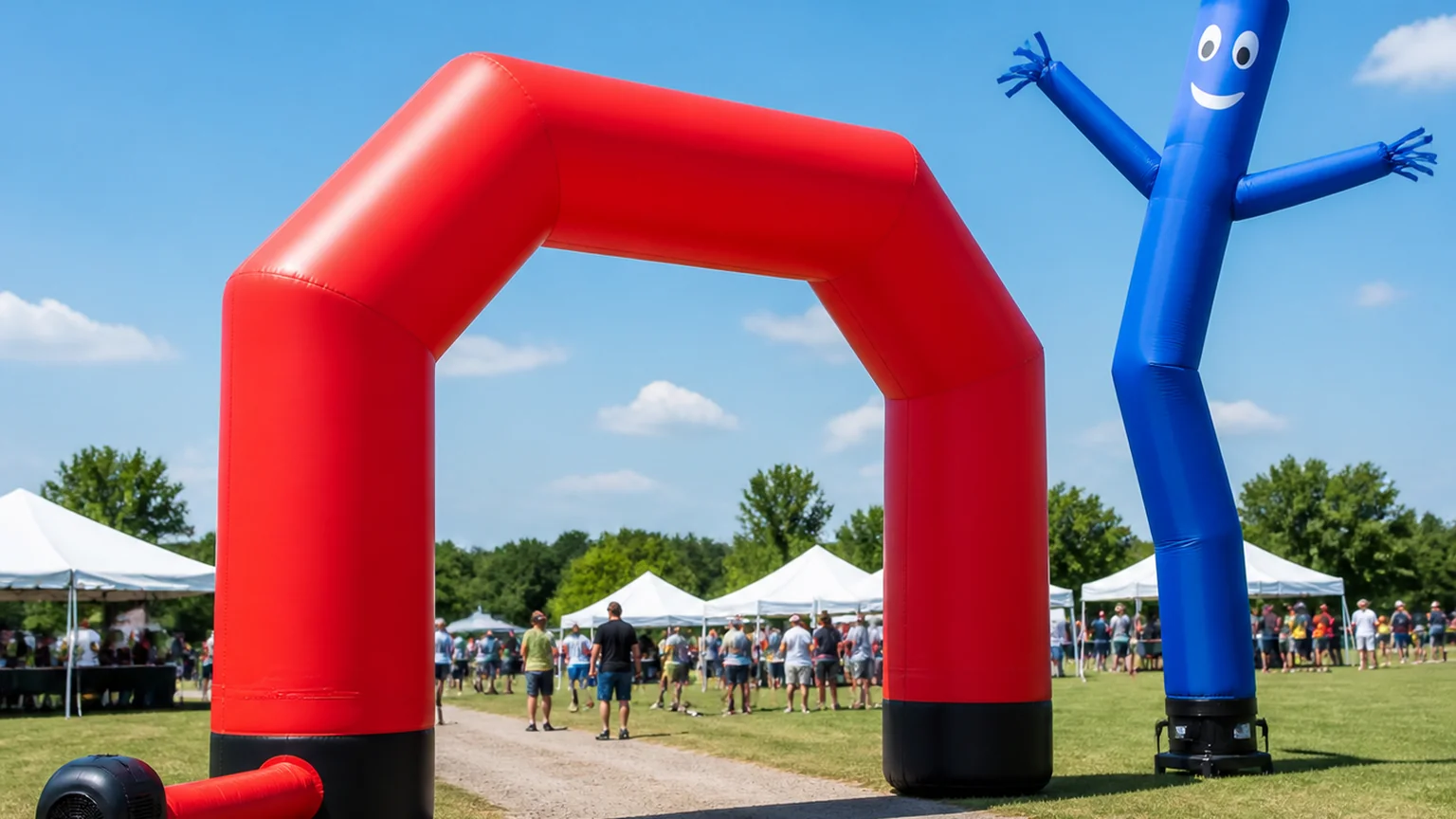
If you’ve been shopping for advertising inflatables, you’ve probably seen the term “cold air inflatable” on a spec sheet or a supplier’s website and assumed it means the product runs without electricity. It doesn’t. Almost every air dancer, arch, and giant balloon on the market today is a continuous-blower, cold-air inflatable — and understanding what that actually means will save you a bad surprise on event day.
This isn’t a marketing distinction. It changes how you plan power, noise, and backup logistics for your activation.
What “Cold Air” Actually Means
“Cold air” is a category label that separates these products from hot-air inflatables (like hot-air balloons), which use heated air and an open flame to generate lift. Advertising inflatables — air dancers, entrance arches, ground balloons, helium-free product replicas, and inflatable mascots — are cold-air products because they’re inflated with ordinary ambient-temperature air, pushed in by an electric blower.
The confusion is understandable: “cold air” sounds like it should mean no power source at all. In reality, cold-air just tells you how the air is heated (it isn’t), not whether the unit needs continuous power (it does, in almost every case).
Continuous-Blower Design: How It Actually Works
Standard advertising inflatables — dancing air dancers, branded entrance arches, giant advertising balloons — use a continuous-blower system:
- A dedicated electric blower (typically in the 550W–1100W range depending on product size) attaches to the inflatable via a flexible duct or direct-mount port
- The blower runs the entire time the product is displayed, constantly pushing air in to counteract the small amount that leaks out through seams and fabric
- Cut power, and the unit deflates within seconds to a couple of minutes depending on size
This is why the blower isn’t an accessory — it’s a permanent part of the system, not a one-time inflation tool. Most units ship with a CE-certified blower matched to the product’s air volume, and the inflatable’s fabric (ripstop nylon for air dancers, 0.55mm PVC for arches and balloons) is chosen partly for how well it holds pressure between blower cycles, not just for print quality and durability.
There’s a smaller category of sealed or self-inflating units — some smaller ground balloons and short-duration promotional pieces — that hold air for extended periods without a running blower. These are the exception, not the rule, and they trade off size and display duration for that convenience. If a supplier doesn’t specify “sealed” or “self-sealing,” assume it’s continuous-blower.
What This Means for Your Event Site
Because continuous-blower is the default, plan your activation around three practical realities:
1. Power access is non-negotiable. You need a standard outlet (or generator) within extension-cord reach of every inflatable on site. For multi-unit setups — say, three air dancers flanking a dealership entrance — that means mapping outlet locations before install day, not on it.
2. Noise is a factor, not a dealbreaker. Blowers run continuously and produce a low, steady hum. For most outdoor retail, dealership, and event settings this is a non-issue, but for indoor trade show booths or close-proximity retail environments, ask your supplier for the blower’s noise spec and consider placement away from customer conversation areas.
3. Power loss means deflation. If your event runs on a generator or shared circuit, a power interruption will deflate the unit within minutes. For high-visibility placements — a branded inflatable arch marking a race start line, or a mascot anchoring a festival entrance — it’s worth having a backup blower or a dedicated circuit rather than sharing power with lighting or sound equipment.
Choosing the Right Fit for Your Use Case
| Scenario | What to plan for |
|---|---|
| Indoor trade show / retail | Confirm blower noise level; secure outlet near booth |
| Outdoor dealership / storefront (long-term display) | Weatherproof outlet, dedicated circuit, consider backup blower |
| One-day event (race, festival, grand opening) | Generator with headroom for all units running simultaneously |
| Frequent move / multi-site rotation | Confirm duct and blower are quick-disconnect for fast breakdown |
If your team is running multiple inflatable types at once — an advertising balloon at the entrance plus a mascot near the registration table — it’s worth briefing your factory on the full site layout up front, including where power will and won’t be available, so blower sizing and cable lengths are right the first time. Our guide on briefing a factory for custom advertising inflatables covers what to include in that spec.
For international buyers sourcing multiple units for a rollout, blower voltage and plug type (110V vs 220V, region-specific plugs) should be confirmed at order time — this is a common miss that causes on-site headaches after the shipping and freight process is already done.
The Bottom Line
“Cold air” describes the inflation method, not the power requirement. Budget for continuous power, confirm blower specs (wattage, voltage, noise) before you order, and have a backup plan for power interruptions on anything you can’t afford to see deflate mid-event. Get that right, and the blower becomes invisible — which is exactly what you want when the inflatable is doing the talking.
Frequently Asked Questions
What is a cold air inflatable?
A cold air inflatable is an advertising inflatable — air dancer, arch, balloon, or mascot — that’s kept upright by ordinary ambient-temperature air from a continuous electric blower, rather than heated air. “Cold air” describes the inflation method, not whether the unit needs power.
Do cold air inflatables need electricity?
Almost always, yes. Standard cold-air inflatables use a continuous-blower system that runs the entire time the unit is displayed. A small number of sealed or self-inflating units hold air without a running blower, but these are the exception.
How long does a cold air inflatable stay up without power?
A standard continuous-blower unit deflates within seconds to a couple of minutes once power is cut, depending on size. This is why a backup blower or dedicated circuit matters for any placement you can’t afford to see deflate mid-event.
Ready to spec out your next activation? Request a quote and our team will help match blower and product size to your site.