Ask any dealership manager what pulls weekend traffic off the road and onto the lot, and the answer is rarely a banner. It’s movement. A dancing inflatable at the kerb does one job extremely well — it converts passing drivers into people who slow down, look, and pull in. Here’s why air dancers work so well for automotive retail, and how to run them properly.
Why motion beats a static sign at the kerb
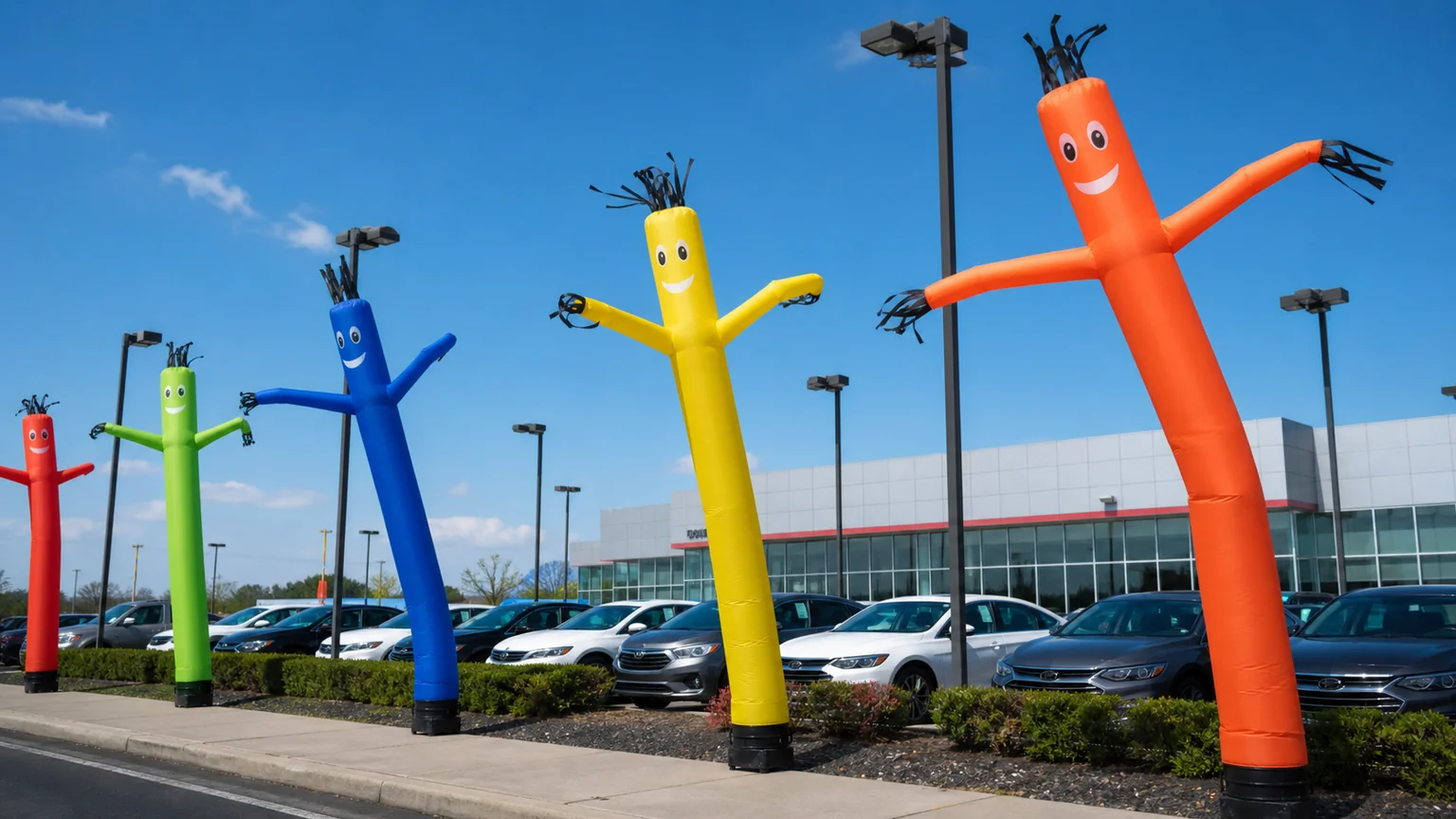
A parked row of cars looks the same at 60 km/h whether or not there’s a sale on. A flailing air dancer breaks that visual monotony — the human eye is wired to catch movement in the periphery, so a dancer registers even when a banner doesn’t. That split-second of attention is often the difference between a drive-past and a drive-in.
The economics: cheap attention that lasts
Part of the appeal for dealerships is cost. Compared with a radio spot or a print run that’s gone the moment it airs, an air dancer is a one-time purchase that keeps working every weekend for years. Spread across dozens of promotions, the cost-per-weekend is negligible, and a commercial-grade unit with UV-stable print easily survives a full season of use. For a marketing line item that quietly pulls traffic every Saturday and Sunday, few tools match it on value.
Point them in with arrow and message dancers
Generic dancers grab attention; arrow and sign dancers direct it. An arrow body or a printed “SALE” / “OPEN” panel tells the driver not just “look here” but “turn in here.” For a weekend event, that small nudge measurably lifts lot entries.
Placement and quantity
One dancer marks an entrance; three or four spaced along the road frontage create a rhythm of movement that’s far harder to ignore. Place them where drivers have time to react — before the entrance, not at it — and keep them clear of sightlines and power lines. On exposed frontages, choose two-leg dancers for stability so they stay upright through a gusty afternoon.
Run them reliably all weekend
Because the blower runs continuously, give every dancer a dedicated, weatherproofed mains outlet and keep one spare blower on site — a dead motor is a dead dancer. Good ripstop nylon units with UV-stable print survive repeated weekend deployments; cheap ones bleach and fray fast, so buy for the season, not the single event.
Combine with height for a bigger footprint
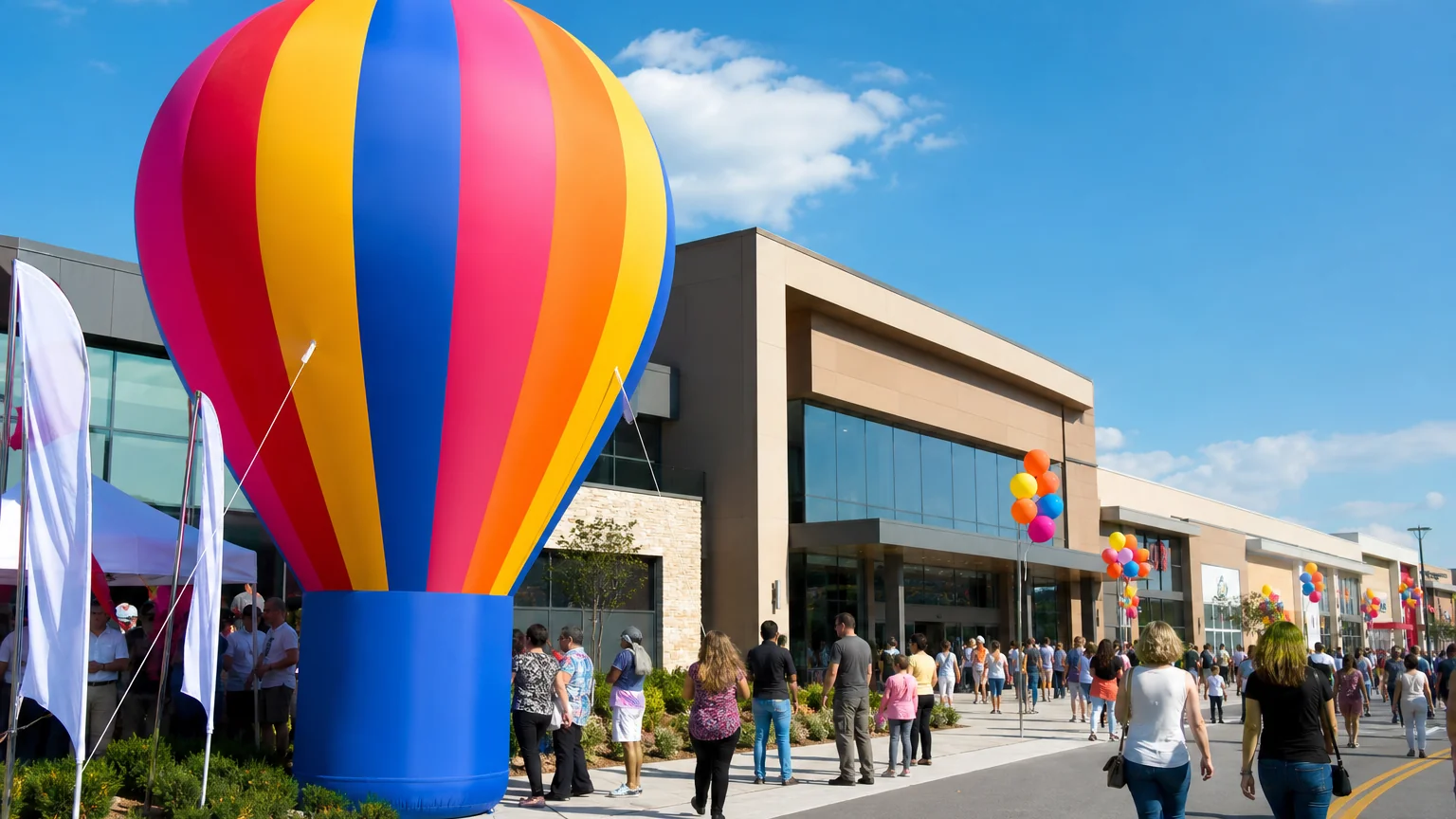
Dancers own the kerb, but pair them with a giant advertising balloon over the lot and you catch drivers from much further out, then convert them at the entrance with the dancers. For the full decision on which inflatable suits which job, see our guide to choosing the right inflatable for your campaign.
Does it actually work? How to tell
You don’t have to take “movement pulls traffic” on faith — it’s measurable. Run dancers on some weekends and not others, and compare lot entries, test-drive bookings or footfall against your quieter control weekends. Most dealerships that test this way see a clear lift on the dancer weekends, which is exactly why the format has survived for decades in automotive retail. Track it for a month and you’ll know your own numbers rather than relying on anyone else’s.
Keep it fresh: rotate colours and messages
The one enemy of an air dancer is familiarity — regulars stop noticing a dancer that’s stood in the same spot in the same colour for months. Rotate. Swap colours between weekends, move dancers to different points along the frontage, and change any printed message to match the current offer (“YEAR-END”, “0% APR”, “NEW ARRIVALS”). Owning two or three interchangeable dancers lets you keep the frontage looking new week to week for very little extra cost.
Weather, wind and keeping them upright
Weekend weather is unpredictable, so plan for it. On gusty days, two-leg dancers stay upright where single-leg ones flail and fold; in heavy rain, the blower keeps running but the fabric gets heavy, so a correctly sized motor matters. Have a simple rule for staff on when to switch dancers off and secure them — a dancer thrashing in a storm is a hazard and wears out fast. Position them clear of forecourt traffic lanes so a customer never has to dodge one.
Permits and good-neighbour sense
Before you commit to a permanent weekend fixture, check local signage and temporary-advertising rules — some municipalities restrict roadside inflatables or require them set back from the pavement. A quick call to the local authority avoids a fine and keeps you on good terms with neighbouring businesses.
A note on cost and compliance
EN14960, the play-equipment standard, governs bouncy castles rather than air dancers — manufacturers building both lines (as we do) hold it for the play range. For dancers, ask about flame-retardant fabric and a CE-certified blower. Custom-printed units ship in 7–15 working days after artwork approval.
Driving weekend traffic to your lot?
Tell us your frontage and branding. We’ll recommend how many dancers, which style, and the right height — and send a free mockup and itemised quote within 24 hours.