Franchise and Multi-Location Rollouts: Standardizing Inflatable Branding Across Sites
Franchise and Multi-Location Rollouts: Standardizing Inflatable Branding Across Sites
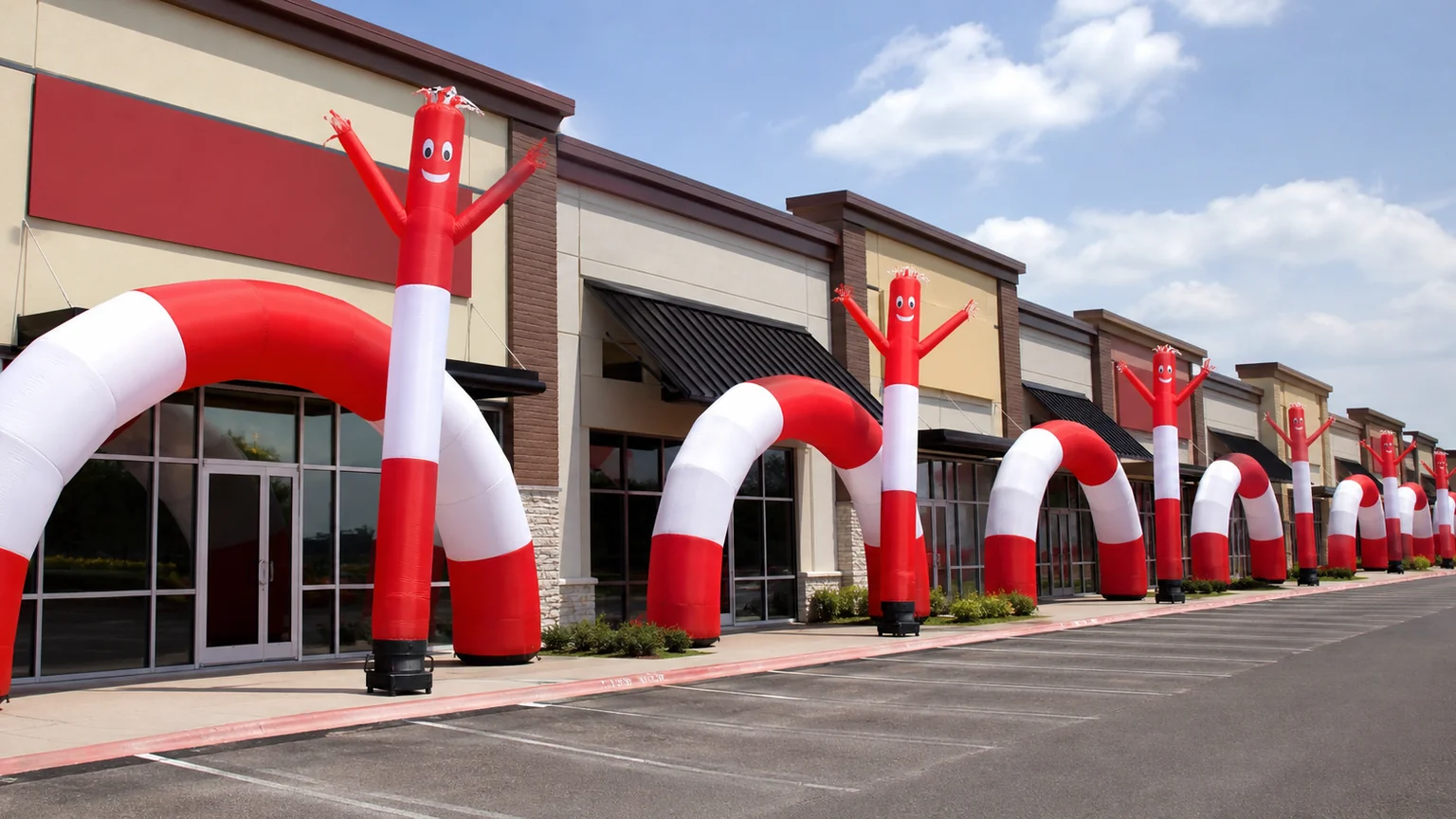
A single air dancer outside one store is easy to get right. Twelve air dancers outside twelve stores, ordered by twelve different location managers over eighteen months, is a different problem. Colors drift, logo placement shifts, sizes stop matching, and by year two your “consistent” brand presence looks like six brands wearing the same shirt in different shades. If you’re managing inflatable branding across a franchise network, dealer group, or multi-site retail chain, the fix isn’t more inflatables — it’s a locked spec and a coordinated ordering process before the next site places an order.
Why brand consistency breaks down across locations
Most inconsistency isn’t a vendor problem — it’s a process gap. Location A orders a custom air dancer from one factory in 2024. Location B opens in 2026 and a regional manager sources a “similar” one from whoever answers the phone fastest. The fabric colors are close but not Pantone-matched, the logo is sized differently because nobody supplied print-ready artwork specs, and the arm length varies because “16ft tall” gets interpreted differently by different suppliers. None of this is anyone’s fault individually — it’s what happens when branding decisions are made site-by-site instead of centrally.
The same drift shows up with entrance arches at grand openings, balloon activations for regional promotions, and mascot rollouts across seasonal campaigns. Each is a small decision made in isolation, and small decisions compound into a network that doesn’t look like one brand.
Setting a standard spec sheet before you order
Before any second location orders anything, lock a one-page spec that every future order references. At minimum it should cover:
- Exact dimensions — height and width in feet/meters, not “large” or “standard.” A 20ft air dancer and a 16ft air dancer read very differently from the road.
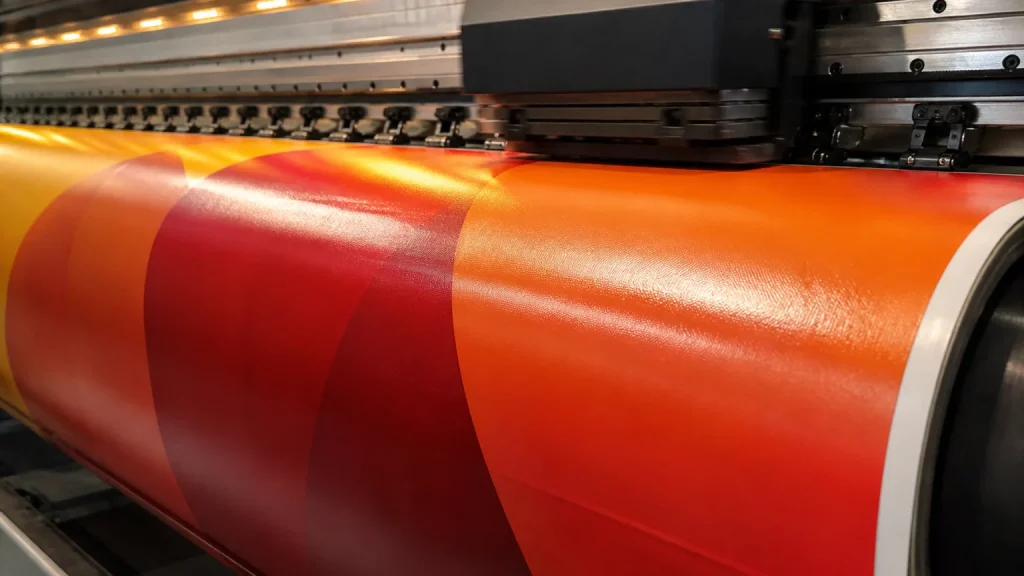
- Color values — Pantone or CMYK codes for brand colors, not “our red” or a JPEG screenshot. Dye-sublimation printing on 0.55mm PVC or ripstop nylon reproduces color accurately, but only if the factory has an exact value to match against.
- Logo placement and artwork format — vector artwork (AI/EPS), specified panel location, and minimum/maximum logo size relative to the product.
- Material and blower spec — fabric weight, flame-retardant rating, and CE-certified blower model, so every site is running the same hardware and warranty terms.
- MOQ and reorder rules — what a single location can order independently versus what needs to route through a central purchasing contact.
This spec becomes the reference document a factory works from on every future order, whether it’s site #2 or site #40 — it removes the guesswork that causes drift in the first place.
Coordinating bulk orders across sites
Once the spec is locked, the next decision is how orders actually get placed. Two models work, depending on how the network is structured:
Centralized bulk ordering — head office batches orders for multiple sites into a single production run. This is the more efficient route for MOQ purposes: a factory quoting a run of 15 identical branded arches for 15 locations can usually offer better per-unit pricing and a single artwork approval cycle than 15 separate orders spread across a year. It also means one container can carry inventory for several sites, splitting freight cost across the batch.
Decentralized ordering against a locked spec — individual locations or regional managers place their own orders, but every purchase order references the same spec sheet and, ideally, the same supplier. This suits networks where locations open on staggered timelines and batching isn’t practical. The tradeoff is that per-unit cost is usually higher on smaller individual orders, and artwork approval has to happen separately each time — so it’s worth confirming the spec sheet is actually being used, not just referenced.
Either way, the goal is the same: every order traces back to one artwork file and one spec, not a fresh interpretation each time.
Balloons and mascots need the same discipline — just on a shorter cycle
Ground balloons and helium spheres and branded mascots tend to get treated as one-off campaign items rather than standing branded assets — which is exactly how a network ends up with a red balloon at one store and an orange one at another for the same “seasonal sale” promotion. If regional teams are ordering balloons or mascots independently for holiday campaigns, grand openings, or anniversary sales, the same spec sheet applies: locked color values, one artwork file, and a shared production run where the calendar allows it.
The difference with balloons and mascots is turnaround frequency. A branded arch or air dancer might stay installed for two to three years, but a seasonal balloon or mascot skin often rotates several times a year across a multi-site calendar. That makes it worth ordering a base structure once and budgeting for replacement outer skins or seasonal accessories on a predictable schedule, rather than re-ordering the entire unit — and worth building a shared campaign calendar so every location isn’t sourcing its own holiday inflatable on its own timeline with its own color interpretation.
Rollout logistics: staging, shipping and replacement cycles
Multi-site rollouts also need a delivery plan, not just a purchasing plan. A few things worth deciding up front:
- Staggered vs. simultaneous delivery — if a container consolidates units for several sites, plan the domestic leg (port to each location) so units arrive close to their planned install dates rather than sitting in storage at one site for months.
- Spares and replacement stock — fabric and blowers wear at different rates depending on climate and run hours. Ordering a small buffer of spares in the same production run (rather than a one-off reorder later) keeps colors and materials matched across the network.
- Replacement cycle planning — stagger replacement timing across the network deliberately. If every site’s inflatable was installed in the same production run, they’ll also reach end-of-life around the same time — plan budget and reorder timing so you’re not replacing the entire network in one quarter.
Production lead time after artwork approval typically runs 7-15 working days depending on order size and current factory load — worth factoring into any launch date tied to a store opening or seasonal campaign.
Standardizing across locations is mostly a documentation and coordination exercise, not a manufacturing one — any factory that can build one branded air dancer, arch, balloon or mascot correctly can build fifty identical ones, provided the spec, artwork and purchasing process are locked before the second site orders. Get more on the front-end process in our guide on how to brief a factory for custom advertising inflatables, and on order sizing in our MOQ and sampling guide.