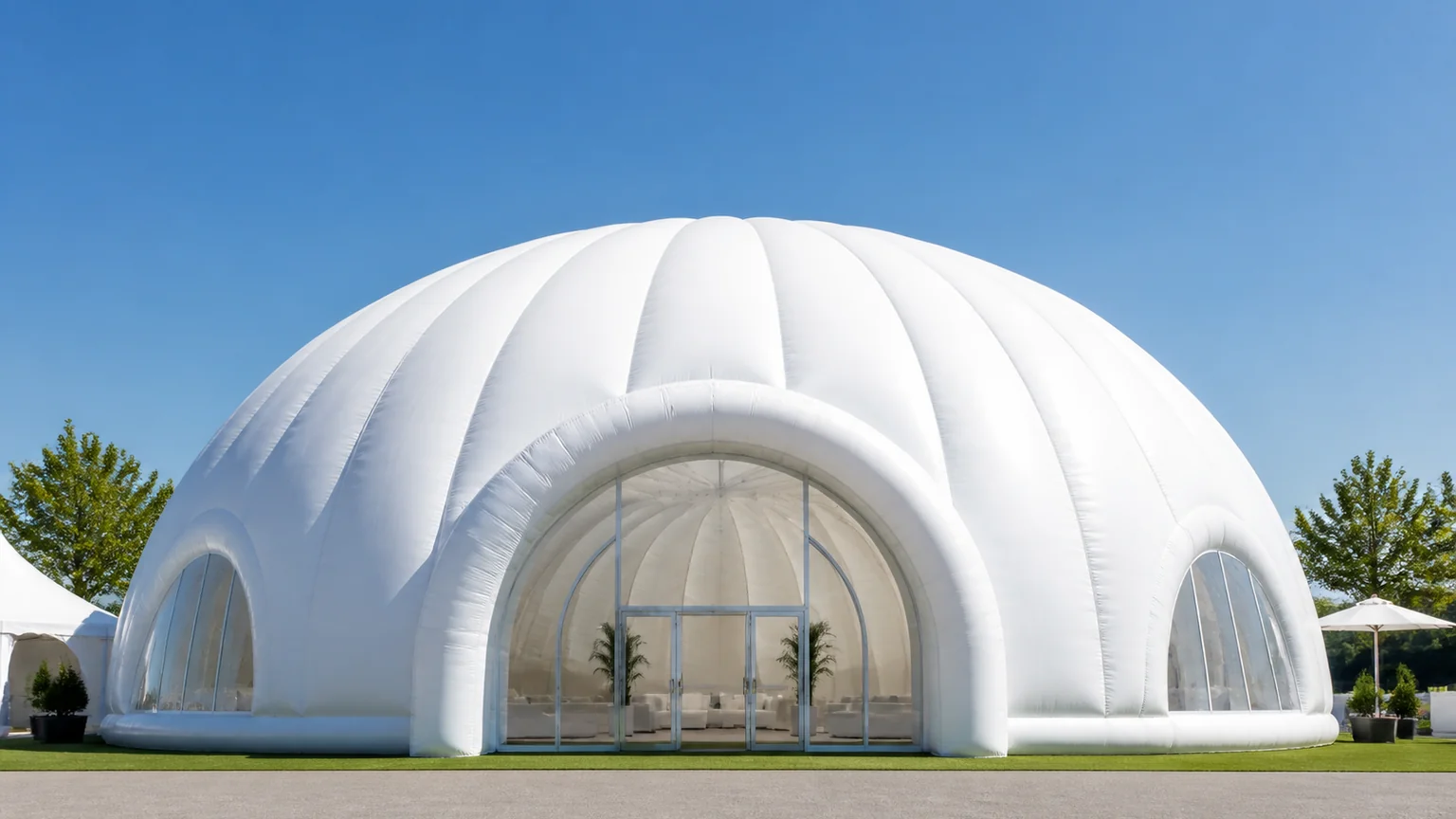
An inflatable tent covers a lot of ground as a product category — everything from a simple dome shelter at a farmers market to a full commercial-grade structure hosting a trade show pavilion. The right choice depends less on which one “looks best” in a catalog photo and more on structural type, size, and how the tent actually needs to perform on your site. Here’s how to navigate the category before you request a quote.
Two Structural Types, Different Use Cases
Inflatable tents split into two fundamentally different build types, and the distinction matters more than shape or size:
- Airtight (sealed-chamber) tents — inflated once to working pressure and sealed, holding their shape without a running blower. These are better suited to sites without reliable power access or where blower noise is a concern, though pressure does need periodic checking over extended deployment.
- Continuous-blower tents — like most other advertising inflatables, these stay inflated via a running electric blower for the duration of use. They typically cost less upfront and are simpler to repair, but require constant power access, similar to the tradeoffs covered in our guide to cold-air vs fan-blown inflatables.
Neither type is universally better — the right choice depends on your site’s power access and how long the tent needs to stay deployed without active monitoring.
Common Shapes and What They’re Built For
- Dome tents — a rounded, single-chamber structure that works well as a compact shelter, information point, or small vendor booth. Simple to set up and strike, making them a common choice for one-day events.
- Tunnel and arch-frame tents — elongated structures built from repeating arch sections, scaling well to larger footprints for trade show pavilions or multi-vendor event spaces.
- Multi-chamber or modular tents — combine sections to create larger enclosed spaces, useful when a single event needs multiple connected zones (registration, seating, staging) under one branded structure.
Sizing: Match the Footprint to the Actual Use
Inflatable tents span a wide range, from small vendor-booth sizes up to large-format structures covering hundreds of square meters for major events. Before sizing, work backward from what the tent actually needs to hold — seating capacity, display tables, walkway clearance, and any equipment inside — rather than picking a size based on visual impact alone. Oversizing adds unnecessary cost and setup time; undersizing means a cramped space that undercuts the professional impression the tent is meant to create.
For events with variable attendance or multiple use cases across a season, modular multi-chamber designs offer more flexibility than committing to one fixed footprint.
Material and Weatherproofing Basics
Commercial-grade inflatable tents use PVC-coated fabric similar to other advertising inflatables, chosen for water resistance, UV stability, and fire-retardant rating. For extended outdoor deployment, confirm the fabric’s specific weather rating with your supplier — a tent used for occasional weekend events has different durability requirements than one deployed for weeks at a time. Ground anchoring matters as much as the tent structure itself; a properly staked or ballasted tent handles wind loads far better than one relying on the structure’s weight alone.
Custom Branding on Tents
Like other advertising inflatables, tents can carry full-color OEM printing across panels, entrances, and roof sections — useful for trade show pavilions or branded event spaces where the structure itself doubles as marketing real estate. If branding consistency across a multi-location rollout matters, specify colors and logo placement in a single brief so print batches match across units, the same approach covered in our guide on briefing a factory for custom advertising inflatables.
Interior Climate and Airflow
A sealed fabric structure holds heat differently than a rigid-frame tent, and this matters more than most first-time buyers expect. Enclosed inflatable tents used for extended events — a full-day trade show or a multi-day festival pavilion — benefit from ventilation panels, mesh windows, or supplementary fans to manage interior temperature, especially in warmer climates or when the space is populated for hours at a time. Ask your supplier what ventilation options are available for the specific tent size and shape you’re considering; this is often an add-on rather than a default feature, and retrofitting it after the fact is harder than specifying it upfront.
For cold-weather deployments, the opposite consideration applies: a well-sealed structure with minimal ventilation retains heat better, which can be an advantage for winter markets or heated event spaces if the tent’s material and seams are rated for the temperature range you’re operating in.
Where Inflatable Tents Get Used Beyond Standard Events
Beyond trade shows and outdoor markets, inflatable tent structures serve a range of specialized uses where rapid deployment matters: temporary medical or testing stations, emergency response and disaster relief shelters, and pop-up retail or registration points that need to go from packed to fully set up in under an hour. These use cases often prioritize setup speed and portability over branding, which shifts the buying decision toward continuous-blower or airtight structures that a small crew can deploy without specialized tools, rather than the larger branded pavilion structures built primarily for marketing visibility.
Choosing Between Inflatable and Metal Frame Tents
Alongside inflatable tents, some buyers are better served by metal frame tents — a rigid-structure alternative that trades faster inflatable setup for a more traditional frame-tent build, useful when local event regulations or extended, unattended deployment favor a rigid structure over an air-supported one. If you’re unsure which fits your event type, it’s worth requesting a comparison from your supplier rather than defaulting to whichever is more familiar.
A Quick Reference for First-Time Buyers
| Priority | Better fit |
|---|---|
| No reliable power on site | Airtight sealed-chamber tent |
| Frequent setup/strike, budget-conscious | Continuous-blower tent |
| Compact single-purpose shelter | Dome tent |
| Large trade show pavilion or multi-zone event | Tunnel or modular multi-chamber |
| Extended unattended deployment | Metal frame tent, or airtight with regular pressure checks |
Lead Time and Ordering Considerations
Custom-printed inflatable tents follow a similar production path to other advertising inflatables — artwork approval, then manufacturing, then shipping — though larger multi-chamber structures naturally take longer to produce than a single-chamber dome. Build extra lead time into your planning for larger custom structures rather than assuming the same turnaround as a smaller stock-color unit, and confirm freight logistics early if you’re sourcing internationally, since a large tent takes up meaningfully more container space than a compact air dancer or arch.
The Bottom Line
Structural type (airtight vs continuous-blower) and sizing to actual use drive most of the decision in this category — shape and branding come after those fundamentals are settled. Confirm power access at your site, size to what the tent actually needs to hold, and check weatherproofing specs against your deployment length before ordering.
Planning an event structure and not sure which tent type fits? Request a quote and tell us your site constraints and event type for a sizing recommendation.