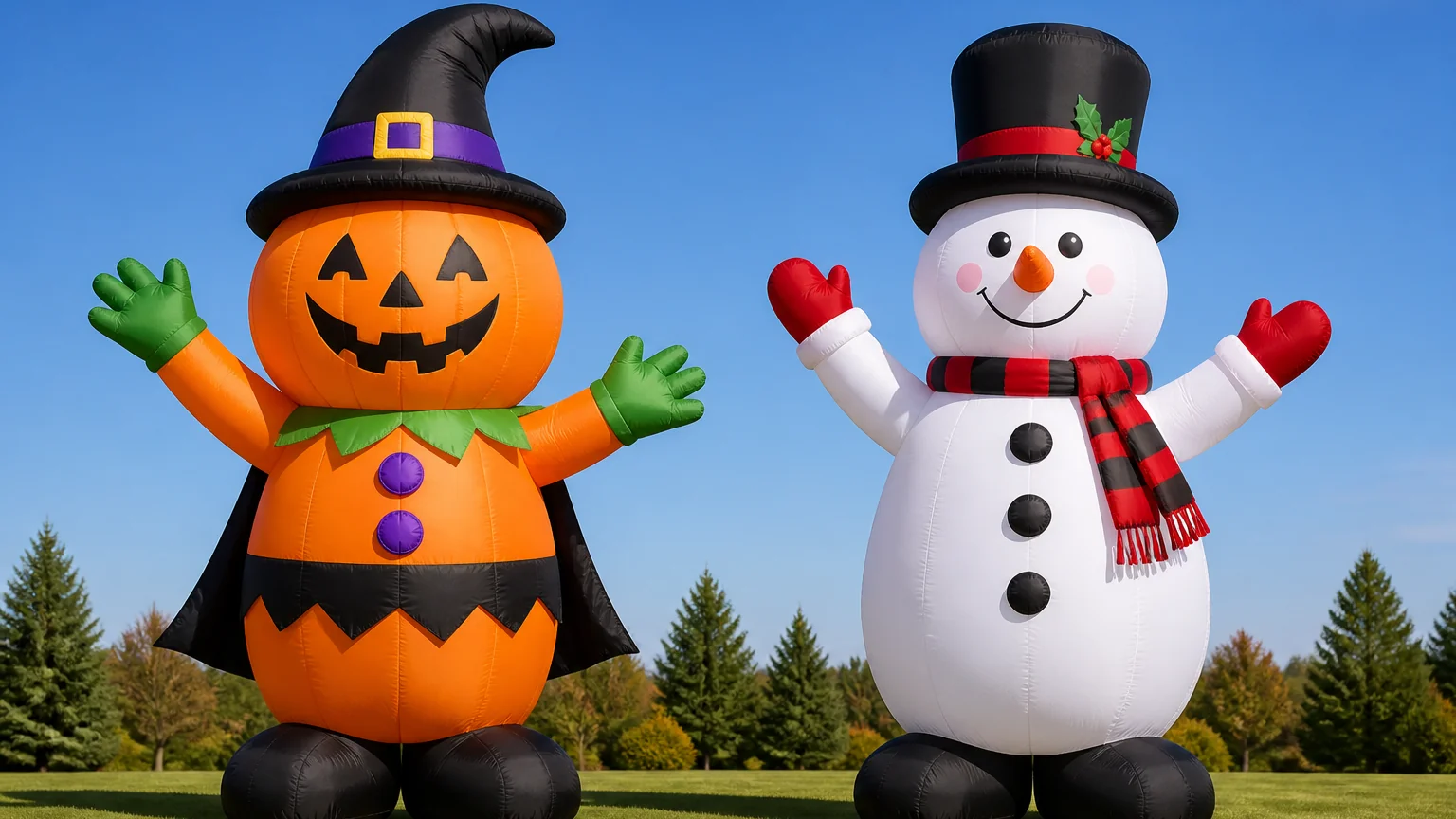
A retailer running a pumpkin mascot in October, a snowman in December, and an Easter rabbit in April is effectively buying three separate campaigns — unless the sourcing is planned as a rotation instead of three one-off purchases. The difference isn’t just cost. It’s storage space, lead time risk, and whether the same base structure can carry multiple seasonal identities instead of starting from zero every quarter.
This is the procurement side of seasonal inflatable mascots: what can be reused, what has to be replaced, and how to plan the order calendar so you’re not scrambling two weeks before a holiday weekend.
What Actually Carries Over Between Seasons
Not every part of an inflatable mascot needs replacing when the theme changes. Depending on how the unit is built, a few components are reusable across a rotation:
- Blower and base anchoring hardware — the electric blower and ground stakes or ballast are generic across most mascot sizes and don’t carry seasonal branding, so the same units can serve a pumpkin in October and a snowman in December
- Core body structure — for mascots built on a modular frame, the underlying inflatable “body” shape can sometimes be resized or reused with a different printed skin, though this depends heavily on the specific character design and isn’t guaranteed across all suppliers
- Storage and transport bags — durable duffel-style bags are generic and don’t need replacing each season
What typically doesn’t carry over is the printed fabric itself — full-color OEM printing is applied directly to the fabric during manufacturing, so a genuinely different character (pumpkin to snowman, not a color variant of the same shape) usually means a new printed unit rather than a re-skin. Ask your supplier directly whether their construction method supports interchangeable skins on a shared frame — this varies by manufacturer and isn’t a given.
Building the Order Calendar Backward From Your Busiest Dates
Custom mascots typically run 7-15 working days production after artwork approval, not counting shipping. For a rotation covering multiple holidays in one year, that means planning the full year’s order calendar in one pass rather than ordering reactively each season:
- List every campaign date across the year (Halloween, Christmas/holiday season, Lunar New Year, Easter, back-to-school, summer events — whichever apply to your markets)
- Work backward from each date by production lead time plus shipping transit, then add a buffer for artwork revisions
- Batch artwork approval for multiple units at once where possible — reviewing three character designs in one round is faster than three separate approval cycles spread across the year
For international buyers, shipping transit adds meaningfully to this timeline on top of production — our guide to shipping inflatables worldwide covers typical freight windows by region so you can build them into the calendar accurately.
Storage Between Seasons Determines Whether Reuse Actually Pays Off
A mascot that isn’t properly deflated, cleaned, and stored between seasons degrades faster than the rotation math assumes — mildew, fabric creasing, and print fading from improper storage can shorten a unit’s usable life enough that the “reuse next year” plan quietly fails. Before packing a mascot away after its season:
- Fully deflate and let the fabric dry completely before folding — trapped moisture is the most common cause of mildew damage in storage
- Store away from direct sunlight and temperature extremes, which degrade PVC and printed graphics over time
- Label storage bags clearly by character and size if you’re running multiple mascots, so the team pulling stock for next season isn’t guessing
When Rotation Math Favors Buying vs. Renting for a Single Event
If your business runs the same 2-3 seasonal campaigns every year — a retail chain doing Halloween and Christmas annually, for instance — owning mascots built for reuse pays off within two or three seasons compared to one-off sourcing each time. If you’re testing a single seasonal activation without a confirmed annual repeat, it may make more sense to start with one well-chosen mascot and build the rotation calendar as your seasonal calendar solidifies, rather than over-investing in a full rotation upfront.
For groundwork on what to specify when briefing a supplier — sizing, printing method, and lead times — our guide on briefing a factory for custom advertising inflatables covers what to include in your spec regardless of whether you’re ordering one mascot or planning a full-year rotation.
A Simple Rotation Planning Table
| Element | Reusable across seasons? |
|---|---|
| Blower and anchoring hardware | Yes, generally |
| Storage/transport bags | Yes, generally |
| Core frame shape (character-dependent) | Sometimes — confirm with supplier |
| Printed fabric skin | No — new unit per distinct character |
| Artwork approval cycle | Batch where possible to save time |
For sizing and theming guidance on individual seasonal campaigns, our earlier guide to inflatable mascots for festivals and seasonal campaigns covers how to pick sizes and themes for a single seasonal push — this piece picks up from there for teams planning multiple campaigns across a full year.
The Bottom Line
Treating seasonal mascots as a rotation rather than repeated one-off purchases saves on hardware duplication and forces a full-year order calendar that avoids last-minute production scrambles. The printed character itself usually needs replacing each time the theme changes, but the blower, anchoring, and storage system don’t have to be bought fresh every season if they’re cared for properly between uses.
Planning a multi-season mascot rotation? Request a quote and we’ll help you map production timing across your full campaign calendar.