Before a buyer sends artwork or asks for a quote, the two questions that actually shape the sourcing decision are usually: how many units do I have to order, and can I see a sample before committing to that? Both questions have real, practical answers in the custom inflatable trade — and knowing them upfront saves a round of back-and-forth that otherwise eats a week off your timeline.
Minimum Order Quantities Vary by Product Type, Not by Supplier Policy
MOQ in advertising inflatables is driven mainly by production economics, not arbitrary supplier rules. A single custom-printed air dancer or arch can often be produced as a one-off, since each unit is individually cut and printed. Products that involve tooling, molds, or batch-dependent processes — certain balloon shapes or mascot designs with complex forms — may carry a higher practical minimum simply because the setup cost per unit drops sharply past a certain quantity.
The honest answer from most manufacturers: ask for MOQ on your specific product and size, rather than assuming a blanket number applies across the whole catalog. A supplier who gives you a firm MOQ instantly, without asking what you’re ordering, likely hasn’t looked closely at your actual spec.
What “Sampling” Actually Means in This Trade
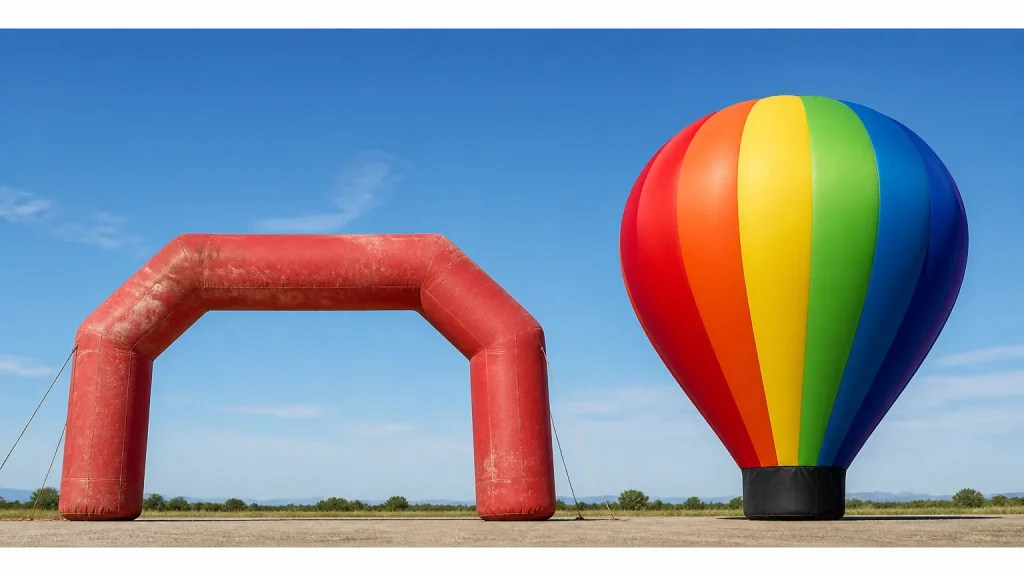
Full physical samples of large advertising inflatables are impractical for most buyers to request — a 15-foot air dancer or a full-span entrance arch isn’t something a factory ships out for a one-off approval before the real order. What buyers typically get instead:
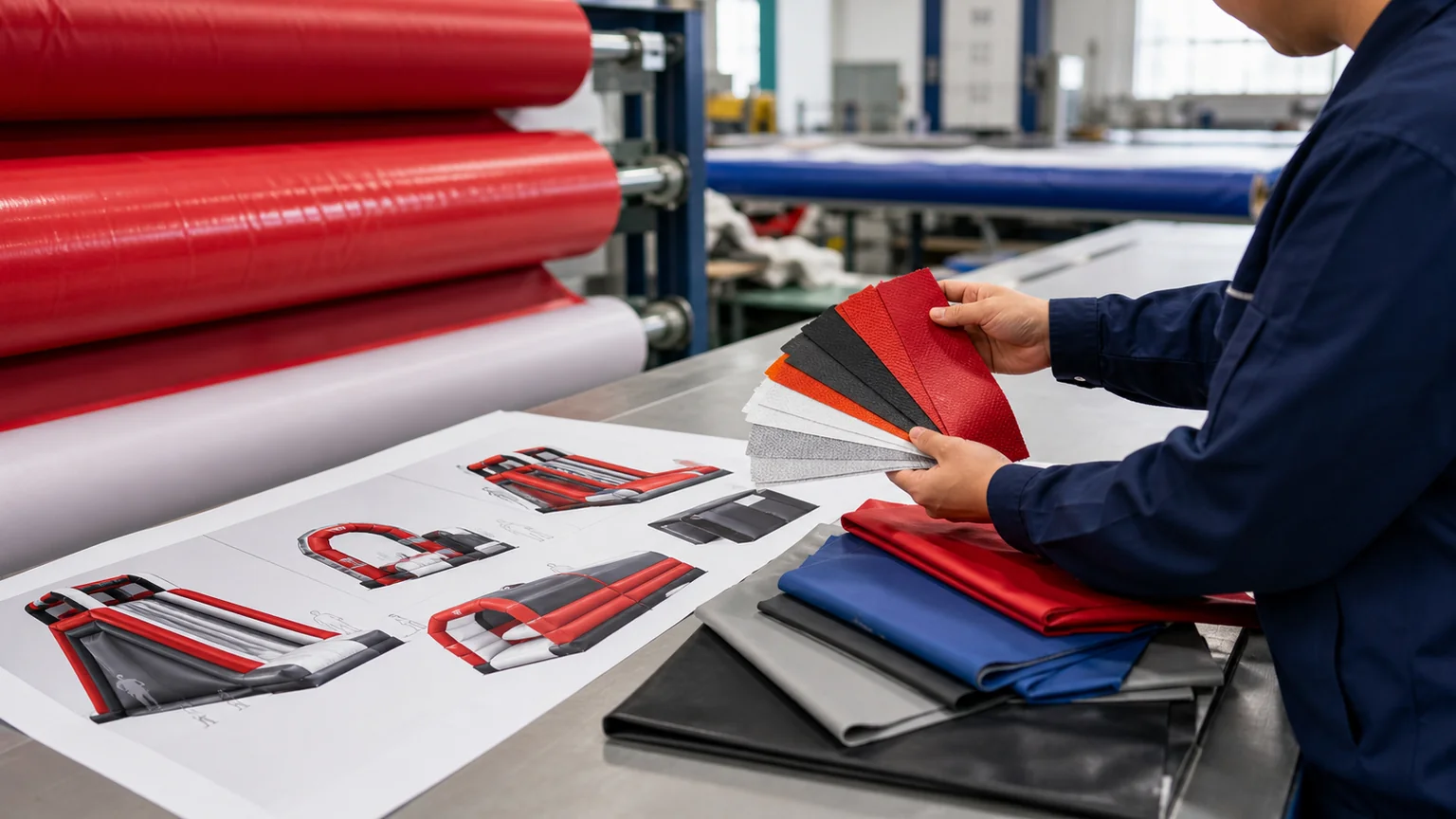
- Digital proofs — a rendered mockup of your artwork applied to the product template, used to confirm layout, color, and logo placement before production starts
- Fabric swatches — physical material samples showing the actual PVC or ripstop nylon grade, color match, and print quality on a small scale, sent by mail before a large order
- Small-scale physical samples — for some product types, a scaled-down or single unit can be produced and shipped for approval, particularly for repeat customers or larger anticipated order volumes
If a full-size physical sample matters enough to your decision to justify the cost and lead time, ask directly whether the supplier offers it and what it costs — some do for serious inquiries, especially when a large recurring order is on the table, but it’s not standard practice for a first small order.
The Realistic Process From First Inquiry to Confirmed Order
| Step | What happens | Typical timing |
|---|---|---|
| Initial spec and quote request | Buyer shares product type, size, quantity, artwork | 1-2 days for firm quote if spec is complete |
| Digital proof | Factory renders artwork on product template | 1-3 days |
| Proof approval / revisions | Buyer confirms or requests changes | Varies by buyer response time |
| Fabric swatch (optional) | Physical material sample mailed for color/quality check | Adds shipping transit time |
| Production | Manufacturing begins after approval | 7-15 working days |
| Shipping | Freight to destination | Varies by region — see freight guide below |
The single biggest lever a buyer has over this timeline is sending a complete artwork and spec package on the first message. Our guide on briefing a factory for custom advertising inflatables covers exactly what to include so the quote and proof stage doesn’t stall on missing information.
Questions Worth Asking Before You Commit to an Order
- What’s the MOQ for this specific product and size — not the general catalog minimum?
- Does the quoted lead time start from artwork approval or from deposit payment?
- Is a fabric swatch available before the full order, and does it cost extra?
- What happens if the digital proof needs revisions after the first round — is there a limit before extra charges apply?
- For international orders, is freight quoted separately, and what’s the realistic transit window for your region?
For that last question, our breakdown of shipping inflatables worldwide covers typical container loading and transit windows by region, so you can build realistic total lead time into your event or campaign planning rather than just the production window.
Why Some Buyers Skip Sampling Entirely — and When That’s a Mistake
For repeat orders of a product you’ve already received and approved — reordering the same air dancer design in a new color, for instance — skipping a fresh proof round is often reasonable, since the base template and material are already confirmed. For a genuinely new design, new supplier relationship, or a product type you haven’t ordered before, skipping the digital proof to save a few days is the most common source of costly reprints. The proof stage is cheap insurance against a production run that doesn’t match what you had in mind.
The Bottom Line
MOQ depends on the specific product, not a blanket supplier policy — ask for it on your exact spec. Full physical samples aren’t standard for first orders; digital proofs and fabric swatches do that job for most buyers. Send a complete spec and artwork package upfront, and the timeline from inquiry to production start comes down to days, not weeks of back-and-forth.
Ready to get a firm quote on MOQ and lead time for your project? Request a quote and include your product type, size, and quantity for the fastest turnaround.