“How long will this last?” is one of the first questions a buyer should ask before ordering a custom advertising inflatable, and it’s also one suppliers answer inconsistently — “several years” from one, “3-5 seasons” from another, with little explanation of what actually determines the number. The honest answer depends on product type, usage pattern, and storage discipline more than any single spec sheet figure. Here’s a realistic breakdown by category, and what actually shortens or extends the lifespan of each.
What Determines Lifespan Across All Product Types
Before breaking down by category, four factors apply universally to advertising inflatables, regardless of whether it’s an air dancer, arch, balloon, or mascot:
- UV exposure — continuous outdoor sun exposure degrades PVC and nylon fabric and fades print color over time. A unit displayed 24/7 outdoors wears faster than one deployed only for weekend events and stored the rest of the week.
- Setup/teardown frequency — repeated folding, especially before the fabric is fully dry, stresses seams and creates crease points where cracking starts. A permanently installed unit that stays inflated sees less mechanical wear than one that’s set up and packed away daily.
- Storage conditions — heat, humidity, and improper folding between uses shorten usable life faster than the material itself would otherwise wear out. This is the single most controllable factor in the list.
- Material grade — commercial-grade ripstop nylon and 0.55mm PVC hold up meaningfully longer than lighter-weight consumer-grade materials sometimes substituted to cut cost.
Air Dancers: Typical Lifespan and Wear Points
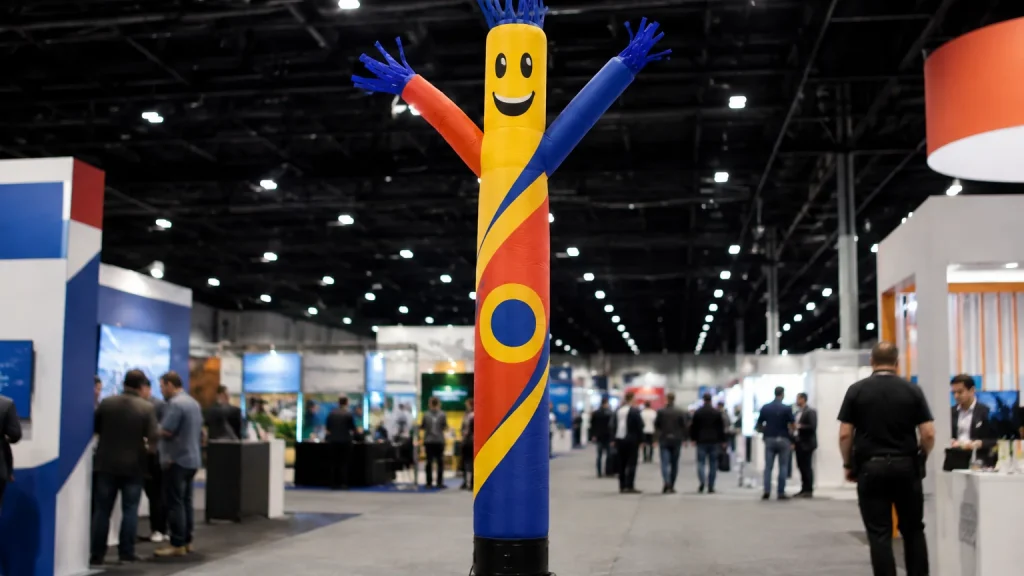
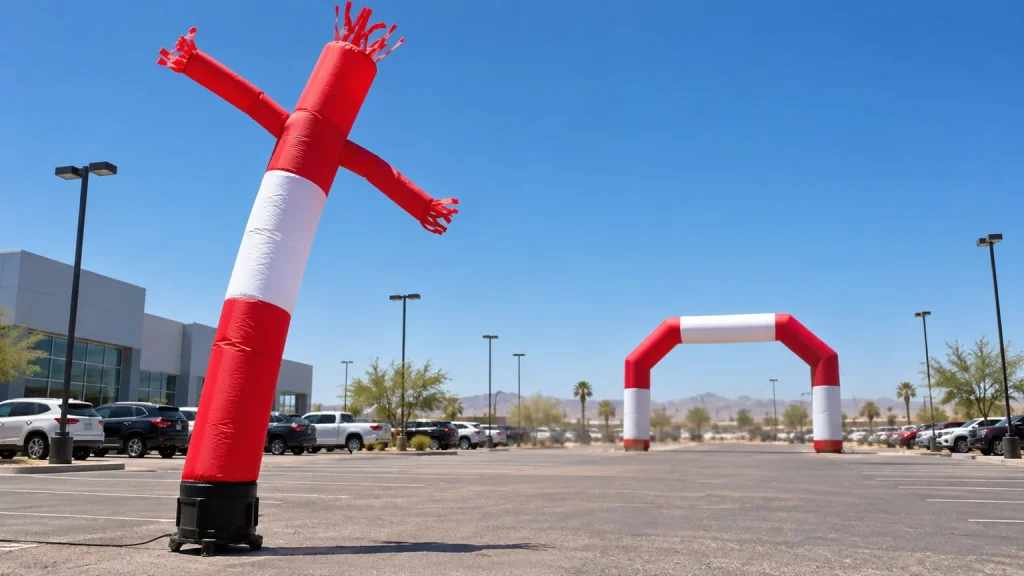
A commercial-grade air dancer in regular outdoor use — set up daily at a dealership or storefront — typically holds up well across multiple seasons with proper care, though the constant motion and flex of the “dancing” mechanism is itself a wear factor unique to this product type. The base attachment point, where the tube connects to the blower duct, sees the most repeated stress and is usually the first place wear shows. Fabric fading from continuous sun exposure is usually the visible sign that a unit is approaching the end of its effective marketing life, even before any structural failure.
Arches: Span Size Affects Wear Distribution
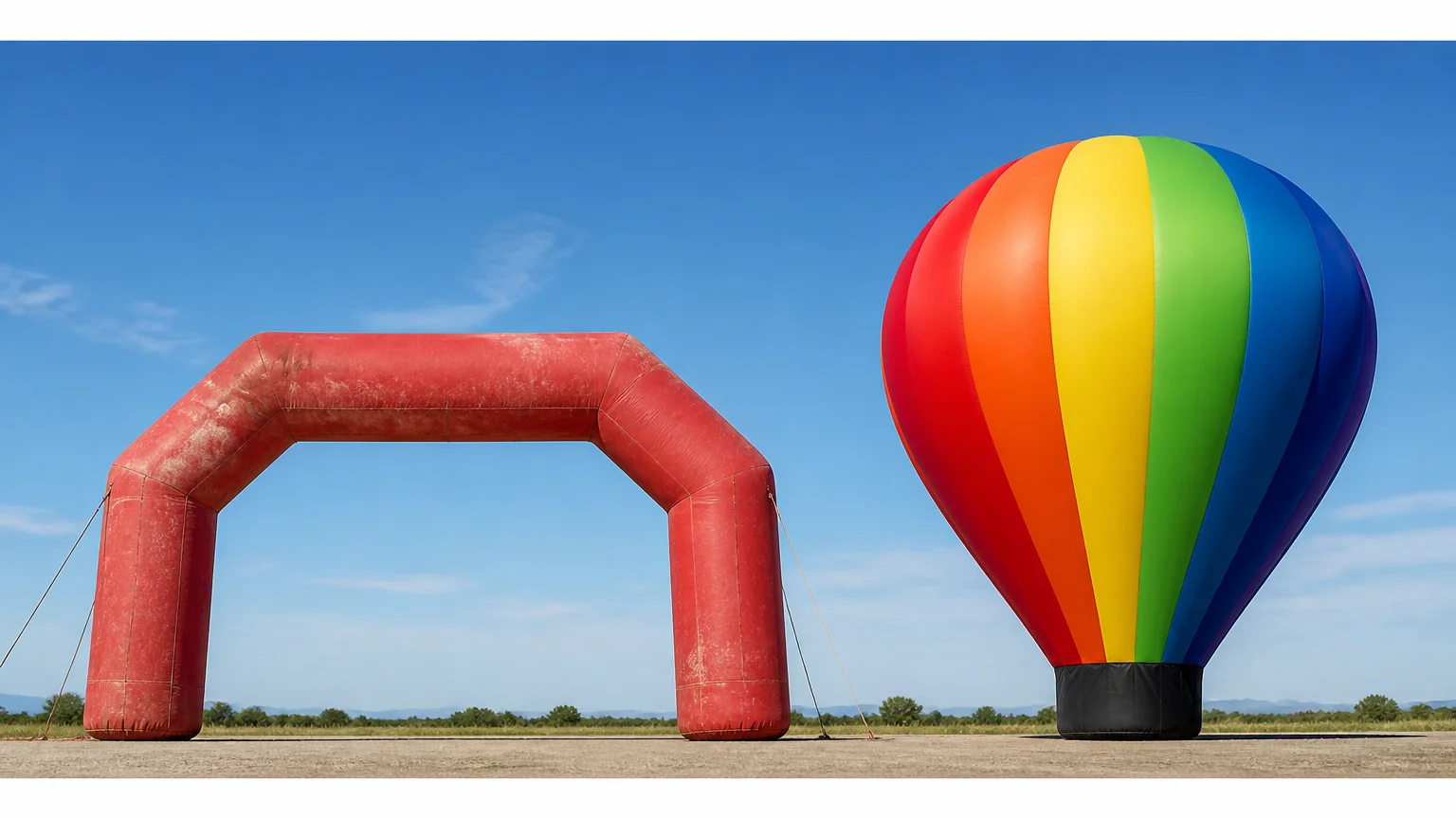
Entrance and event arches see less continuous motion stress than air dancers but carry more structural load across a longer span, particularly at the base connections and seams. Larger spans put more stress on seam construction, which is why our guide to branded entrance arch durability covers print and setup practices specific to extending arch lifespan. Arches used for recurring events (set up, used for a weekend, packed away) generally outlast permanently displayed units because they spend less total time under UV exposure.
Balloons: UV Exposure Is the Dominant Factor
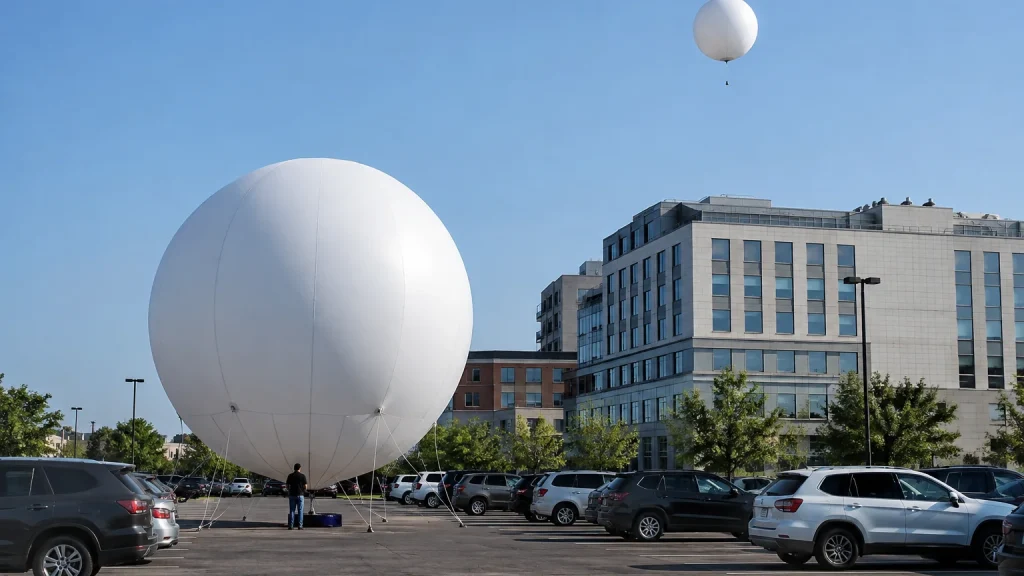
Ground balloons and helium spheres have the most surface area relative to their structure exposed to direct sun, making UV-stable printing and material grade the biggest lifespan lever for this category. A balloon using standard printing will show fading and coating degradation noticeably faster than one printed with UV-stable inks — our guide on UV-stable printing for outdoor balloons covers this in detail. Helium spheres also face wear from repeated inflation/deflation cycles if not left inflated for extended display periods.
Mascots and Cartoon Characters: Complexity Adds Wear Points
Custom-shaped mascots with multiple limbs, appendages, or complex silhouettes have more seams and structural joints than a simple tube or sphere shape, and each joint is a potential wear or leak point over time. These units benefit the most from careful storage between seasonal uses, since a complex shape folded improperly creates more stress concentration points than a simple geometric form. For mascots used across a rotation of holidays or campaigns, our guide on planning a mascot rotation covers storage practices that extend usable life between appearances.
How to Get the Most Years Out of One
Most premature failures come down to handling, not manufacturing. A few habits noticeably extend service life: always let the fabric dry fully before folding it away, so trapped moisture can’t cause mildew or seam breakdown in storage; store it loosely in a cool, dry place rather than crushed under other gear; keep the blower intake clear of grit and check it before each run, since a struggling blower stresses seams; and bring the unit down in strong wind rather than trusting the anchors past their limit. A quick rinse of dust and a check of the seams after each long deployment costs minutes and adds seasons. Used this way, a commercial-grade inflatable comfortably reaches — and often exceeds — the upper end of its expected range.
Signs It’s Time to Replace, Not Repair
| Sign | What it usually means |
|---|---|
| Noticeable color fading affecting brand recognition | Cosmetic — consider replacement if the unit is customer-facing |
| Small punctures or seam separation, isolated | Usually repairable |
| Repeated leaks at multiple points | Fabric degradation — repair is a stopgap, not a fix |
| Stiff, brittle fabric that cracks when folded | End of usable life — material breakdown, not a repair situation |
The Bottom Line
There’s no single honest answer to “how long will it last” without knowing your usage pattern — daily outdoor display, weekend event rotation, and careful seasonal storage all produce meaningfully different lifespans from the same starting material. Commercial-grade fabric, UV-stable printing where relevant, and disciplined storage between uses are the levers actually within a buyer’s control. Budget for replacement based on your actual usage intensity, not a generic number from a spec sheet.
Not sure what material grade fits your usage pattern? Request a quote and tell us how you plan to use it — we’ll recommend the right spec for the lifespan you need.