Indoor Venue Restrictions for Inflatable Displays: Fire Code and Mall Policies
Indoor Venue Restrictions for Inflatable Displays: Fire Code and Mall Policies
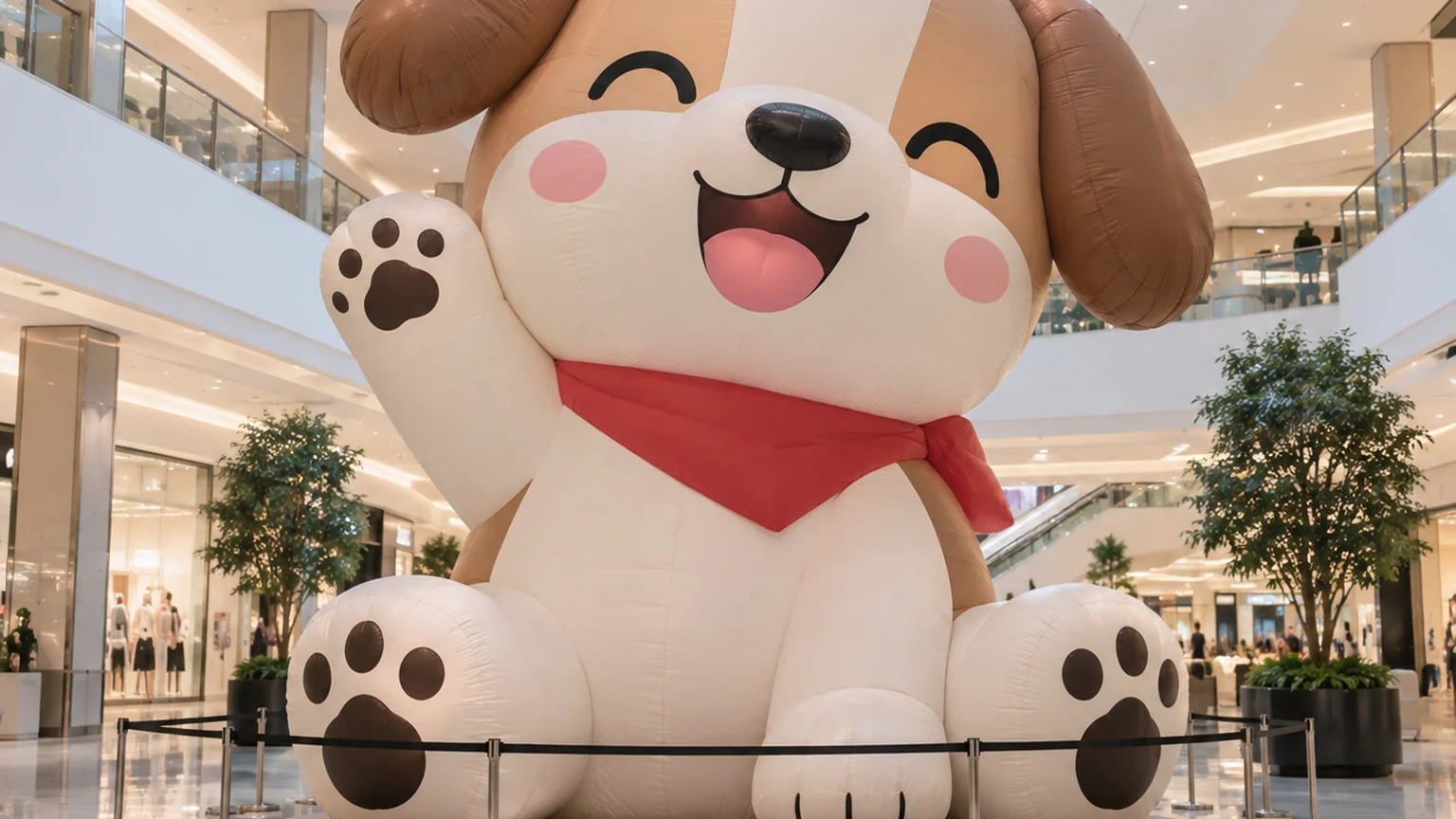
Approval for an inflatable display inside a shopping mall or retail venue runs on a different set of rules than booking a trade show booth. It’s not about ceiling height or exhibitor manuals — it’s about fire code, and getting that wrong doesn’t just mean a rejected booking, it can mean a display pulled on the day of the event. Understanding what mall and retail property managers actually check before approving an indoor inflatable saves you from finding out the hard way.
This is a different set of constraints than the ones we cover for trade show booth deployments — that guide deals with exhibitor height limits and show approval processes; this one deals with fire and life-safety compliance in a retail environment.
Why Fire Code Is a Different Kind of Restriction
A trade show’s height limit is a logistical rule set by the show organizer. Fire code in a mall or retail venue is a legal safety requirement enforced by local authorities and the property’s own fire marshal or safety officer, and it exists for one reason: nothing can obstruct emergency egress or fire suppression systems, ever, regardless of how good the display looks. This isn’t a box to check quickly before setup — it’s the first conversation to have with the venue, well before you finalize a display plan.
The First Gate: Flame-Retardant Fabric
Before a mall property manager will even discuss placement, they’ll want confirmation the display material meets basic fire-safety standards. Our advertising inflatables use flame-retardant, UV-stable fabric and CE-certified continuous-duty blowers as standard — ask your venue exactly what documentation they require to confirm this, since requirements vary by property and jurisdiction, and don’t assume a general product spec sheet automatically satisfies a specific venue’s paperwork requirement.
What Mall Property Managers Typically Ask For
While exact requirements vary by property and location, a few documents come up consistently enough to prepare for in advance:
- Proof of liability insurance naming the venue as an additional insured party
- Fire-safety or flame-retardancy documentation for the display material
- A site plan showing exact placement relative to exits, sprinkler heads, and fire extinguisher stations
- Setup and teardown timing that doesn’t conflict with the venue’s own fire-safety inspection schedule
Confirm this list directly with the specific venue rather than assuming it matches a previous mall you’ve worked with — requirements genuinely differ property to property.
Placement: What Has to Stay Clear
Beyond the paperwork, physical placement has hard constraints that aren’t negotiable: displays can’t block emergency exits or the path to them, can’t sit under or too close to sprinkler heads (which need clearance to function), and can’t obscure exit signage or fire extinguisher locations. A display that looks fine to the eye can still violate clearance requirements that aren’t visually obvious — this is exactly why the venue’s own safety officer needs to sign off on the specific placement, not just the display itself.
Start the Approval Conversation Early
Fire and safety approval at a retail venue isn’t a same-week formality — build it into your timeline the same way you’d plan around production lead times. Reach out to the property management or events team as early as possible, get their specific documentation requirements in writing, and confirm placement before you finalize a production order — reworking a design after a venue rejects a placement is a far more expensive fix than building the constraint in from the start.
This planning-ahead principle applies whether you’re doing a single mall activation or the kind of larger mall opening display that combines multiple inflatable units — more units generally means more scrutiny on placement and documentation, not less.
Multi-Venue Chains: Requirements Aren’t Uniform
Retail chains running the same display concept across multiple mall locations often assume that one venue’s approval means the concept is pre-cleared everywhere. It isn’t. Each property has its own fire marshal, its own insurance requirements, and sometimes its own local jurisdiction rules layered on top of the venue’s internal policy. Budget time to run the approval process at each location independently rather than treating the first approval as a template that guarantees the rest — a display concept that cleared one mall without changes can still need placement adjustments or additional documentation at another, even within the same ownership group.
The Bottom Line
Indoor retail deployment runs on fire code, not exhibitor rules — start the conversation with the venue’s safety officer early, confirm exactly what documentation they need, and plan placement around emergency egress and suppression system clearance from the start. None of this is something AdInflatable certifies or guarantees on your behalf — it’s a conversation between you and your venue, and we can confirm the material and blower specs you’ll need to have that conversation with.
Planning an indoor retail activation? Browse our inflatable mascots and displays or reach out with your venue’s requirements and we’ll confirm what documentation we can provide.