Advertising Blimps: Sizing, Lettering and Lead Times for Overhead Branding
Advertising Blimps: Sizing, Lettering and Lead Times for Overhead Branding
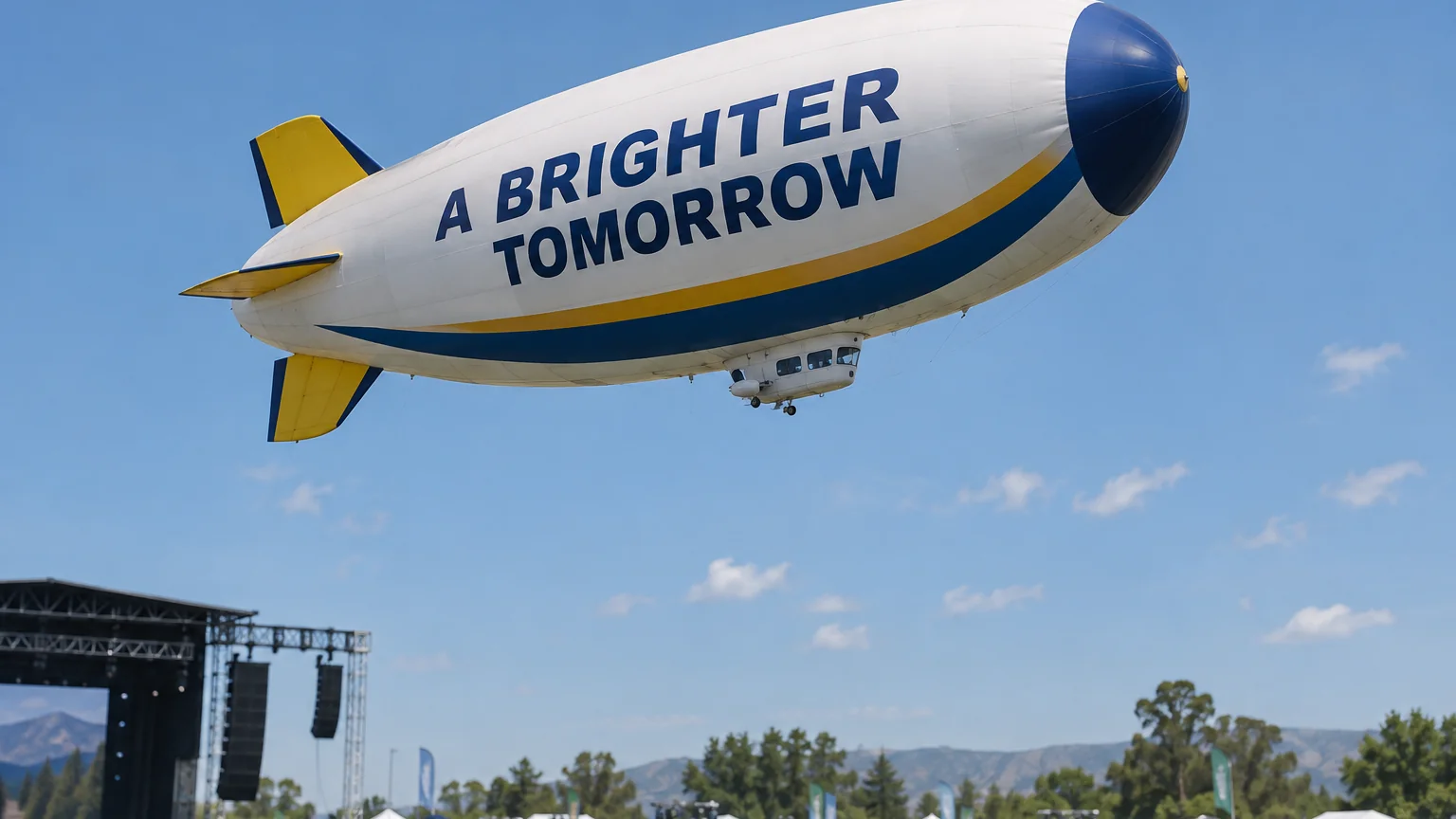
A helium sphere is a floating logo. An advertising blimp is a floating shape — a recognizable silhouette with a nose, a body, and tail fins that reads as “branded aircraft overhead” rather than just “big round thing in the sky.” That directional form is the entire reason to choose a blimp over a sphere: it carries a sense of intent and scale that a geometric shape doesn’t, and it gives you a longer printed surface to work with.
For the broader choice between balloon formats, our ground balloons vs helium spheres guide covers where blimps sit in that decision. This piece goes deeper into blimps specifically.
Why the Shape Itself Is the Selling Point
A sphere’s job is pure visibility — height and distance. A blimp’s job includes that, but adds recognizability: the elongated body and tail fins register as a deliberate, branded object rather than an abstract shape, which matters when the goal is “unmistakably ours” rather than just “visible from far away.” This is also why blimps read well in photography and drone footage — the silhouette itself is distinctive even before anyone can make out the printed lettering.
Sizing: Length-to-Diameter Ratio Is Its Own Variable
Unlike a sphere, where size is a single diameter number, a blimp’s proportions — how long and slender versus short and stout — are an independent design choice on top of overall size. A longer, more slender blimp reads as more dynamic and aircraft-like; a shorter, fuller body holds more printable surface area relative to its length. Our balloon sizing guide covers the general diameter-to-distance relationship that still applies here — a blimp needs to be sized for your actual viewing distance the same way any other balloon format does, on top of choosing its length-to-diameter proportions.
Lettering and Print Design on a Curved, Elongated Surface
The same high-contrast, bold-block principles that apply to arches and air dancers apply here, with one added wrinkle: a blimp’s surface curves away from the viewer more than a sphere’s does at any given point, which means lettering positioned too far toward the nose or tail can distort or partially disappear depending on viewing angle. The body’s widest, flattest-reading section — typically the mid-length — is where large lettering and primary logos hold up best across the range of angles a moving viewer will actually see the blimp from. Smaller supporting text or secondary branding can go toward the tail, where it reads fine up close but isn’t relied on for distance visibility.
Tethering and Wind: Tail Fins Add a Variable
Blimps share the same core tethering and wind-ceiling principles as helium spheres — see our helium balloon safety guide for the fundamentals — but the tail fins that give a blimp its shape also catch wind differently than a smooth sphere does. In practice this means a blimp will tend to weathervane, orienting itself nose-into-the-wind, which is actually a useful stability behavior but does mean the branded side facing viewers can shift with wind direction over the course of a day. Confirm with your supplier how tether point placement affects this behavior for your specific site and prevailing wind direction.
Where Blimps Earn Their Cost Over a Sphere
A blimp typically costs more than a sphere of comparable visual footprint, and that premium buys three specific things: the distinctive silhouette itself, a longer usable printing surface for lettering and secondary branding, and a stronger sense of scale and intent in photography. For a genuinely one-off event where pure height and visibility is the only goal, a sphere delivers that more economically. A blimp earns its premium when the shape itself is doing brand work — a product launch, a flagship activation, or any campaign where “distinctive overhead presence” is part of the message rather than an incidental benefit of being airborne.
Transport and Storage Considerations
An elongated blimp envelope packs down differently than a spherical one — the shape means slightly more careful folding to avoid stress concentrating at the nose and tail sections during storage, similar to the fold-pattern care we cover for other inflatables. Between deployments, store the envelope clean and fully dry, and inspect the nose and tail seams specifically at each pre-season check, since these curved, higher-stress sections are where wear typically shows first on a blimp compared to the more uniform stress distribution a sphere’s shape produces.
Specs and Ordering
Standard build: 0.55mm PVC envelope, UV-stable full-color print, tether line and anchor kit rated to size, 7-15 working day production after artwork approval. Because the elongated shape means more surface area per unit of “apparent size” than a sphere of similar visual impact, confirm helium volume and fill logistics with your supplier at quote stage rather than assuming sphere-equivalent numbers apply directly.
Considering a blimp for your next activation? Browse the blimps range or send us your site details and we’ll recommend sizing and lettering placement before you commit to artwork.