A Christmas tree for a hotel lobby has a different job from one marking the entrance to an outdoor market. In the lobby, guests may stand close enough to examine branches and ornaments. At the market, visitors may first see the tree across a square. Choosing between an inflatable Christmas tree and a traditional artificial tree starts with that viewing experience, then moves to the practical requirements of the particular display.
Both formats can be used in commercial Christmas displays. The useful comparison is between two actual proposals for your venue, with their dimensions, equipment and installation requirements stated. Start with the role you want the tree to perform and ask each supplier to explain how its proposed tree would serve it.
Choose the appearance your visitors will see
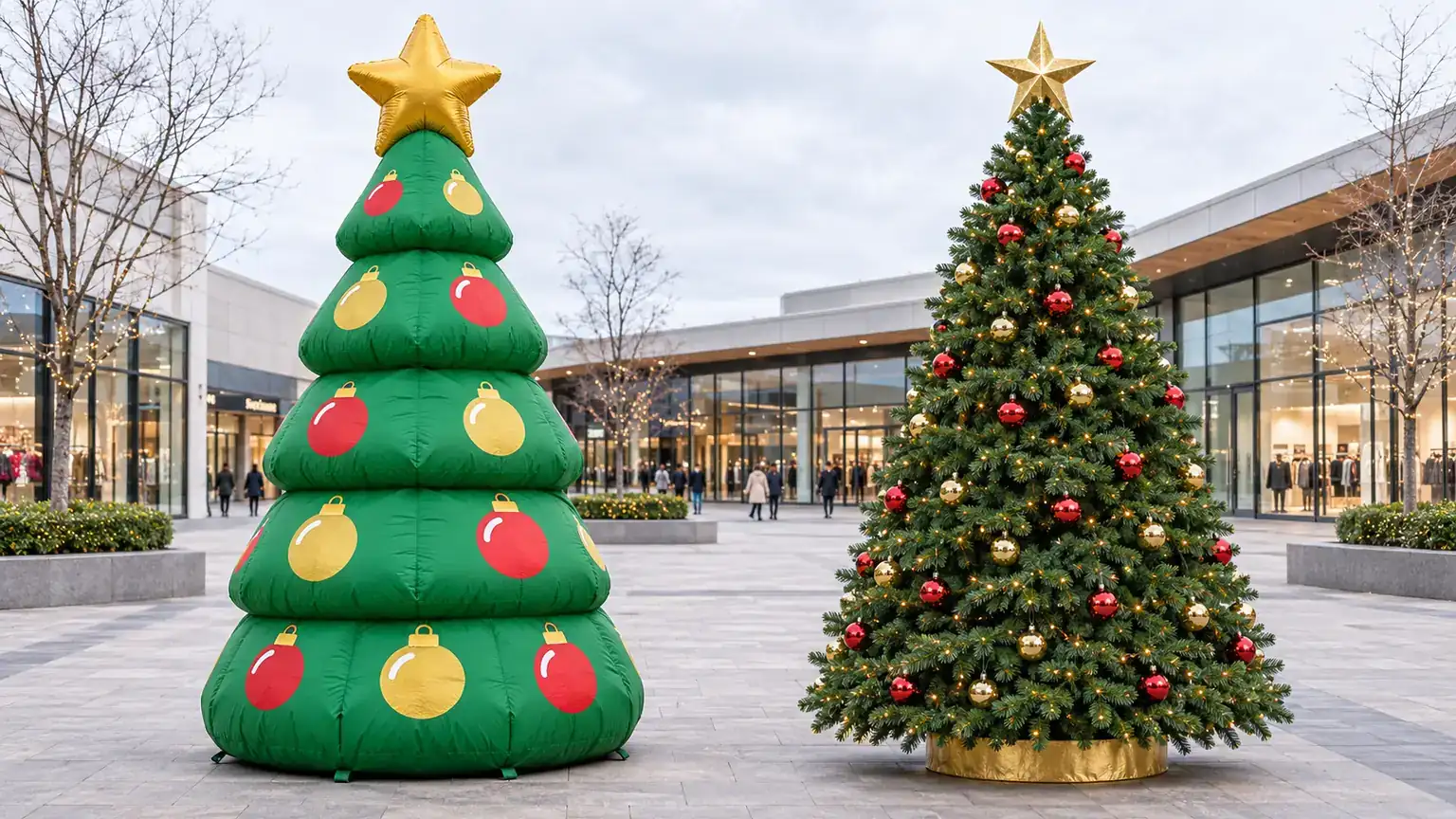
A traditional foliage tree is worth considering when the branch texture and individually arranged ornaments are central to the experience. Think of a hotel lobby where guests pause beside the tree, or a department store display photographed from a few steps away. Ask to see the proposed foliage, lighting and decoration treatment at the distances that matter to your audience.
An inflatable tree offers a different design surface. Its shape and printed panels can carry a graphic Christmas theme, including large decorations that become part of the printed artwork. That can suit a retail campaign built around a particular colour palette or a stylised seasonal scene. Judge the proposed surface in both a close view and a full-tree view, so the expected appearance is clear before ordering.
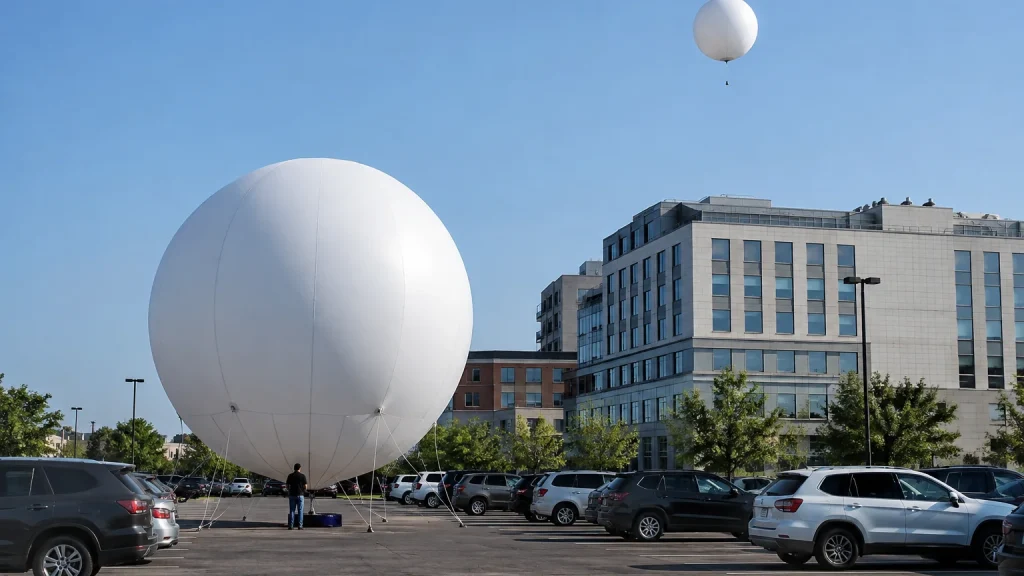
Our Christmas tree and nativity project used flat printed decorations on a ten-metre inflatable tree and separate inflatable gift boxes. The case records outdoor factory test inflation. It gives buyers a specific example of that graphic approach, while the appearance of a new design still needs its own review.
Match each proposal to the actual location
For an indoor atrium, compare the full installed height and footprint, including the top decoration, base and any surrounding display. Then consider the routes people take through the space. A tree that fits the ceiling can still occupy a circulation area or obscure a shopfront. Show the venue team the whole composition before settling the size.
For an outdoor forecourt, ask each supplier about the proposed tree’s suitability for that location. Traditional artificial trees include commercial outdoor tower designs. Creative Displays, for example, describes a steel frame and separate branch sections in its commercial tower range. An outdoor artificial-tree option therefore deserves a project-specific assessment alongside an inflatable proposal.
Give both suppliers the same site photographs, surface information and intended display dates. Ask them to identify the anchoring or support arrangement, power requirements and operating limitations for their proposed equipment. The venue should review the complete plan, including pedestrian routes and access to electrical equipment. Similar height alone does not make two proposals equivalent.
Compare installation work and day-to-day operation
Traditional artificial-tree assembly varies by model. Some trees use sectional trunks and hinged branches, while large commercial designs may use frames and branch panels. Lights may be supplied with the tree or installed separately. Balsam Hill’s assembly guidance covers tree sections, branch shaping and light connections. Use the instructions for the actual model when estimating labour and preparation time.
For a blower-inflated tree, establish where the blower will sit, how it will receive power and when the tree is expected to be inflated. Ask the supplier to confirm the equipment and supervision requirements for the intended use. If the display is deflated outside opening hours, show the venue what occupies the area during that period and agree how it will be managed.
Consider a Christmas market with a short installation window and a hotel with a display maintained for several weeks. Each has a different staffing pattern. Compare the supplier’s installation and operating plan against the people and access windows available at your site. Include any outside installation support in the proposal you review.
Compare the complete seasonal cost and reuse plan
Ask for quotations covering the same display brief. Include the tree, decoration treatment, lighting where required, support or anchoring equipment, delivery, installation assistance and pack-down responsibilities. Then record which items are included and which need a separate allowance. Our guide to comparing inflatable quote scope explains how to resolve those gaps before comparing totals.
Also ask for the packed dimensions and handling instructions. An inflatable fabric body can be deflated, but its blower, weights and accessories still need space. A foliage tree may separate into sections or use a model-specific storage system. Compare the whole packed kit against the storage room and handling route you actually have. Detailed cleaning and packing procedures belong in the supplier’s instructions and our inflatable storage guide.
Make the choice with one shared commercial brief
For a lobby focused on close-up foliage and ornaments, start by assessing a traditional artificial tree. For a graphic seasonal landmark with coordinated printed presents, assess an inflatable design against the required look. A commercial plaza may have suitable proposals in either format. Let the approved appearance, site requirements and complete quotation decide which one fits.
To discuss a custom inflatable Christmas display, send the location, intended viewing distance, available space and installation date. Include any lighting or branding requirements. Those inputs make the first proposal useful for the comparison your team needs to make.