Winter Festival Advertising Inflatables: Coordinating Indoor and Outdoor Displays
A winter festival can have one opening date and several different deadlines for its inflatable displays. The indoor character scene may need to be installed before the venue opens in the morning, while the outdoor entrance display is first presented at an evening launch. A shipment arriving before the launch can still arrive too late for the indoor installation window.
Planning winter festival advertising inflatables means connecting those local requirements to the same campaign schedule. Establish where each display belongs, when it must first be usable and when the responsible teams can prepare it. Then check whether the confirmed production, delivery and site arrangements support that sequence.
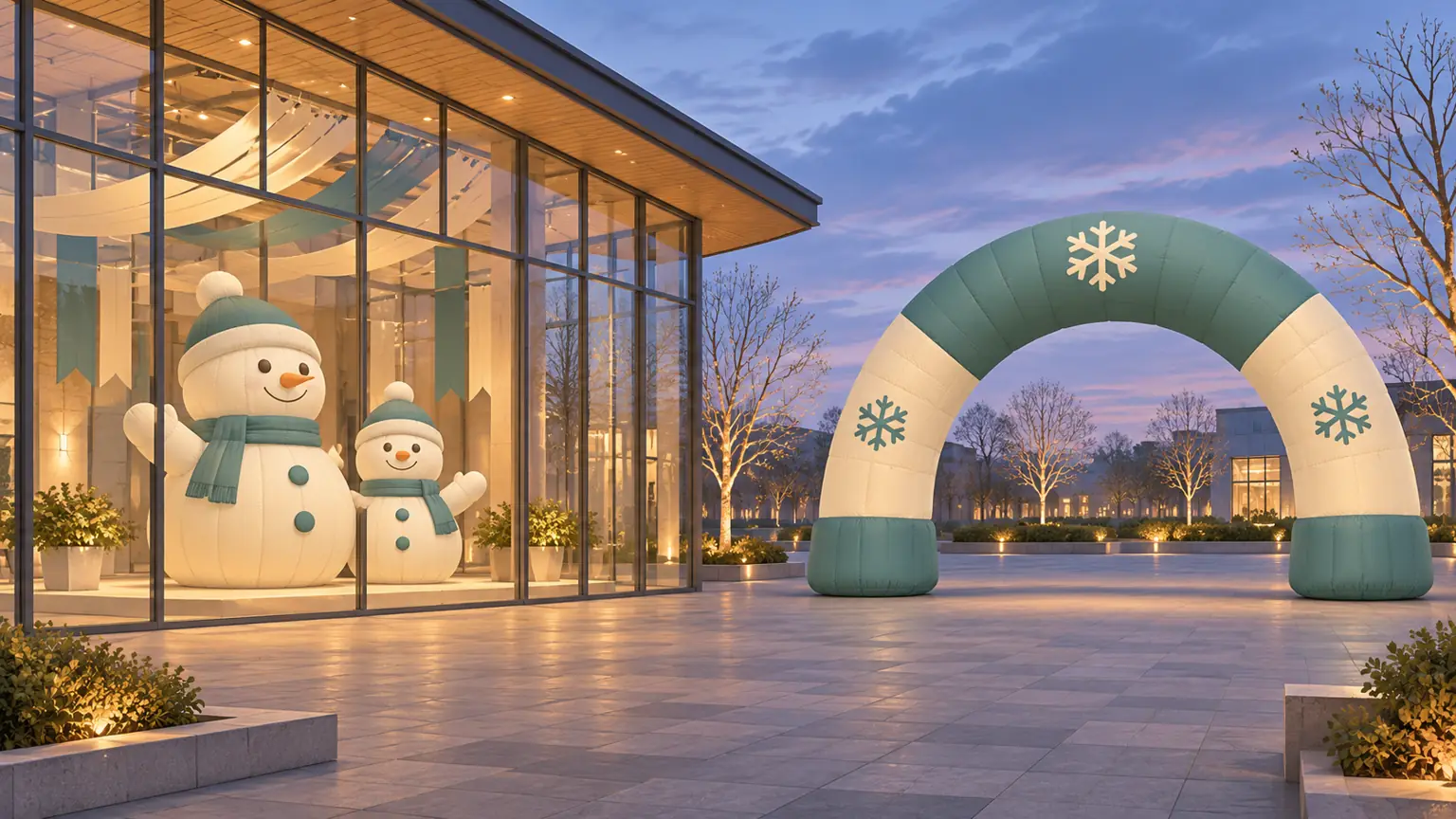
The cover is a concept illustration of a fictional venue with indoor characters and an outdoor arch. It is not a client installation photograph or evidence that the illustrated placement, equipment or winter operating conditions have been approved.
Give each location its own readiness time
Consider a hypothetical retail-plaza winter festival opening on Friday. The approved concept includes a character scene in the indoor atrium and an entrance arch on the outdoor plaza. Both belong to the same campaign, but their first public-use times differ.
The atrium scene must be ready when the building opens at 10:00. The property has provisionally offered the installation team a Friday slot from 06:00 to 09:00. The outdoor arch is intended for an 18:00 launch, with a separate provisional preparation window from 14:00 to 17:00. Those are illustrative project inputs, not recommended installation durations.
Keep the location references consistent across the venue plan and delivery discussion: Indoor Scene I and Outdoor Entrance O. The display types are already chosen for this exercise. The next question is whether each can reach its own readiness point, rather than which catalogue product is best for winter.
Do not give both locations an 18:00 deadline simply because that is the advertised launch time. Doing so would conceal the indoor scene’s earlier obligation. Likewise, a shipment confirmation saying “delivery on Friday” is not precise enough to establish whether the receiving team can hand the relevant packages over before either preparation window.
The Christmas tree and nativity project describes an order combining outdoor and indoor components. Its photographs include factory test-inflation records. It provides context for a mixed-location seasonal order; it does not verify the fictional schedule here or establish winter operation at another venue.
Expose the arrival-to-installation conflict
Now assume the proposed delivery appointment is Friday at 11:00. A campaign-level summary might mark it as acceptable because the shipment arrives seven hours before the evening launch. The location-level comparison shows otherwise.
| Point | Site window | First use | 11:00 arrival |
|---|---|---|---|
| I: indoor scene | 06:00–09:00 | 10:00 | Misses the proposed window |
| O: outdoor arch | 14:00–17:00 | 18:00 | Earlier arrival; readiness unconfirmed |
The indoor conflict exists even if the goods arrive exactly as proposed. It is not a late-delivery problem relative to the evening launch; it is an incompatible sequence for the earlier location. Naming that distinction helps the organizer ask for the right correction.
The outdoor row is also not an automatic pass. An 11:00 arrival precedes its provisional slot, but receipt, release to the installation team and the proposed preparation work still need confirmation. A timestamp alone does not demonstrate that an installation can be completed in the available period.
Possible revisions need responses from the parties who control them. The delivery team might be asked whether an earlier appointment is achievable. The property might be asked whether another permitted installation slot exists. The organizer might consider changing the indoor first-use time, but only if that is an acceptable campaign change. None becomes a confirmed solution merely because it appears in the revised table.
Also connect any requested earlier arrival to the supplier’s actual production plan and the transport provider’s commitment. A generic production range cannot establish a specific receipt date. Design approval, completed production and arrival remain distinct milestones supporting the location deadlines.
Our mall load-in planning guide addresses the separate access question: how the actual packages reach the display and preparation areas. Here, obtain the relevant team’s route confirmation without duplicating that route assessment. A workable route and an available installation slot must both be present.
Carry the winter daytime and evening windows into the plan
The two locations also have different intended display windows. Suppose Scene I is requested during indoor opening hours, while Entrance O is requested from the evening launch until the plaza programme closes. Record those intentions against the same I and O references used in the schedule.
For I, establish the appearance needed under the venue’s indoor lighting and the periods in which the scene should be presented to the public. For O, identify the approach from which the entrance should be recognizable after dark and whether illumination is being requested. An evening use requirement is an input for the proposed build, not proof that any particular lighting arrangement is included.
If the outdoor programme includes changes of appearance, move those requirements into a specific lighting-scene brief. The campaign schedule only needs to identify which display window depends on that confirmation. It should not quietly approve colour sequences, shared controls or timer operation.
For the outdoor point, have the supplier and venue identify the equipment restrictions and site decisions relevant to the actual proposed configuration. The event team needs an assigned contact for the operating decision and an agreed response if conditions prevent the intended display. The separate rain-day planning guide explains the responsibilities and limitations involved; an inflatable’s fabric description does not settle the suitability of its complete installation.
Do not assign a universal temperature limit, anchoring arrangement or overnight operating pattern in the campaign brief. Likewise, an indoor installation should not inherit the outdoor point’s equipment assumptions. The useful schedule identifies what must be confirmed for each use window and who will return that answer.
Resolve one dependency without treating the whole plan as approved
Return to the example’s missed indoor slot. Suppose the delivery provider subsequently confirms Thursday at 15:00, and the property confirms an appropriate receiving and holding arrangement until Friday’s installation. The installation team then confirms that the relevant packages can be made available for its agreed Friday slot. These are hypothetical confirmations illustrating how the timing conflict could be addressed.
The revised arrival now supports the indoor sequence. Record that change against I and retain the supporting confirmations. Do not merely replace “Friday” with “Thursday” in the shipment summary while leaving the venue team unaware of the new receiving appointment.
Next review O against the revised handover arrangement. If outdoor equipment or permissions remain unresolved, keep that row open. Fixing the indoor delivery dependency does not establish outdoor readiness, and one location’s approval should not stand in for the other.
Keep the campaign decision equally clear. Is the organizer retaining the original first-use times, accepting a later presentation at one point, or awaiting another response? A location that is deliberately postponed should not continue appearing as ready in the public opening plan.
For a custom winter and holiday display, start the supplier discussion with the destination, named display points and their first-use times. Bring the property’s permitted preparation windows and the proposed delivery appointment into the same conversation. That produces a winter-campaign brief with a sequence the project teams can actually assess: goods received, packages available, installation permitted and each location ready for its own audience.