Helium Balloon Safety: What Event Organisers Need to Know Before Flying One
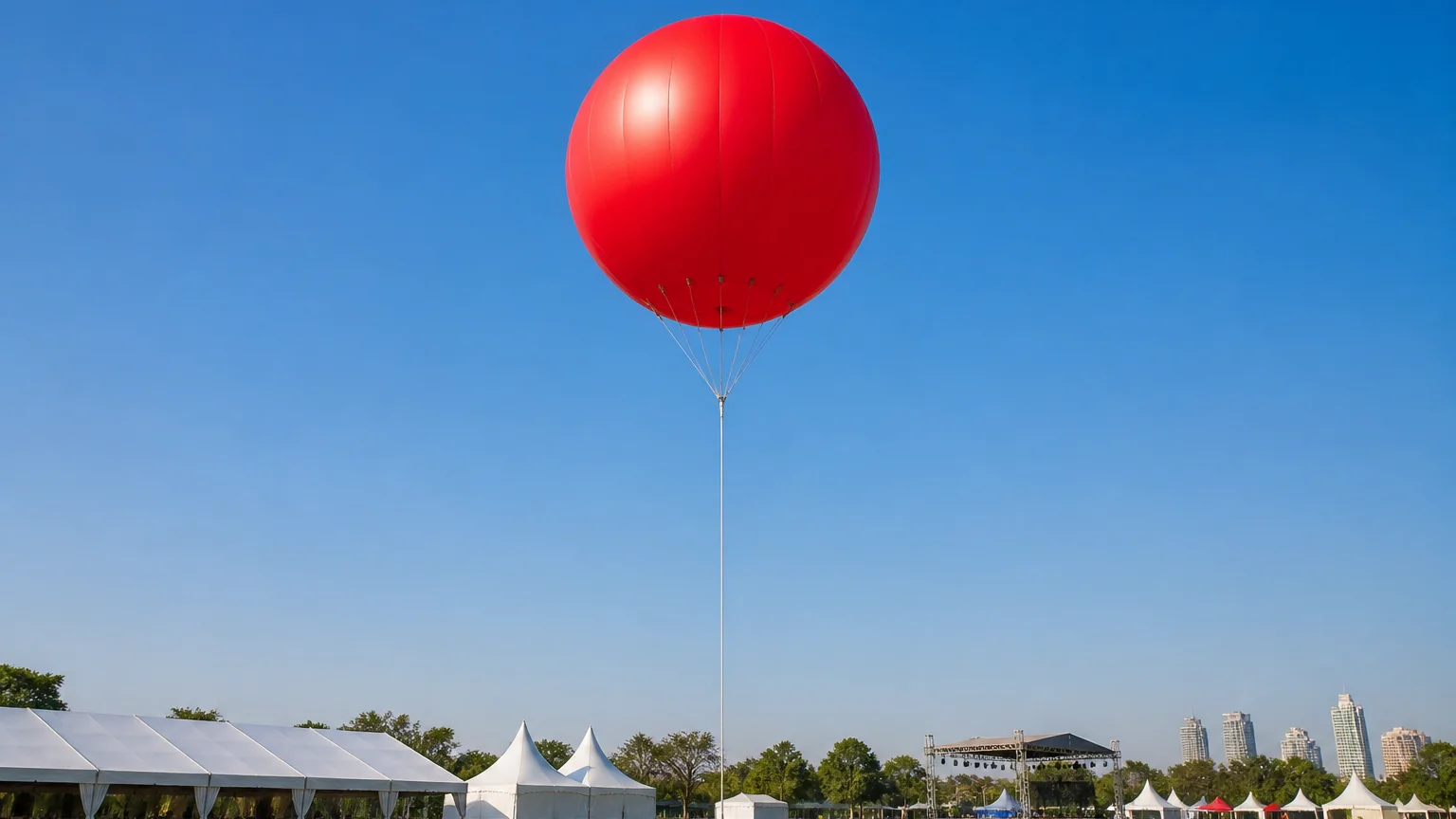
A helium sphere floating 40 feet above a grand opening looks effortless from the ground. What buyers don’t see is the tether rating, the wind forecast the supplier checked that morning, and whether anyone confirmed the site isn’t inside restricted airspace. Get any of those wrong and “effortless” turns into a liability conversation with your venue, your insurer, or in rare cases, aviation authorities. Here’s what event organisers actually need to check before committing to a helium balloon.
Tethering Is Not Optional Detail — It’s the Safety System
A helium balloon’s entire safety case rests on its tether: the line, the anchor point, and the ground-level rigging holding it down. This isn’t just about preventing the balloon from drifting off — an improperly tethered balloon in a wind gust becomes an uncontrolled object with real force behind it, and a failed anchor at height is what turns a marketing display into an incident report.
What to confirm with your supplier before the event:
- Tether line rating matched to balloon size and expected wind load, not a generic “rope” spec
- Multiple anchor points for larger spheres, not a single ground stake
- Swivel connections at the balloon end so the tether doesn’t twist and weaken under sustained wind
- Anchor weight or fixing method appropriate to your actual ground surface — asphalt, grass, and concrete all need different anchoring
If a supplier can’t answer these specifically, that’s a signal to ask more questions before booking, not after setup.
Wind Is the Variable That Cancels Events
Helium spheres have a real wind ceiling, and it’s lower than most first-time organisers expect. Beyond a certain sustained wind speed, the balloon’s surface area turns into sail area, and tether stress increases faster than most anchor systems are rated for. Reputable suppliers will have a documented maximum operating wind speed for each balloon size and will recommend deflation or grounding before conditions get there — not after something starts to strain.
Build this into your event planning, not just your supplier contract: know who has authority to call an early takedown if wind picks up mid-event, and don’t schedule an unattended helium display for a site with no one monitoring conditions.
Airspace and Local Regulations Matter More Than People Assume
Tethered balloons flown above certain heights can fall under aviation authority rules, particularly near airports, helipads, or other controlled airspace — the specific height threshold and permit requirements vary by country and region, so this is not something to assume is fine because “it’s just a balloon.” For any outdoor helium display, especially at height or near transport infrastructure, check with your local aviation authority or your venue’s compliance team before booking.
Local municipal rules can also apply — some cities restrict tethered aerial displays in event permits regardless of aviation rules. Build this check into your event timeline early; it’s a bad surprise to discover the week of the event.
Inspect the Balloon and Rigging Before Every Use
Tether ratings and wind ceilings only hold up if the physical equipment behind them is in good condition. A helium sphere that’s been in rotation across multiple events accumulates wear that isn’t always visible from the ground — and the pre-flight check is a supplier responsibility that organisers should confirm happened, not just assume.
Ask your supplier what their pre-event inspection covers. At minimum it should include:
- Seam and fabric integrity — checked for UV degradation, punctures, or patch repairs that might not hold at full inflation pressure
- Tether line condition — fraying, abrasion at the anchor point, or UV brittleness in older lines, all of which reduce the rated load below spec
- Valve and fill-port seals — a slow helium leak mid-event isn’t a safety issue on its own, but it changes the balloon’s lift and behavior over the course of the day
- Anchor hardware — stakes, weights, or ballast bags rated for the specific ground surface and balloon size, inspected for corrosion or wear if they’re reused equipment
A supplier who can walk you through their inspection routine specifically — not just say “we check everything” — is one who treats this as an operational discipline rather than a formality.
Insurance and Liability: Confirm This Before, Not After
Most venues will ask for proof of liability coverage before approving any aerial or tethered display, and it’s worth confirming this early rather than discovering a gap during the permit process. Ask your supplier directly whether their coverage extends to tethered helium displays specifically — general event insurance doesn’t always include aerial equipment by default, and some venues require a certificate naming them as an additional insured party.
This is also where the earlier checks connect: a documented tether rating, wind ceiling, and inspection routine aren’t just safety practice, they’re what an insurer or venue will ask to see if anything is ever questioned after the fact.
Ground Balloons: The Lower-Risk Alternative for Many Use Cases
Not every activation needs a floating sphere. Ground-mounted advertising balloons — fixed to a base rather than tethered aloft — deliver similar visibility for storefronts, mall entrances, and dealership lots without the wind-ceiling and airspace considerations that come with true helium flight. They’re also less weather-dependent, since a base-mounted balloon doesn’t carry the same failure mode as a tethered aerial one.
For a full comparison of when a helium sphere is worth the added logistics versus when a ground balloon delivers the same result more simply, our guide on ground balloons vs helium spheres breaks down the tradeoffs by activation type.
A Pre-Event Safety Checklist
| Check | Who confirms it |
|---|---|
| Tether and anchor rating for balloon size | Supplier, in writing |
| Max operating wind speed and takedown plan | Supplier + on-site event lead |
| Airspace / height restrictions for the site | Local aviation authority or venue compliance |
| Local permit requirements for aerial displays | Venue or municipal event office |
| On-site staff assigned to monitor conditions | Event organiser |
What This Means for Your Booking Conversation
When you’re getting quotes, ask suppliers directly about tether specs, wind ratings, and whether they’ve handled displays at your venue type before. A supplier who answers these in specifics — not just “it’s very safe” — is the one who’s actually thought through the failure modes. If your event site has any airspace sensitivity or you’re not sure, a ground-mounted giant advertising balloon is often the simpler, lower-risk call for the same visual impact.
The Bottom Line
Helium balloon displays are safe and widely used when tethering, wind planning, and airspace checks are treated as core requirements rather than paperwork to skip. Confirm the specifics with your supplier, build wind and permit checks into your event timeline early, and consider a ground-mounted balloon when the added logistics of true helium flight aren’t necessary for your activation.
Planning an activation and not sure which format fits your site? Request a quote and we’ll help you weigh helium versus ground-mounted options for your venue.