Hot Weather and High Temperatures: How Heat Affects Advertising Inflatables
Hot Weather and High Temperatures: How Heat Affects Advertising Inflatables
Advertising inflatables get specified in mild weather and deployed in whatever the site actually delivers. Cold-weather planning gets most of the attention — the Q4 winter campaign planning cycle, holiday windows, seasonal mascot rotations — but the other end of the thermometer changes things too, and in genuinely different ways rather than simply reversed ones. Heat doesn’t make an inflatable fragile the way cold does. It makes it softer, redistributes stress through the structure, and puts a different kind of load on the equipment running it. For buyers deploying into the Gulf, Southeast Asia or the southern United States, that’s worth understanding before the order goes in.
What Heat Actually Changes About the Material
Cold makes PVC stiff and less forgiving — the failure mode there is brittleness, cracking along folds that were packed tight. Heat does the opposite: PVC softens and becomes more pliable, which sounds harmless until you follow where that softness goes.
A softened panel stretches. On a pressurised structure that means the fabric is no longer resisting the internal load the way it does on a cool morning, and the stress redistributes toward the parts that can’t stretch with it — seams, welded joints, and the attachment points where the unit is tied down. The load path changes through the day: an inflation that looks correctly tensioned at 8am can read differently at 1pm. Checking tension during the hottest part of the day, rather than only at setup, is the practical takeaway.
There’s a longer-term dimension too: material repeatedly worked while soft fatigues differently from material worked while stiff, which makes sustained high-temperature deployment one input into service life. Our guide to how long advertising inflatables last covers the wider picture.
Air Pressure Through the Day: Two Different Structures
This is where advertising inflatables split into two groups, and getting the distinction right is the single most useful thing you can do when planning for hot weather.
Airtight structures — sealed inflatables that hold their own internal pressure with no continuous air supply — behave like any sealed gas volume. Ambient temperature rises, internal pressure rises with it. That isn’t a fault, it’s physics, and it means an airtight unit filled to a comfortable firmness in the cool of the morning can be noticeably harder by mid-afternoon. The operational answer is to inflate to a sensible margin rather than to maximum firmness, and to know where the relief valve is. The construction differences between the two families are set out in our comparison of cold-air vs fan-blown structures.
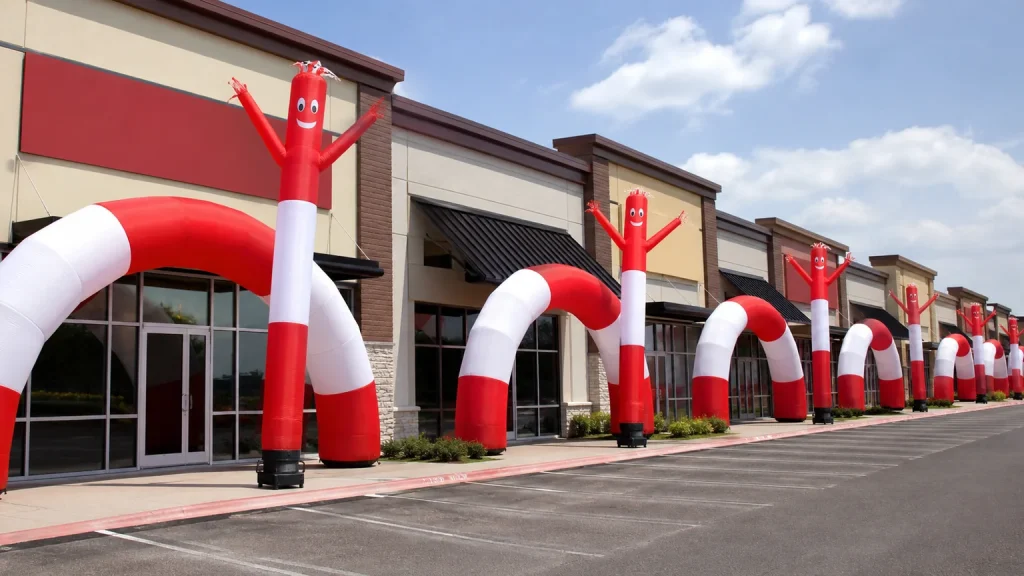
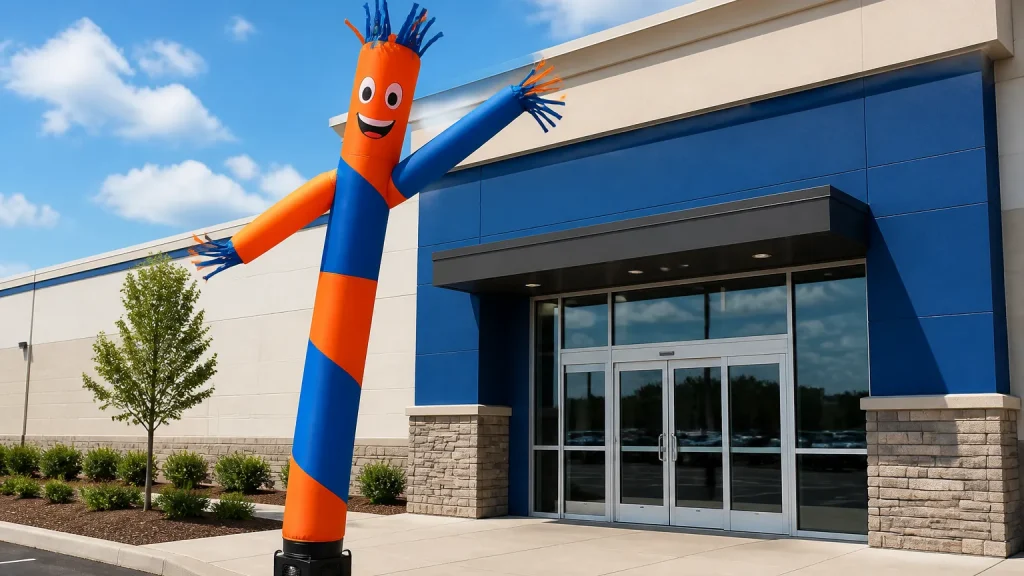
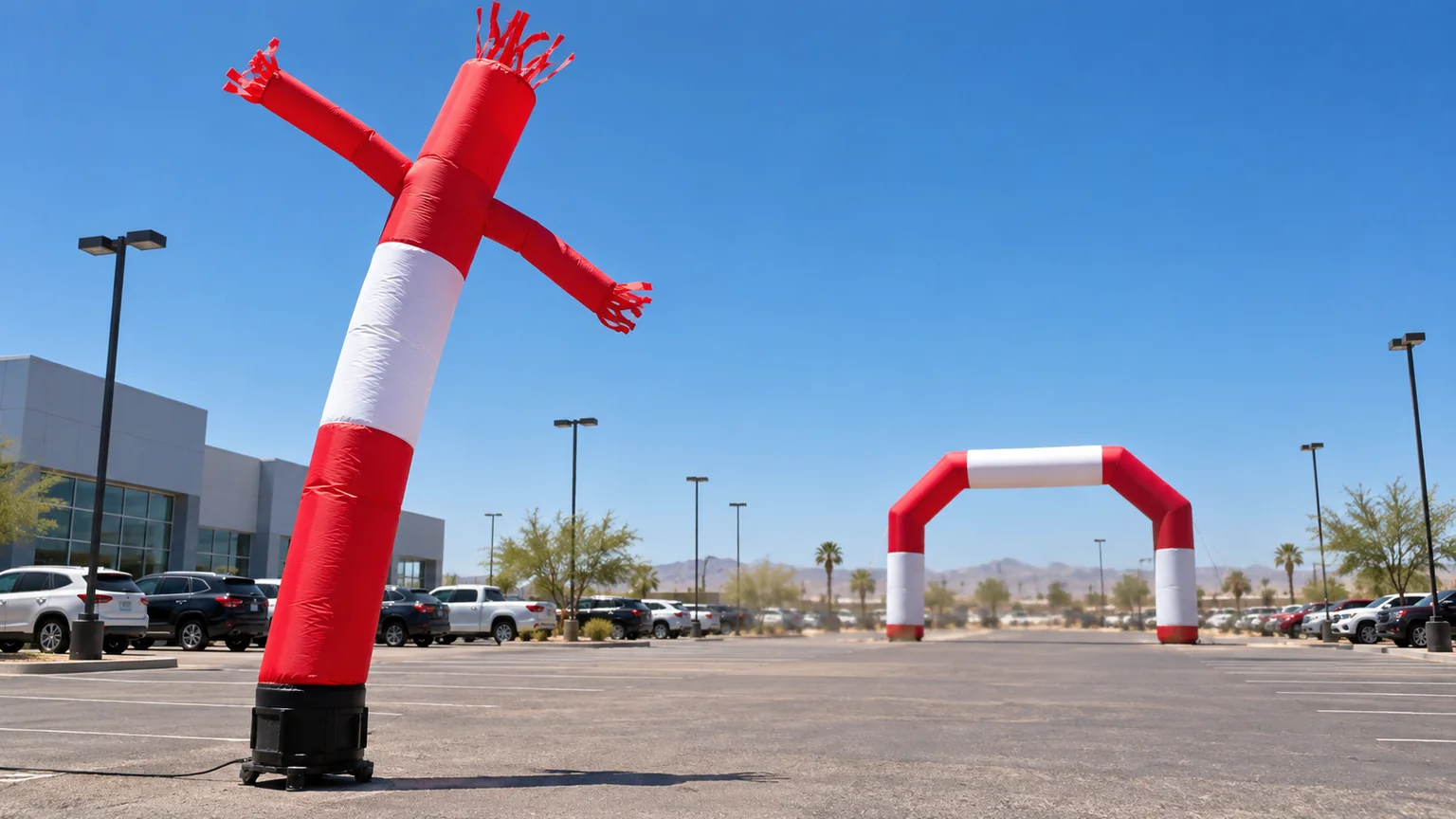
Fan-blown structures — air dancers, most advertising arches, anything running off a blower with a permanently open exhaust — sit at the other end of the spectrum. The blower pushes a constant supply and the structure vents continuously, so internal pressure is set by the blower rather than by the weather. Ambient heat has essentially no effect on the inflation itself. An air dancer in Dubai at 45°C inflates the same way it does in Manchester at 15°C. What changes is the equipment running it, which is the next problem.
Continuous Running Through the Hottest Hours
A fan-blown advertising inflatable runs its blower for as long as it’s on display — that’s the design, and it’s a large part of why inflatable air dancers are so simple to operate. In hot ambient conditions that continuous duty becomes the real thermal question, because the blower is generating its own heat on top of an already warm intake.
Two practical points follow. The first is placement: a blower tucked into a windless corner, pushed against a wall, or covered over has nowhere to shed heat. Moving it into open air costs nothing and is the most common-sense fix available. The second is spares. A blower under sustained heat fails slowly rather than suddenly, and a hot-climate deployment is exactly where a backup unit earns its place — when a blower stops, the structure doesn’t shrink politely, it comes down.
Colour Has a Thermal Dimension, Not Only a Conversion One
Print decisions get made for brand reasons and for legibility, both covered elsewhere. There is a third, quieter input: dark surfaces absorb more solar heat than light ones. A large area of deep brand colour in direct sun runs warmer to the touch than the same structure printed predominantly light, and that warmth feeds back into the softening effect described above.
This isn’t an argument against a dark brand palette — it’s a reason to know that a predominantly dark unit in full sun is working slightly harder than a predominantly light one, and to inspect tension and fabric condition accordingly.
Scheduling the Deployment Around the Day
The most controllable variable is when the unit goes up and when it comes down. Where the event allows it, deploying in the cooler morning and evening hours and avoiding the peak of the day reduces the thermal load on both the fabric and the blower, and it is considerably kinder to the crew.
Ground conditions matter too: asphalt and paved forecourts get genuinely hot underfoot in direct sun, which affects the people working the site more than the structure — worth thinking about if sandbags and stakes are being handled in the middle of the afternoon.
One more separation worth making in your planning: hot weather and wet weather are different problems, not the same one. Heat is a materials question and an equipment-load question. Rain is an electrical-safety question and a drying question. Wind is a third, independent one. A site risk plan that treats “bad weather” as a single category will end up missing something, because the mitigations don’t overlap.
Specs and Ordering
Advertising inflatables are built from 0.55mm PVC — ripstop nylon for air dancers — with flame-retardant fabric throughout, OEM full-colour print, and CE-certified blowers wherever a blower is used. Lead time runs 7-15 working days after artwork approval, with container loading planned around the unit sizes you specify.
If your deployment is going into a hot climate or a summer outdoor season, say so at enquiry stage. It affects two things worth discussing early: whether your structure is airtight or fan-blown, since that decides whether a daily pressure margin is part of your setup routine at all, and whether a spare blower belongs in the order. Browse the advertising balloons range for reference on sealed and grounded formats, or send us your site details and event dates and we’ll confirm what the construction allows.