Inflatable Event Tents for Weddings, Fairs and Trade Shows
A marquee with center poles works fine until you need to seat a head table under one of them or route a vendor aisle around the guy-lines. That’s the practical case for an inflatable event tent: air-filled arch or dome frames give you a clear-span structure with no interior poles, no permanent stakes through decorative flooring, and a printable outer skin that turns the tent itself into branded real estate. Setup runs in hours with a single blower crew, not a day with a rigging team.
We build these on the same production line as our inflatable tents range, so the fabric, seam, and blower specs below apply whether the end use is a wedding reception, a weekend fair, or a touring trade show booth.
Why Event Organisers Are Switching to Inflatable Tents
Three things drive the shift from frame tents to inflatable structures for one-off and recurring events:
Setup speed. A single continuous-duty blower inflates the arch or dome frame in 15–30 minutes depending on size, and two to four people can have the whole structure standing and secured well within a morning call time. There’s no truss to bolt, no pole to walk up, and no crane needed for anything under our largest spans.
Clear interior space. Because the load-bearing structure is the inflated skin itself, there’s no center pole or cross-bracing eating into the floor plan. That matters for round tables at a reception, aisle width between festival vendor stalls, or sightlines to a trade show demo station.
A branded surface, not just shelter. The outer skin is full-color OEM print — logo, event dates, sponsor panels, whatever the brief calls for — rather than a plain canvas roof with a banner clipped to the outside.
For a side-by-side on when a rigid frame structure makes more sense instead, see our Inflatable vs Metal Frame Tents guide.
Weddings: Clear-Span Elegance Without a Center Pole
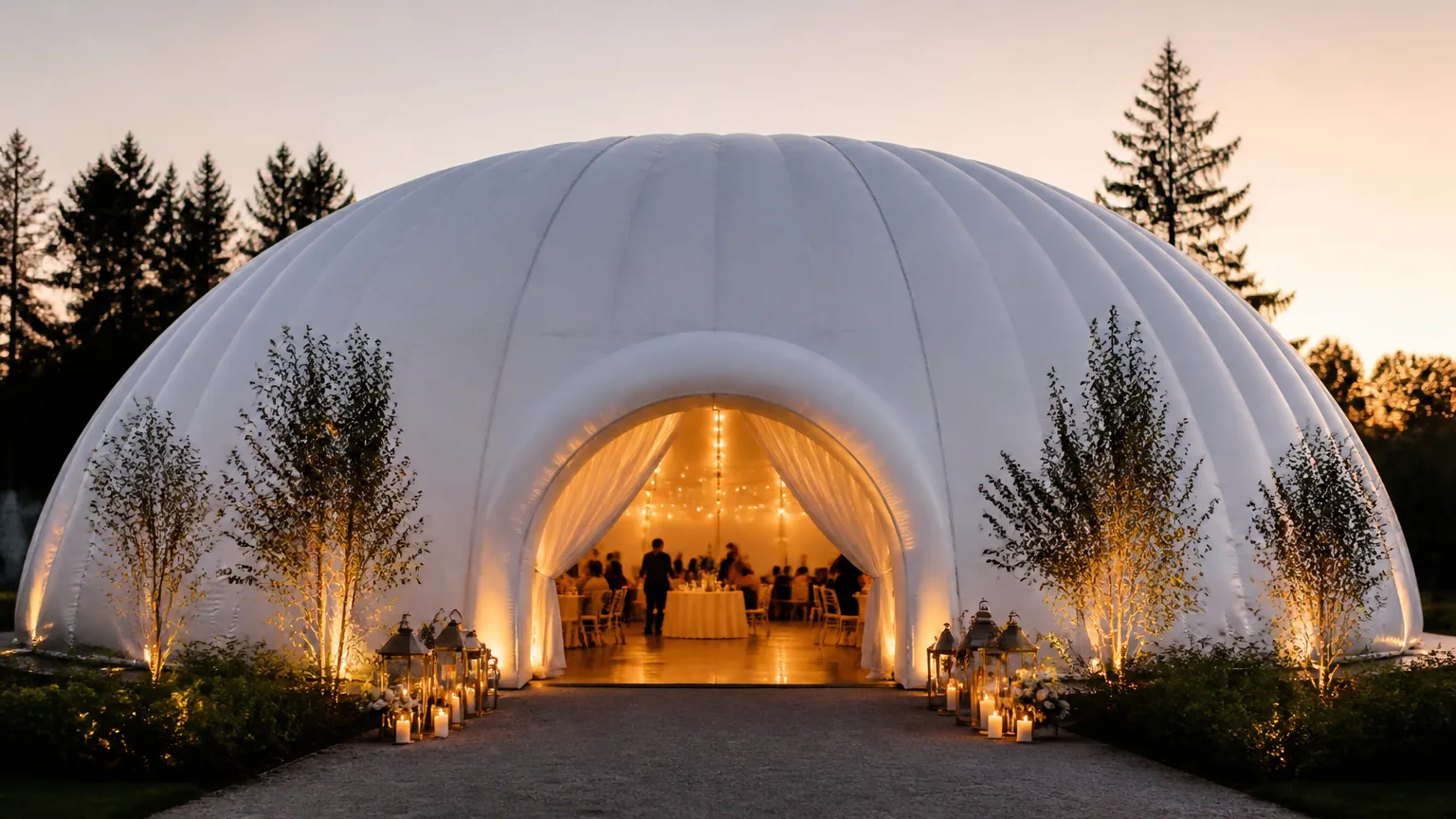
Wedding buyers — venues, event planners, and rental fleets serving them — ask for two things almost every time: a clean white or ivory dome or arch profile, and zero interior poles interrupting the seating plan. Both are standard on our event-tent builds. The 0.55mm PVC skin takes dye-sublimation or digital print for subtle patterning (drape-look panels, monogram accents) without the cost or lead time of custom fabric.
Interior lighting runs off the same low-voltage circuits used for LED-lit arches — string lighting, uplighting, or panel-integrated LED strip along the seams — so the structure reads as a finished room rather than a tent with lights hung inside it. Span options run from intimate 6m domes for a ceremony canopy up to multi-bay structures that seat a full reception under one continuous roofline.
Fairs and Festivals: Modular Layouts That Reconfigure Fast
Fair and festival organisers rarely need one tent — they need a layout. Inflatable tent modules connect side-by-side or in a row to form vendor aisles, and because each unit inflates and deflates independently, a partial layout change (adding a row, pulling a unit for repair) doesn’t mean striking the whole site. Deflated units pack down small enough that a multi-day festival can store the unused inventory on-site rather than trucking it back and forth between event days.
Anchoring follows the same wind-rating principles we cover for air dancer anchoring and wind safety — ground stakes on grass or dirt lots, sandbag or water-weight bases on paved festival grounds where stakes aren’t an option. We size the anchoring plan to the surface you’ll actually be setting up on, not a generic default.
Trade Shows: A Branded Entrance That Tours Well
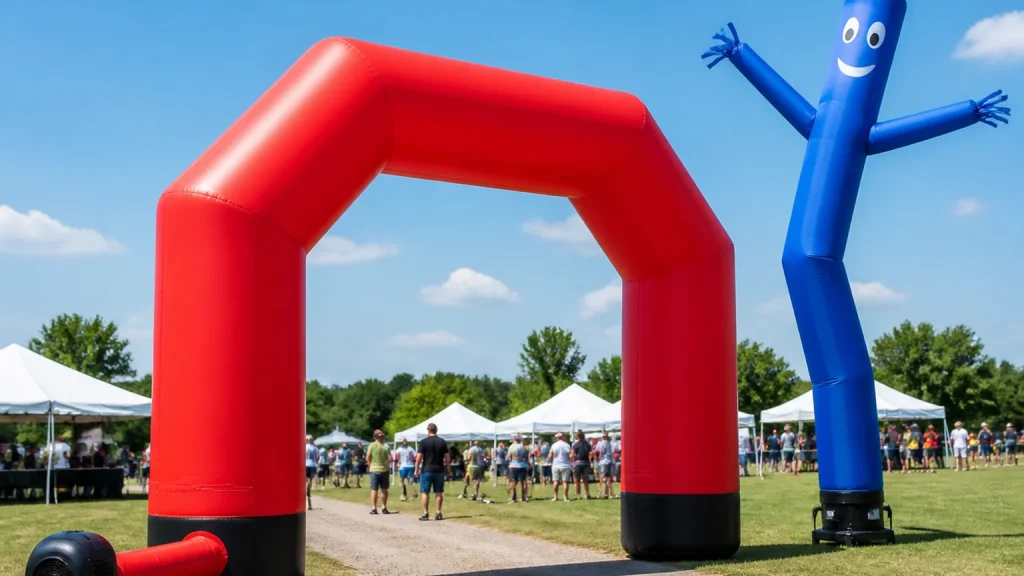
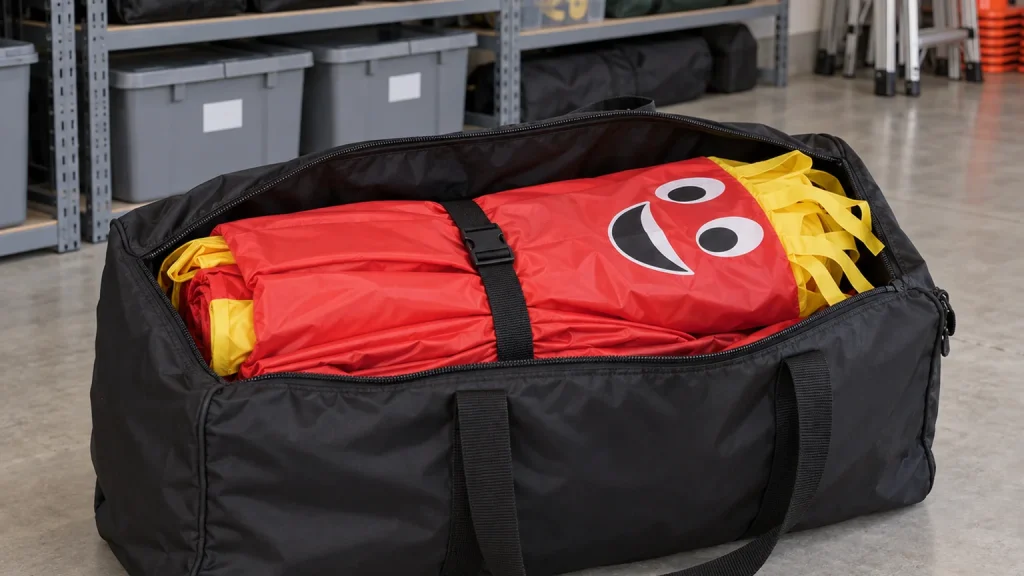
For exhibitors running a multi-city circuit, the inflatable tent works less like a booth and more like a branded entrance structure — an arch-form tent framing the entry to a larger footprint, printed with the exhibitor’s logo and booth number on every visible panel. It breaks down to a duffel-sized bag plus a blower case, which matters when the alternative is crating a rigid frame system between show cities.
Because setup and teardown are both fast, the same structure realistically supports a two- or three-city monthly touring schedule without extending your production run to a second unit — though for a heavy touring cadence we do recommend budgeting a backup blower, the same guidance we give for any continuous-duty inflatable running multiple events per month.
Specs, Lead Times and What to Send Us First
Standard build spec across weddings, fairs and trade show use:
- Material: 0.55mm PVC tarpaulin, flame-retardant, UV-stable outer skin
- Frame: continuous-duty CE-certified blower, sewn-in internal baffles for shape retention
- Print: full-color OEM digital or dye-sublimation print, logos and sponsor panels to artwork spec
- Anchoring: ground stakes, sandbags, or water weights depending on surface
- Lead time: 7–15 working days production after artwork approval, standard container loading for sea freight on larger orders
Send us the span you need, the surface you’re anchoring to, and your logo files, and we’ll turn around a spec sheet before quoting. For sizing guidance across the wider range, start with our Inflatable Tents Buyer’s Guide, or browse metal frame tents if your event calls for a rigid structure instead. MOQ and sampling terms are the same across our tent and advertising-inflatable lines — see our MOQ and Sampling guide for what to expect before you order.