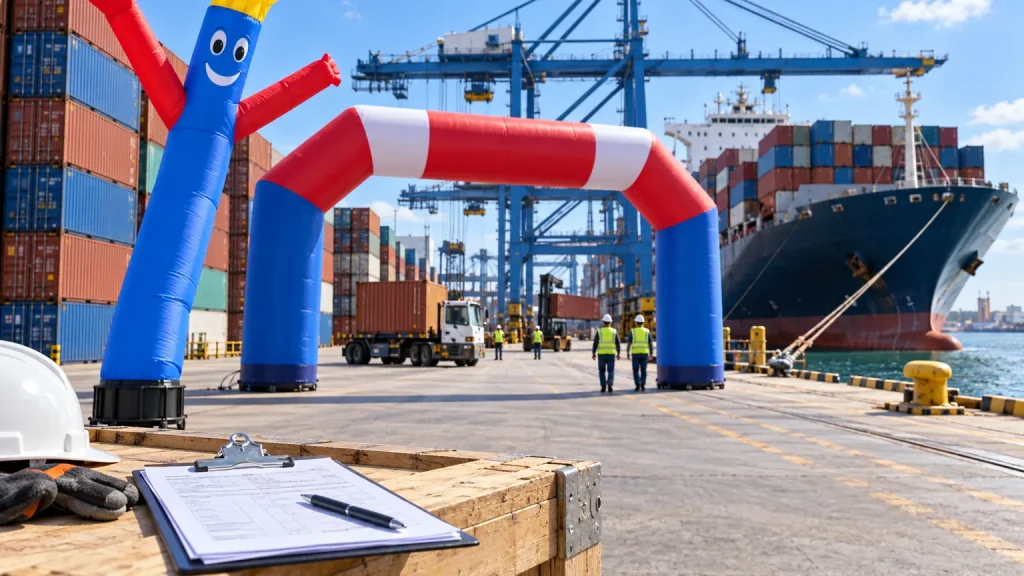
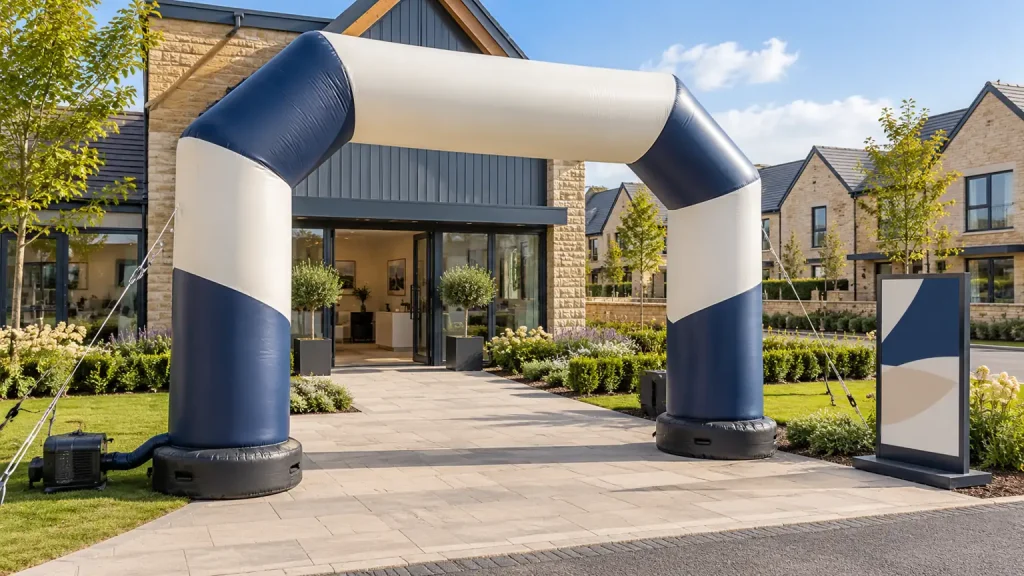
Anchoring and Wind Safety for Air Dancers: Ground Stakes, Sandbags and Wind Ratings
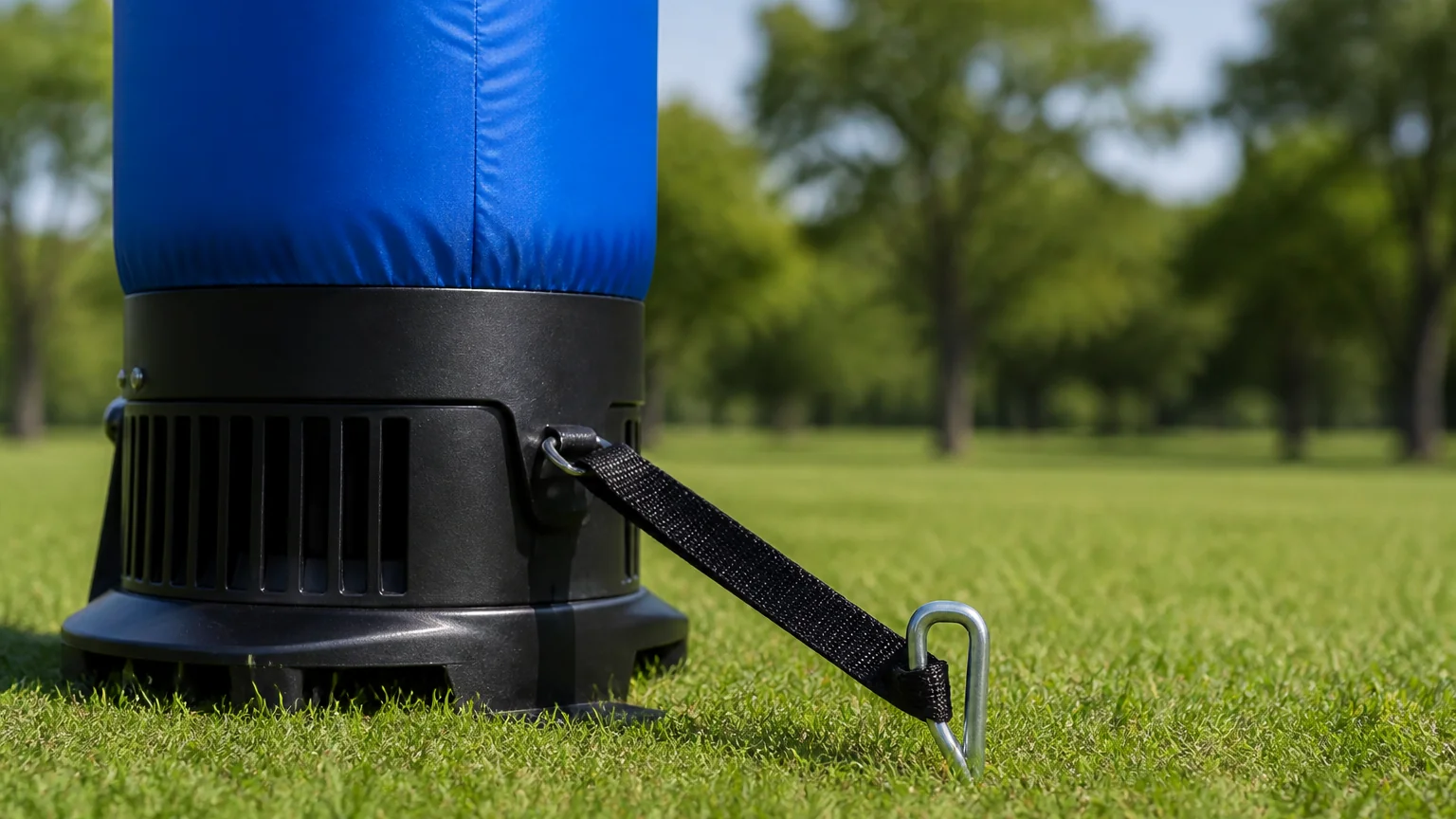
An air dancer’s entire appeal is that it moves — the whipping, twisting motion that catches attention is the product doing its job. That same motion is also why anchoring matters more for this product than for almost any other advertising inflatable: a poorly secured unit in a wind gust doesn’t just look bad, it can tip, drag its base, or in extreme cases become a real hazard near traffic, pedestrians, or your own storefront glass. Here’s how anchoring actually works and what determines whether a given site and wind condition is safe to deploy in.
How Air Dancers Are Anchored
Most air dancers anchor through the base of the unit, using one of a few common methods depending on ground surface:
- Ground stakes — driven into soil, grass, or landscaping beds, the most common method for grass or dirt surfaces and generally the most secure option when the ground allows it
- Sandbags or water-filled weights — used on surfaces where staking isn’t possible, like asphalt, concrete, or indoor flooring, relying on weight rather than ground penetration to hold the base
- Bolt-down or permanent mounting plates — for units deployed long-term at a fixed dealership or storefront location, offering the most secure hold but requiring a permanent modification to the surface
The base attachment point is also where the most mechanical stress concentrates during use — this is the part of the unit worth inspecting most closely before each deployment, since it’s carrying both the weight of anchoring and the repeated flex from the dancing motion.
Matching Anchoring Method to Your Actual Surface
Staking only works where the ground allows real penetration — grass, dirt, and soft landscaping. Asphalt, concrete, pavers, and indoor flooring all require weight-based anchoring instead, since there’s nothing to stake into. This sounds obvious, but it’s a common planning gap: a supplier’s standard package often includes stakes by default, and a dealership or mall deploying on a paved lot needs to specifically request or supply sandbags rather than assuming the default anchoring kit will work on their surface.
Confirm your actual deployment surface with your supplier before the unit ships, and if you’re moving a unit between different site types over time — grass for one event, asphalt for the next — keep both anchoring options on hand rather than assuming one method covers every deployment.
Wind Is the Variable That Actually Determines Safety
Every air dancer has a practical wind ceiling beyond which the unit’s surface area and motion generate more force than a given anchoring setup can reliably hold, and this ceiling is lower than most first-time buyers assume — the constant flex and directional change of the dancing motion puts more variable stress on an anchor point than a static structure like an arch experiences in the same wind. Ask your supplier for guidance on wind conditions appropriate to your specific unit size and anchoring method, and treat gusty or unpredictable conditions — not just sustained wind speed — as a reason to reconsider deployment, since gusts create the sudden load spikes that most often cause an anchor to fail.
Our guide to helium balloon safety covers a similar wind-ceiling consideration for a different product type — the underlying principle (know your equipment’s limits, and have a plan to act on them) applies across most tethered or anchored inflatables, not just air dancers specifically.
What to Check Before Every Deployment
| Check | Why it matters |
|---|---|
| Anchoring method matches actual ground surface | Stakes don’t work on pavement; sandbags don’t hold as well in soft ground |
| Base attachment point inspected for wear | Highest-stress point on the unit from repeated motion |
| Current and forecast wind conditions checked | Gusts, not just sustained speed, cause most anchor failures |
| Clear space around the unit’s full range of motion | Prevents contact with vehicles, pedestrians, or structures during normal operation |
| Someone assigned to monitor conditions during unattended hours | Enables an early takedown if wind picks up beyond safe limits |
Site Placement Matters as Much as Anchoring
Beyond the anchor itself, where you place the unit affects how much wind exposure it actually sees. A air dancer positioned in an open lot with wind funneling between buildings experiences different conditions than the same unit tucked closer to a storefront wall with some natural wind-break. If your site has a history of gusty conditions — near open parking areas, elevated locations, or wind corridors between buildings — factor that into both anchoring method and placement, not just the wind forecast for the day. If you’re deploying indoors, for a trade show booth for instance, wind isn’t a factor, but confirming anchoring options for indoor flooring is still worth doing ahead of time — our guide to air dancers for trade shows covers the indoor-specific side of deployment planning.
The Bottom Line
Anchoring method has to match your actual ground surface, not a generic default kit. Wind ceilings are lower than most buyers expect given how much the dancing motion amplifies load on the anchor point, and gusty conditions matter more than average wind speed. Confirm anchoring method and wind guidance with your supplier before the unit ships, and build a plan for who monitors conditions and calls an early takedown if needed.
Not sure which anchoring setup fits your site? Request a quote and tell us your surface type and typical site conditions.