Walk any trade show floor or race expo and you’ll still see plenty of pull-up banners and truss-mounted signage. But increasingly, the entrance and headline positions go to inflatable arches instead. That’s not a fashion trend — it’s a shift driven by four practical factors: visibility, setup speed, transport cost, and durability under real event conditions. Here’s the actual comparison, not the sales pitch version.
Visibility: Height and Motion Win Attention
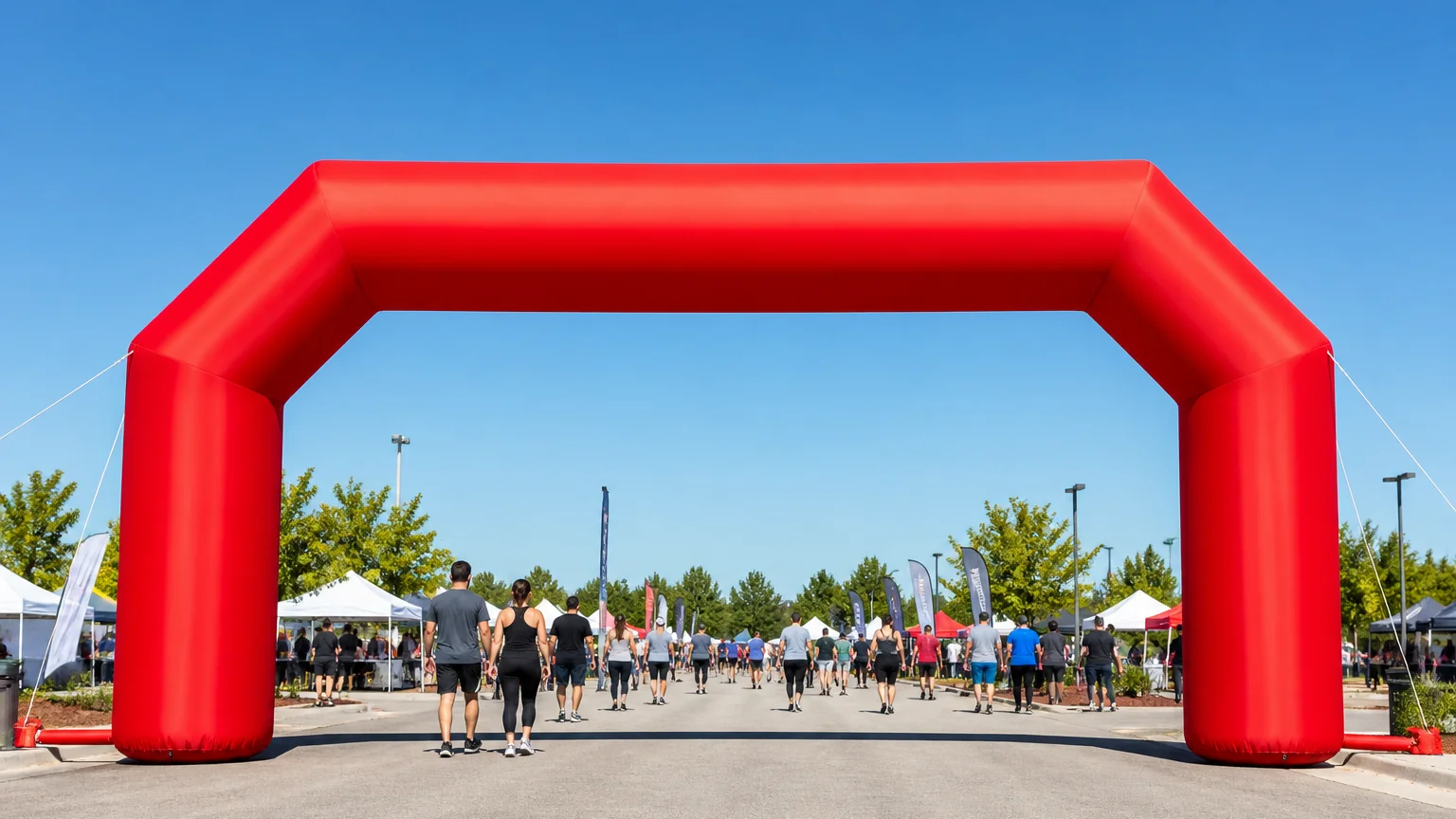
A pull-up banner or truss banner tops out around 8-10 feet and competes with booth clutter, crowds, and other signage at eye level. An inflatable arch spans overhead — typically 10 to 20+ feet tall depending on the span — and creates a physical threshold people walk through, not just past. That structural difference matters for attention: an arch is visible from further away, works as a wayfinding marker across an open venue, and photographs better because it frames the space rather than sitting flat against it.
Banners still win in one scenario: tight indoor spaces with low ceilings, where an arch’s height becomes a liability rather than an asset. For anything outdoor or high-ceiling — festival entrances, race start lines, dealership lots — the height advantage is decisive.
Setup Speed: Minutes vs. an Hour of Truss Work
A standard entrance arch inflates in 2-5 minutes once the blower is running — one or two people, no tools. A comparable truss-and-banner structure of similar height requires assembling aluminum sections, leveling, securing banner material with bungees or zip ties, and usually takes 45 minutes to an hour with a small crew, plus a second pass to break it down. For events with tight load-in windows — a one-day festival, a weekend race — that time difference is the difference between the crew finishing setup with margin or scrambling before doors open.
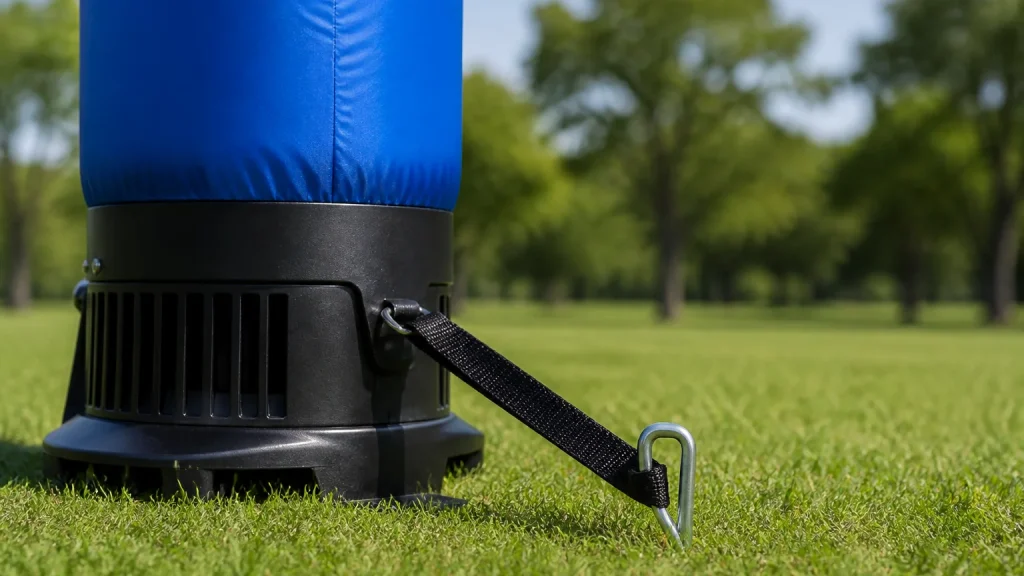
The tradeoff: the arch needs continuous power for its blower to stay inflated, while a truss banner doesn’t. If your site has no power access, factor that into the comparison — see our breakdown of how continuous-blower inflatables handle power requirements.
Transport and Storage: Duffel Bag vs. Truss Cases
An inflatable arch deflates and folds into a duffel bag roughly the size of a large suitcase, even at 20-foot spans — because the structure is fabric and air, not rigid material. A truss system of comparable size ships in multiple hard cases, weighs significantly more, and takes up real cargo space, which matters for teams running multi-city event circuits or shipping internationally.
For international buyers, this also affects freight cost per unit — inflatable arches pack far more efficiently into a shared container than rigid truss structures. Our guide on shipping inflatables worldwide covers container loading specifics if you’re sourcing for a multi-market rollout.
Durability: Different Failure Modes
Banners fail predictably: fabric fades under UV exposure, grommets tear in wind, and vinyl cracks in cold. A well-made inflatable arch — 0.55mm PVC with OEM full-color printing and a fire-retardant rating — holds up to repeated outdoor use across a season, but it has its own failure mode: a punctured seam or a failed blower means the whole structure goes down, not just one panel.
That’s a real tradeoff, not a reason to dismiss either format. A banner degrades gradually and partially; an arch’s failure is binary but rare with commercial-grade material and a backup blower on hand for critical placements — the same advice we give for any branded entrance arch used for repeat events.
Cost: Arches Win Over Multiple Uses
Upfront, a custom-printed inflatable arch typically costs more than a single banner or truss setup. But banners need reprinting each time branding or event details change, and truss rental or repeated setup labor adds up across a season. An arch with swappable or durable printed panels amortizes that cost across dozens of events, and the labor savings on setup/teardown compound with every use.
For one-off events with a fixed, unchanging message, a banner can still be the cheaper call. For anything recurring — a dealership’s weekend promotion, a race series, a seasonal retail campaign — the arch usually wins on total cost per use, not just visual impact.
When to Actually Choose Each
| Scenario | Better fit |
|---|---|
| Low-ceiling indoor booth | Banner / truss |
| Outdoor entrance, festival, or race start line | Inflatable arch |
| No power access on site | Banner / truss |
| Recurring events, same branding | Inflatable arch |
| One-off event, fixed message | Banner (lower upfront cost) |
| International multi-site rollout | Inflatable arch (freight efficiency) |
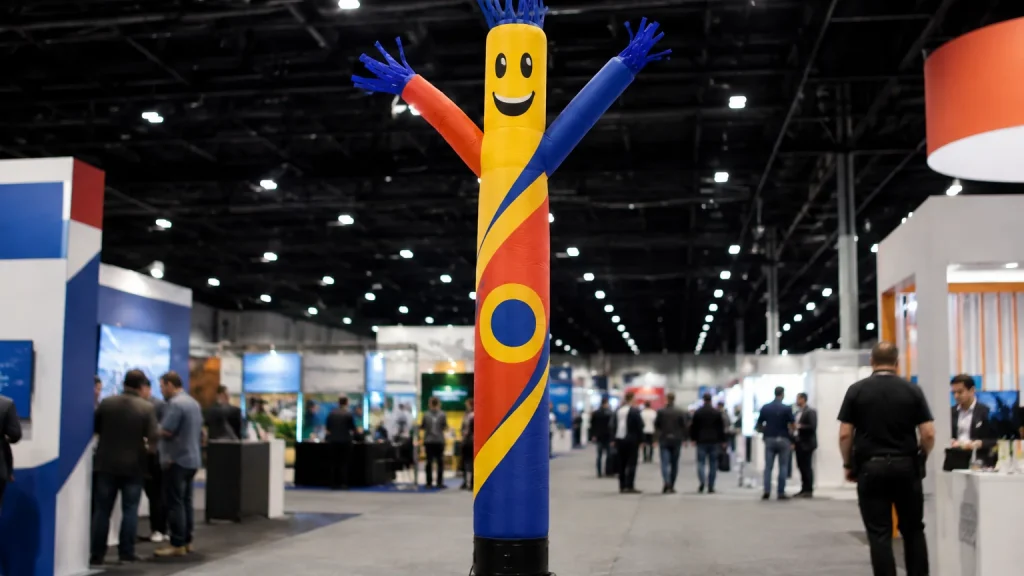
If you’re weighing an arch against other inflatable formats too, our guide to choosing the right inflatable for your campaign compares arches against air dancers and balloons by use case.
The Bottom Line
Brands aren’t switching to inflatable arches because they look impressive — they’re switching because the format wins on setup time, transport cost, and cost-per-use for anything recurring or outdoor. Banners still have a place for tight indoor spaces or one-off, power-free setups. Match the format to your site constraints and event frequency, not just the visual.
Planning a branded entrance for an upcoming event? Request a quote and we’ll help you spec the right span, print method, and power setup.