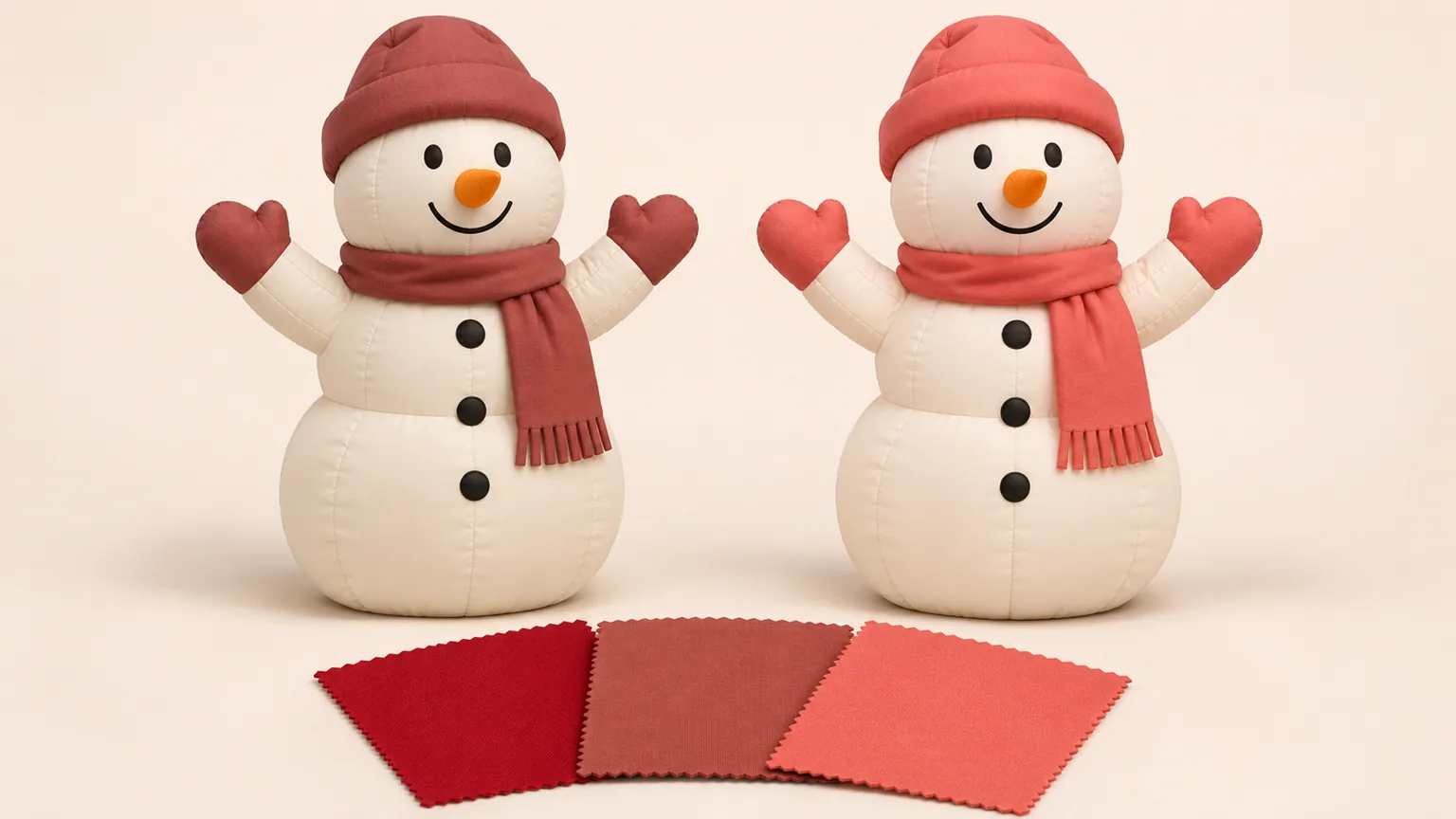
A replacement holiday inflatable can follow the original colour reference and still look different beside the figures already in use. Choosing an existing figure as the reference can create the opposite problem: the new piece may be judged against a colour that differs from the brand’s approved standard. “Match the set” does not resolve that conflict.
For this replacement holiday inflatable colour-matching decision, identify which reference governs before comparing a proposed new piece. The original approved colour, the current appearance of an existing unit and a photograph of that unit are different references. They may support different decisions.
The cover is a concept illustration of fictional holiday characters and colour samples. Its deliberately different reds illustrate a reference-selection problem; they are not measured colours, evidence of fading or a record of an actual replacement project.
Separate the original reference from the surviving figures
Consider a hypothetical set of three holiday figures sharing a red hat-and-scarf treatment. Two figures remain in service, identified as A and B. A new figure, C, is being commissioned to replace the third. Assume the replacement decision has already been made; this comparison concerns C’s colour target.
The original approved reference is R. The project team now sees a difference between R and the reds on A and B. It also sees a difference between A and B. These observations create three potential references rather than one obvious “set colour.”
First establish what those observations actually describe. If the apparent difference comes from separate photographs, compare the physical references before treating it as a confirmed material difference. Lighting, camera processing and screens can affect the comparison. The cause of a confirmed difference is a separate question; this example does not assume that exposure, storage or production variation caused it.
Keep R identified by its actual approved reference and revision. Describe A and B as particular physical units, with the relevant colour area identified. A red hat and a red scarf on one figure should not silently become interchangeable references if they themselves appear different.
The multi-location branding guide covers maintaining a common specification for repeat orders. Here, that original specification is available. The unresolved issue is whether it should govern C when the surviving pieces no longer present the same appearance.
Compare what C would be judged against
Under the first route, R remains the governing reference. The supplier develops C against that reference using the agreed material and checking method. A and B provide context for how the group may look together, but their appearance does not silently redefine the target.
This route preserves the original colour requirement. It does not establish that C will blend with either surviving figure. If C is acceptable against R while visibly different beside A, those two findings can coexist. A difference within the group does not, by itself, show that the supplier departed from the chosen reference.
Under the second route, the responsible brand team explicitly chooses a defined area of A as the physical comparison target. The supplier then assesses what representation is feasible in the proposed material. R remains visible in the discussion so everyone understands that the project is considering a departure from the original reference.
This route makes A the intended comparison partner for C. It does not establish an exact match, and it does not make A a new brand standard for every future order. The decision can apply only to this replacement and this selected reference, subject to the brand’s direction.
Keep the implications separate when describing the two proposals. “C is closer to A” answers a different question from “C follows R.” Neither statement establishes the other. A sample that appears more consistent with the surviving group could still conflict with the colour the brand requires.
| Target for C | What it prioritises | What remains unresolved |
|---|---|---|
| Original reference R | The original approved colour requirement | How C appears beside A and B |
| Selected area of A | The agreed current physical reference | Departure from R and difference beside B |
If the brand requires R without alteration, the second route may not be available. Resolve that constraint before asking the supplier to pursue an alternative appearance. Do not turn a visual preference for a quieter-looking group into permission to change the brand colour.
Do not let A stand in for a set that already differs
Suppose physical comparison confirms that A and B have different-looking reds. Choosing A for C cannot also establish a match to B. Even if a proposed sample is acceptable beside A, the original A-to-B difference remains in the group.
That matters when someone writes “match the other two” in the replacement brief. The instruction has no single target if the two references disagree. Ask which relationship the project needs to preserve and have the responsible team make that choice explicitly.
Do not average A and B by eye and describe the result as matching both. An intermediate proposal is a third target. It might be considered deliberately, but it would require its own defined reference and brand decision; it cannot be presented as a neutral way of avoiding the conflict.
Also avoid choosing the most convenient area without naming it. A less exposed patch, a fold or a different accessory may show another appearance. If that area becomes the proposed reference, explain why it was selected and whether it represents what the project team intends C to resemble. Do not infer an original colour merely because an area was less visible during use.
The six-figure Christmas set case describes a newly produced group with a shared palette and a combined factory review. It illustrates why relationships between figures matter. It does not document replacing one used figure or demonstrate that a new piece can precisely reproduce the appearance of an older set.
For A, B and C, a group comparison therefore needs a more precise conclusion than “the colours match.” State which reference governed C, which pairwise comparisons were acceptable under the agreed method and which differences remain. The project may still have an unresolved group appearance even after the selected target has been addressed.
Compare proposed samples without changing the target halfway through
Physical samples can help the team assess the chosen route, provided the comparison has a named target. Our sampling guide explains the broader options. In this example, their purpose is specifically to distinguish a proposal against R from a proposal against the selected area of A.
If both routes are still being considered, keep the samples identified separately. Compare the R-directed proposal with R, then consider its appearance alongside A and B. Compare the A-directed proposal with the specified area of A, then consider its relationship to R and B. Use a comparison method and viewing conditions agreed with the supplier and responsible brand team.
Do not move the target because one sample looks attractive in isolation. Accepting an A-directed proposal while recording R as the approved reference would leave the supplier and receiving team working to different expectations. Likewise, a comment that a sample “looks too new” does not explain whether the target has changed or whether the proposal departs from its existing target.
A useful decision for the hypothetical order could read: R continues to govern C; the difference beside A and B has been shown to the brand team and remains an acknowledged group difference. Another could identify the exact area of A as the approved comparison reference for this replacement, with its departure from R expressly accepted. Neither wording promises a manufacturing result; it makes the intended comparison clear.
If the requirements remain “follow R exactly” and “look identical to both differing survivors,” keep the conflict open. A general approval cannot make incompatible references agree. To discuss a replacement seasonal display, provide the original approved reference, identify the surviving pieces and explain which relationship the new figure is expected to satisfy. That lets the colour discussion start with a defined target.