OEM Factory vs Local Rental Company: Where Advertising Inflatables Come From
OEM Factory vs Local Rental Company: Where Advertising Inflatables Actually Come From
Two quotes for what looks like the same air dancer can come from completely different places in the supply chain, and the price difference often makes no sense until you understand what you’re actually comparing. An OEM factory and a local rental company aren’t competing versions of the same thing — they’re two different business models, and knowing which one you’re actually talking to changes what questions matter.
Two Different Businesses, Not Two Prices for the Same Product
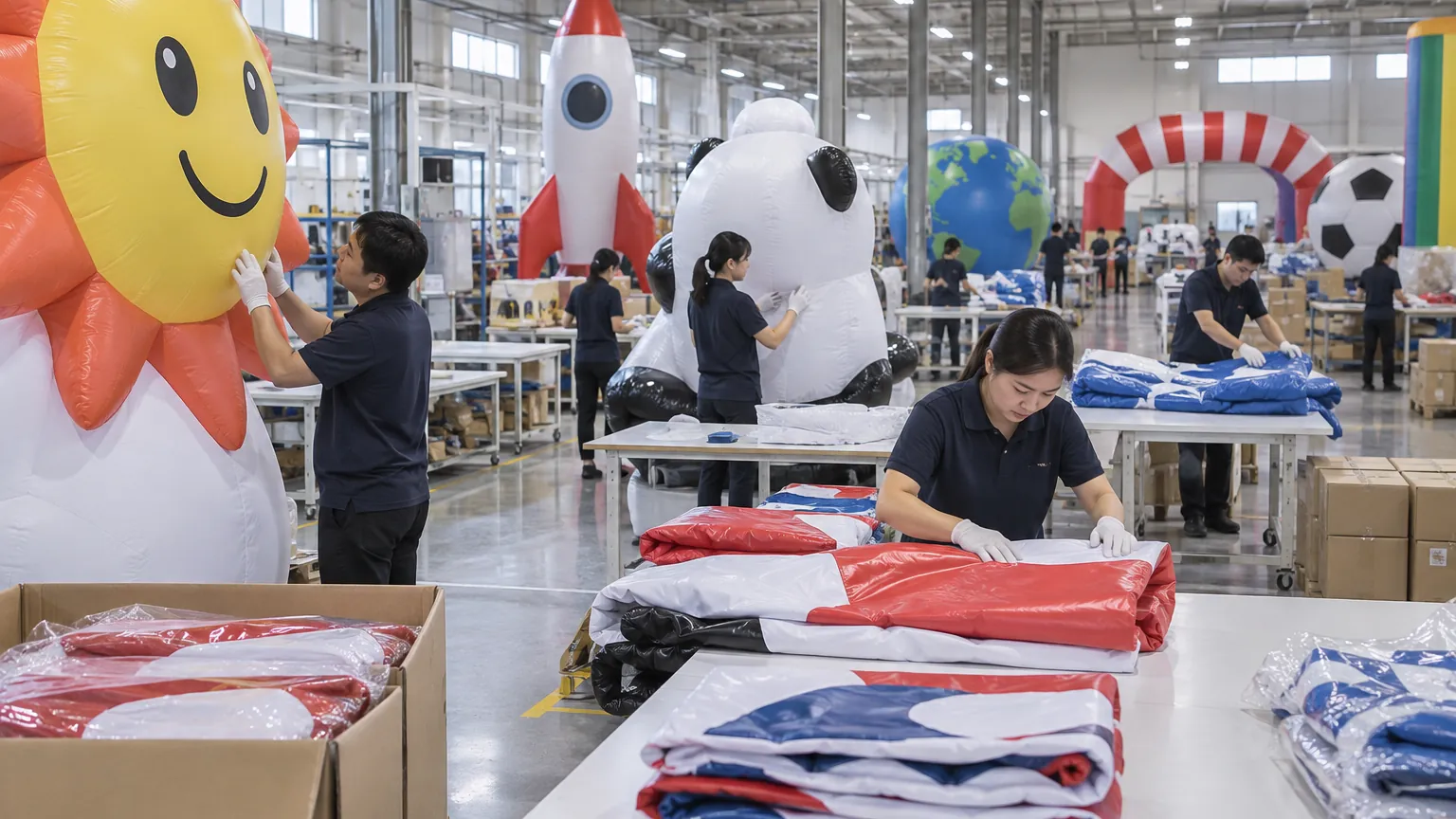
A rental company typically holds a fixed inventory of stock-color, stock-size inflatables and charges per use — you’re renting access to equipment they already own and maintain. An OEM factory builds to your order — your colors, your branding, your sizing — and the unit becomes yours after production, not returned after the event. Our factory briefing guide covers what that ordering relationship actually looks like once you’ve decided this is the right path.
Neither model is inherently better — they solve different problems, and the mismatch happens when a buyer needs custom branding but calls a rental company, or needs a single one-off use but goes through a full custom production order.
When Renting Is the Right Call
A rental company makes sense for a single short-term event where brand customization isn’t the point — a generic celebratory shape for a party, a stock color unit for a one-day promotion, or any use case where “advertising inflatable” is more prop than brand asset. You pay for access, not ownership, and someone else handles storage, maintenance, and inventory between uses. For a true one-off, this avoids paying for an asset you’ll only use once.
When Factory-Direct Ownership Is the Right Call
Once branding matters — your logo, your colors, a shape built to represent your specific campaign — a rental company’s stock inventory usually can’t deliver it, and even where “custom rental” options exist, you’re paying custom-production pricing without ending up owning the result. If you’re running the same campaign more than a handful of times, or your brand identity needs to be exact rather than approximate, factory-direct ownership is the path that actually gets you what you’re picturing.
The Pricing Trap: Per-Use Cost vs. Total Cost of Ownership
A rental quote for a single event will almost always look cheaper than a factory-direct order — that’s the nature of paying for one use versus paying for a durable asset. The comparison that actually matters is total cost across how many times you’ll realistically use the piece. A factory-direct unit that gets deployed across a season or multiple years spreads its upfront cost over many uses, while a rental fee repeats in full every single time. Run the math against your actual expected usage frequency, not just the first quote, before assuming rental is the cheaper option — see our lifespan guide for how many uses a well-made unit realistically delivers.
Supply Chain Transparency: Knowing What You’re Actually Getting
Ordering factory-direct means you can confirm the exact fabric grade, blower specification, and print method going into your unit — it’s your order, built to your spec sheet. Renting means trusting the rental company’s existing equipment and maintenance standards, which you typically can’t inspect or specify in advance. For a buyer who cares about fabric grade, print durability, or specific certifications, factory-direct is the only path that gives you that level of control — see our cost breakdown guide for what those spec variables actually are.
A Third Option: Sample Before Committing
If you’re unsure whether factory-direct ownership makes sense for your use case, ordering a smaller initial run or requesting a sample before committing to a full production batch — covered in our MOQ and sampling guide — lets you validate the fit before scaling to a larger order or a multi-unit campaign.
A Common Middle Case: Rental Companies Sourcing From the Same Factories
It’s worth knowing that many rental companies don’t manufacture their own inventory — they order stock units from the same OEM factories buyers can approach directly, then rent that inventory out at a markup that covers their storage, maintenance, and logistics overhead. This isn’t a criticism of the rental model; it’s a legitimate service layer. But it explains why a factory-direct quote for a comparable stock-spec unit can sometimes undercut a rental fee even for a single use, once you account for what that markup is actually paying for. If you’re unsure whether a rental quote reflects genuine equipment-access value or just a markup on the same factory pricing you could access directly, it’s a reasonable question to ask the rental company outright.
The Bottom Line
Rental and factory-direct aren’t competing quotes for the same thing — they’re different answers to different needs. Rent for a genuine one-off with no branding requirement; go factory-direct when brand accuracy, repeat use, or supply chain control actually matter. Compare total cost against realistic usage frequency, not just the first number on the quote.
Weighing your options for an upcoming campaign? Send us your use case and we’ll help you figure out whether factory-direct ownership makes sense for your situation.