An air dancer looks simple — a tube of fabric flailing in a column of air — but the gap between a cheap one that fades and tears in a season and a commercial unit that runs for years comes down to a handful of specifications. If you’re buying for a dealership, a franchise rollout, or resale, here is what actually matters before you place an order.
What an air dancer is (and what to call it)
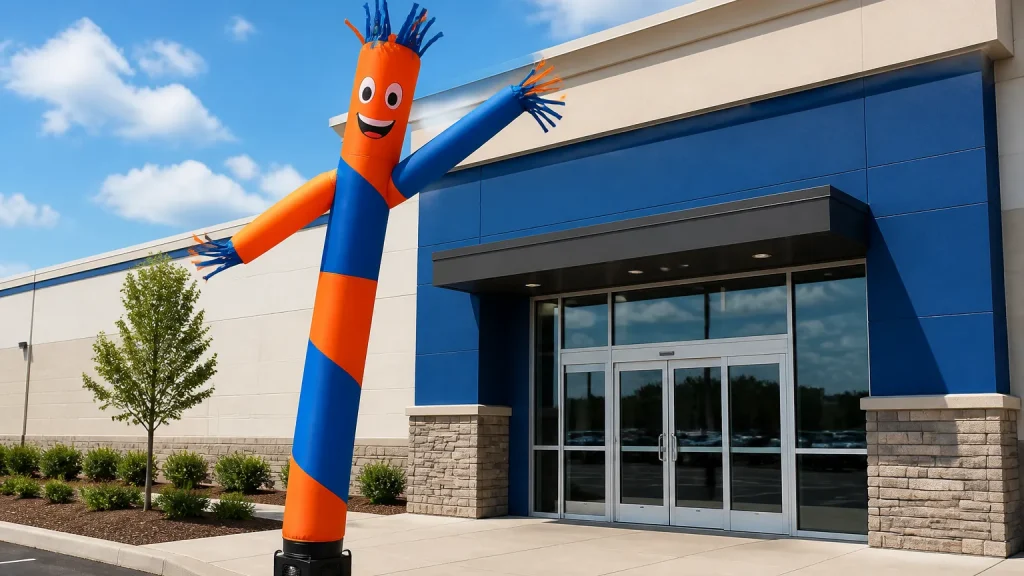
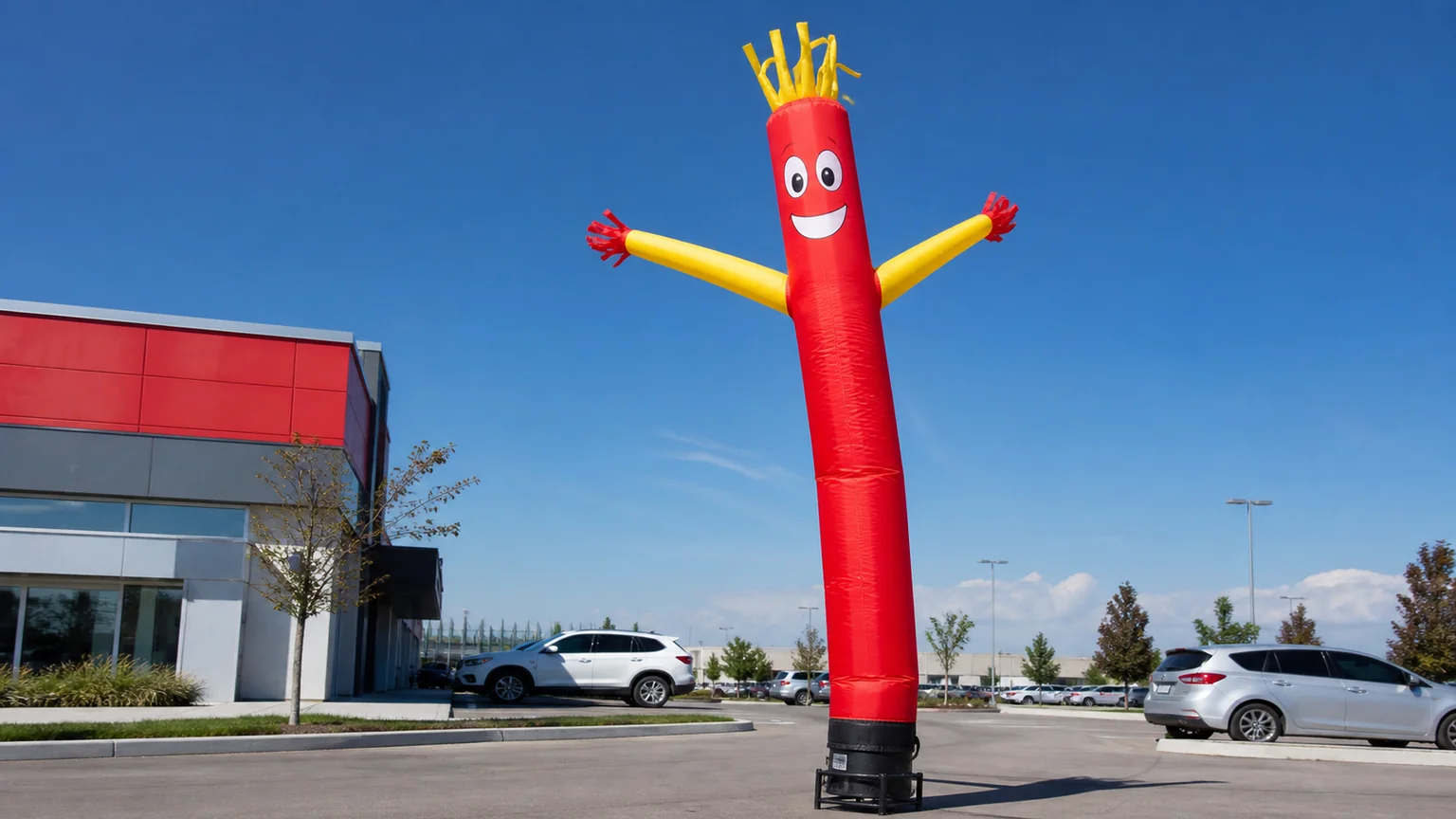
The product goes by many names — sky dancer, tube man, fly guy, wacky waving inflatable — but they all describe the same thing: a tall fabric tube driven by a continuous-airflow blower that keeps it moving all day. That motion is the entire point; it’s what catches the eye of a driver at 50 km/h. Browse the full range of inflatable air dancers and you’ll see the same engine behind every style.
Single-leg vs two-leg: match it to your wind
The first real decision is body type. Classic single-leg tube dancers give the wildest, most eye-catching motion and suit sheltered forecourts and indoor events. On exposed or windy sites, two-leg dancers stay more stable and upright, trading some of the frantic movement for reliability. If your sites vary, buy for the windiest one.
Material and print
Commercial air dancers are made from lightweight ripstop nylon — light enough to flow in the blower’s airflow, tough enough to take daily flexing and UV. Ask specifically for UV-stable, colour-fast fabric if the unit lives outdoors; a bargain dancer will look sun-bleached within weeks. Full-colour custom printing (logos, brand colours, “SALE” or “OPEN” panels) is standard OEM work — supply vector artwork and confirm a digital proof before production.
The blower is half the product
An air dancer is only as reliable as the blower under it. Look for a CE-certified continuous-duty blower sized to the dancer’s height — an undersized motor leaves the top drooping. Typical heights run 3–6 m (10–20 ft); taller units need more airflow. Because the blower runs all day, factor in mains power at every site and keep a spare blower if the dancer is business-critical.
Sizing, MOQ and lead time
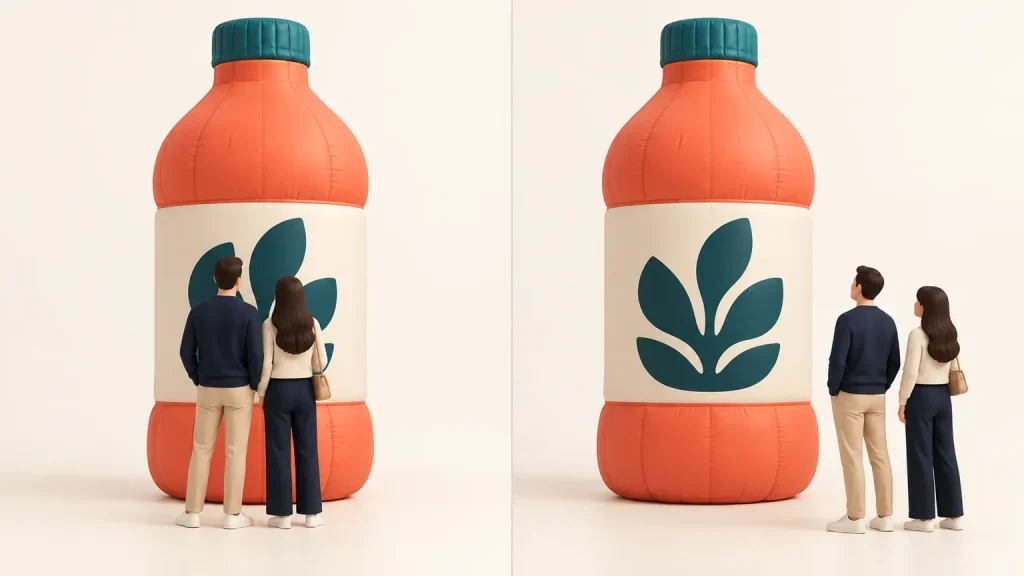
For roadside visibility, 6 m (20 ft) reads well from a distance; for indoor or tight forecourts, 3–4 m avoids overwhelming the space. Custom single units are possible, and typical production runs 7–15 working days after artwork approval, packed down for container shipping worldwide. One honest note: EN14960 covers inflatable play equipment rather than air dancers themselves — manufacturers that also build play inflatables (as we do) hold it for that range. For an air dancer, look for a CE-certified blower and UV-stable ripstop fabric.
Setup, power and safety on site
An air dancer takes minutes to set up, but the details keep it running safely all day. Bolt or weight the blower base so it can’t tip, run the cable where no one will trip on it, and use a weatherproof, RCD/GFCI-protected outdoor socket — the blower draws current continuously in all weather. Keep the dancer at least a couple of metres clear of overhead power lines, signage and tree branches; a 6 m dancer sweeps a wide arc when it moves. On public frontages, check whether your local authority requires the unit set back from the pavement or road edge.
Maintenance and storage — the bit that decides lifespan
Most air dancers don’t die from use; they die from bad storage. The single most important habit is to run the blower for a few minutes after a wet day so the fabric dries fully before you pack it — folding a damp dancer breeds mildew and staining that no amount of cleaning removes. Keep the blower’s air intake clear of grass and grit, store the motor somewhere dry, and keep a small PVC/nylon repair kit on hand for the occasional seam nick. Treated this way, a commercial-grade unit comfortably lasts multiple seasons; treated carelessly, even a good one looks tired within months.
Colours, print and brand consistency
Beyond the body shape, colour is your cheapest lever. Solid high-visibility colours (red, orange, yellow) read best from a distance and against most backdrops; add a printed logo or a single word like “SALE” or “OPEN” only if drivers have time to read it. If you’re ordering several units for a franchise or multi-site rollout, lock the exact Pantone references into the order so every location matches — colour drift between batches is a common and avoidable annoyance. Supply vector artwork and always sign off a digital proof before the run goes ahead.
A quick pre-purchase checklist
Before you commit, confirm five things: body type suits your windiest site; fabric is UV-stable ripstop nylon; the blower is CE-certified and correctly sized to the height; the anchoring or base weighting is included; and the print is full-colour with a proof step. Get those right and the rest is easy.
When an air dancer isn’t the answer
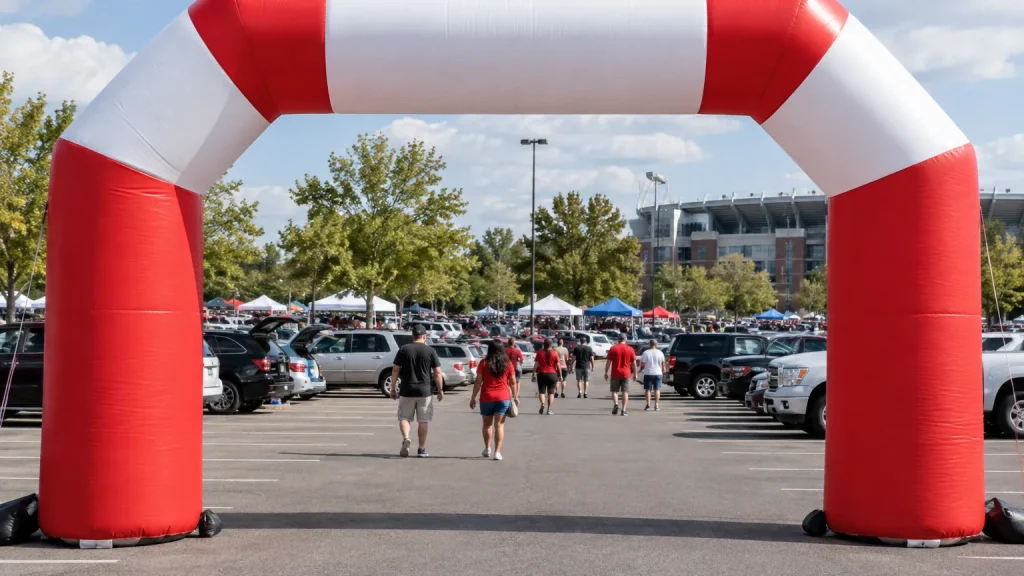
Motion wins for roadside attention, but if you need to frame an entrance or finish line, an inflatable arch does that job far better. Many forecourt promotions run both: an arch at the entrance and dancers along the approach.
Speccing air dancers for your sites?
Tell us your sites, wind exposure and branding. We’ll recommend single- or two-leg, the right height and blower, and send a free mockup and itemised quote within 24 hours.