Advertising Inflatables in Rain: When to Stop and What to Check Before Restarting
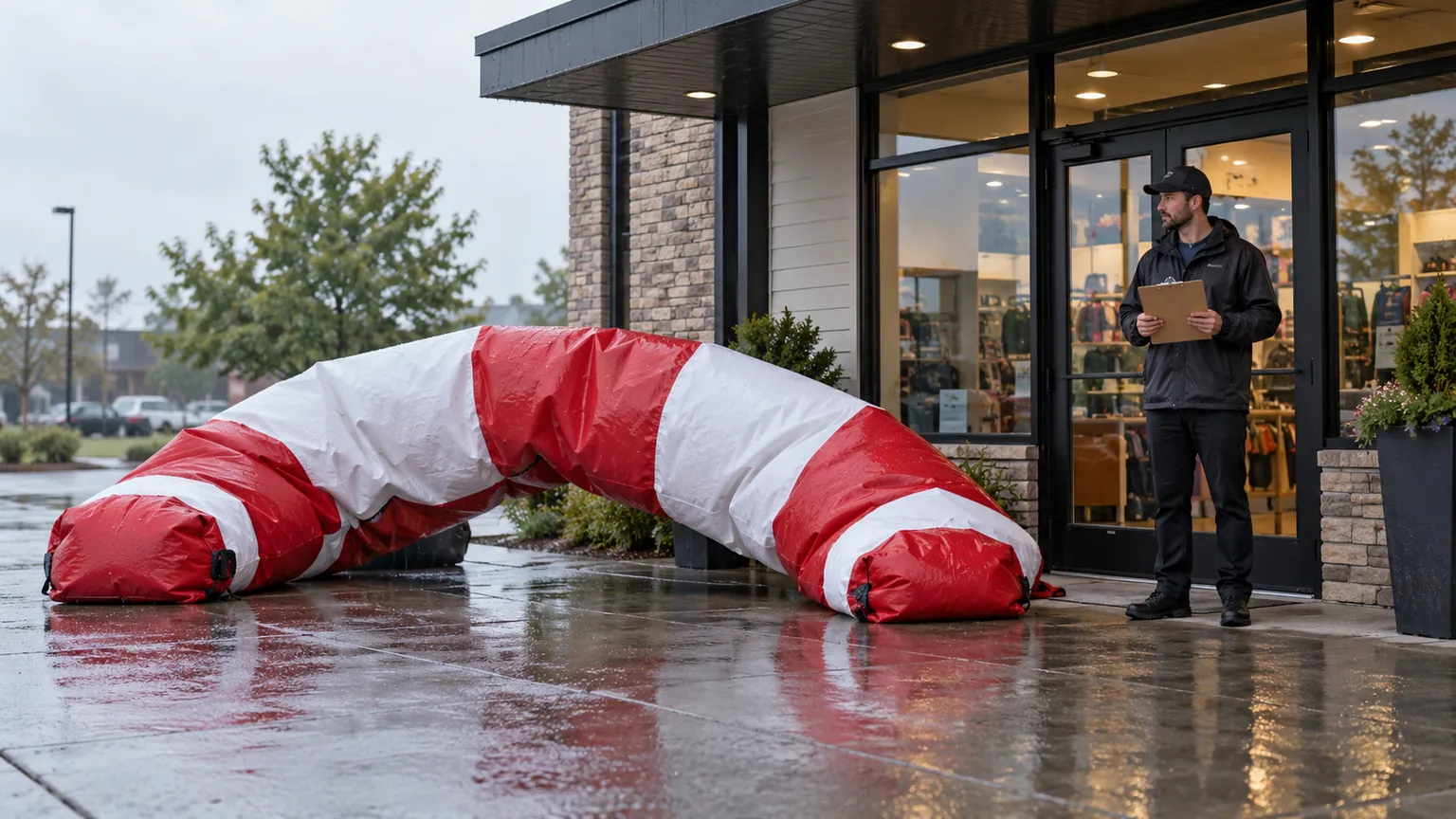
Advertising inflatables in rain require a decision about the whole installation: the fabric, blower, electrical connections and ground conditions. A rain-resistant inflatable skin does not establish that its blower or power supply can operate safely in the same weather. For a store opening or outdoor activation, decide how the team will stop the display before rain creates an unsafe working area.
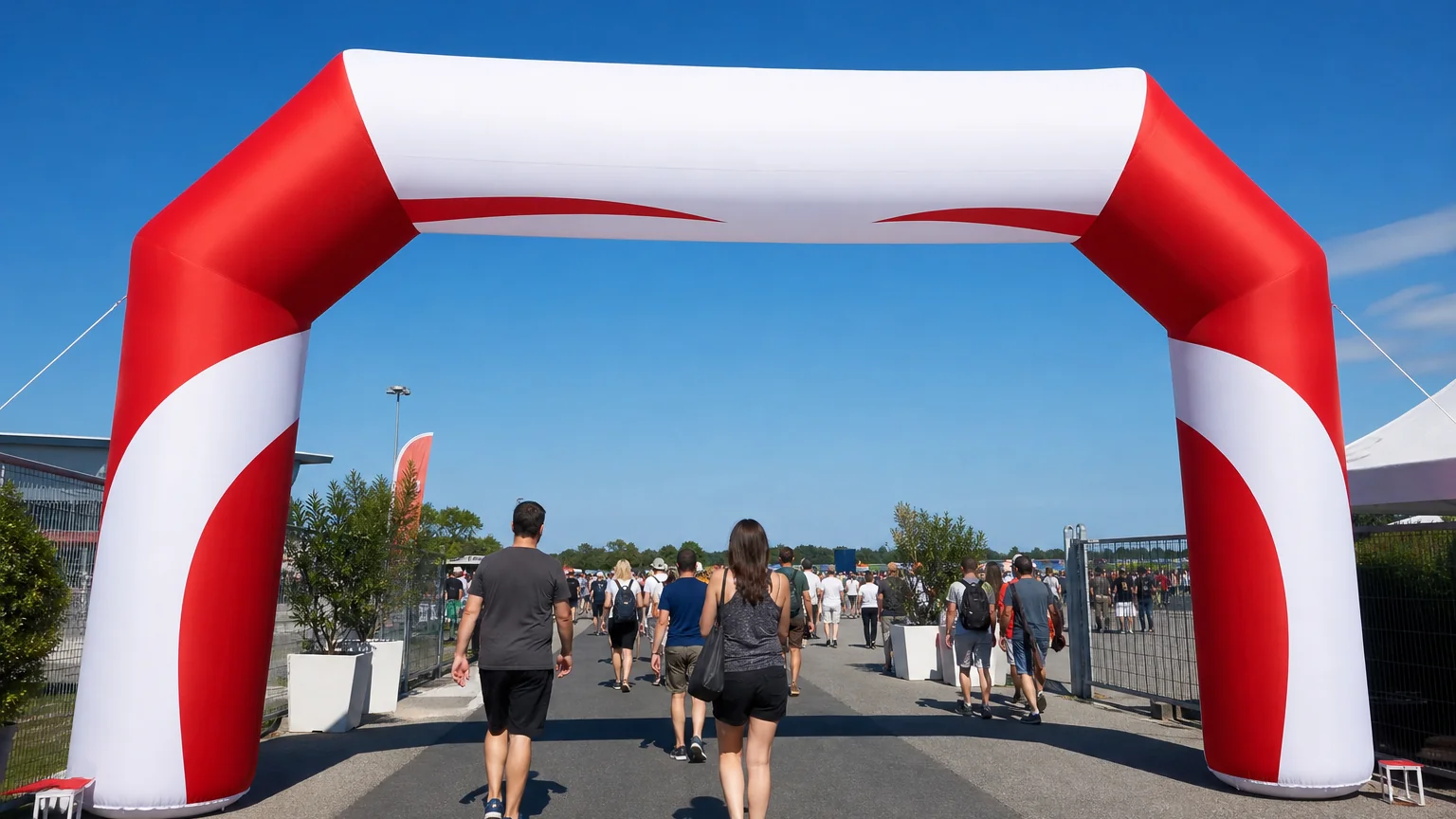
This guide covers continuously blower-inflated advertising displays, including inflatable air dancers and inflatable advertising arches. Use the instructions for your actual equipment and the venue’s electrical arrangements to decide whether rain-day operation is permitted. There is no universal rainfall threshold that makes every setup safe.
Can Your Particular Setup Operate in Rain?
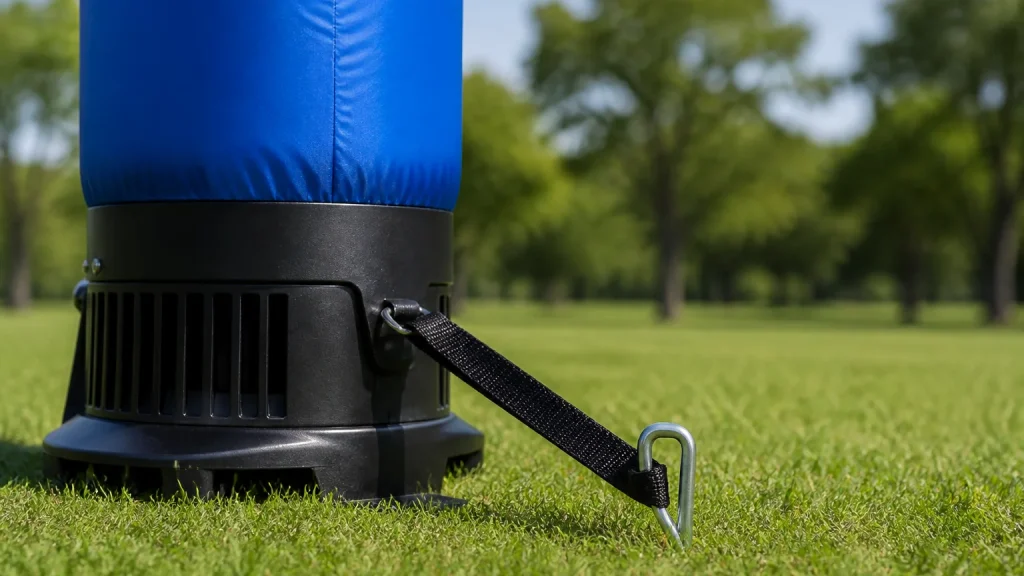
Start with the blower model supplied with the display. Ask the supplier for its operating instructions and restrictions on rain, splashing and wet locations. A specification for the inflatable fabric answers a different question. Even where the fabric tolerates rain, the installation may include electrical components that require dry conditions.
Check the complete power route with the venue’s qualified electrical personnel: outlet, protective devices, extension leads and connectors. Outdoor suitability depends on the equipment and its conditions of use. An RCD or GFCI provides a layer of protection; its presence does not make unsuitable equipment suitable for wet operation.
Also assess where runoff will travel. A position that is dry during setup may become a low point after rain. If the equipment’s limitations or the power arrangement cannot be established, plan an alternative display or postpone deployment rather than treating uncertainty as permission to continue.
Before Rain: Agree Who Stops the Display
Assign an operator with authority to stop the installation. That person needs the equipment instructions, a way to contact the venue team and an agreed shutdown plan. Store staff should not have to debate whether a campaign is important enough to keep running while conditions deteriorate.
Identify a power isolation point that can be operated safely without approaching wet connections or walking through standing water. Arrange the blower and cable route according to the manufacturer’s instructions and the venue’s electrical plan. Keep access to the isolation point clear throughout the event.
Any permitted weather protection must preserve the blower’s intake and cooling airflow. Do not improvise by wrapping an operating blower in a plastic bag or covering its openings. A cover that appears to keep rain off can introduce a different operating problem. Confirm the proposed arrangement with the supplier instead of copying a photograph from another event.
Plan what happens when the display loses pressure. An arch across a pedestrian route needs a controlled area during shutdown; a dancer beside a storefront needs room to collapse without obstructing access. Brief staff on keeping people clear rather than attempting to support a deflating structure in unsafe conditions.
When to Stop: Use Conditions, Not a Rainfall Guess
Stop when conditions exceed the equipment instructions or the agreed site plan. If the blower is restricted to dry operation, that restriction controls the decision. Do not assume that light rain is acceptable because another unit appeared to tolerate it elsewhere.
- Water threatens electrical equipment or connections. Suspected water ingress requires safe isolation and assessment, not a trial run.
- The protective device trips. Do not repeatedly reset it to keep the display inflated. Have the cause investigated.
- Runoff or standing water changes access. The operator must still be able to act safely; do not handle energized connections from a wet area.
- The installation becomes unstable or obstructs circulation. Ground conditions, anchoring and a collapsing display can create problems independent of electrical suitability.
Follow the venue’s procedure for isolating power safely. If the planned control is no longer safe to reach, keep people away and involve the responsible electrical personnel. A marketing display can remain out of service while the site is made safe.
A spare blower does not resolve an unsafe electrical supply or wet site. The existing backup blower planning guide helps with equipment continuity, but replacement equipment should only be connected after the underlying conditions have been assessed.
Before Restarting: Rain Stopping Is Only the First Check
Separate a wet fabric shell from potentially wet electrical equipment. They need different responses. A damp inflatable is not evidence that the motor has taken in water, but neither does a dry-looking motor housing prove that its internal electrical parts are safe.
Where electrical equipment has become wet or water ingress is suspected, have qualified electrical personnel inspect it before energizing it, following the manufacturer’s requirements. Do not open the motor housing yourself, substitute a larger protective device, or keep testing whether the circuit will hold. Surface drying and waiting for a fixed number of minutes do not establish readiness.
Recheck the site as well: runoff, cable condition, connection protection, anchoring and the space into which the display will inflate. Resolve the cause of any protective-device trip before considering a restart. Then use the manufacturer’s startup procedure and confirm the display maintains its intended shape with people kept clear.
Record why the display stopped and who cleared the restart. A short deployment log helps the next shift distinguish a planned weather shutdown from an unresolved equipment fault.
Finish the Event and Improve the Next Order
Once the equipment and setting have been confirmed safe, arrange drying according to the product instructions. Do not restart questionable electrical equipment simply to dry the fabric. For packing and longer-term care, follow the drying and off-season storage guide. Drying deserves its own time in the event schedule.
Rain, heat and wind require separate checks. The hot-weather operation guide addresses material and equipment-load considerations; it does not replace rain-day electrical planning.
For your next inquiry, send AdInflatable the display type, destination country, intended location and expected operating schedule. Ask for the proposed blower model, its rain-use restrictions and the relevant setup and inspection instructions. Give the venue team those details before installation. A clear equipment brief lets you plan a realistic shutdown and restart procedure before the campaign reaches the site.