Custom Inflatable Cartoons vs Off-the-Shelf Mascot Molds: What You’re Really Paying For
“Just use one of your existing molds” sounds like the budget-friendly option, and often it is — but the actual choice between a custom vs stock mascot isn’t as binary as “cheap generic character” versus “expensive fully bespoke sculpture.” Understanding what you’re actually paying for at each level makes the decision a lot clearer than the price quote alone does.
Our custom inflatable mascots guide covers what goes into ordering one generally — this piece focuses specifically on the custom-vs-stock decision and what each option actually costs you in money, time, and brand differentiation.
“Off-the-Shelf” Isn’t Really Off-the-Shelf
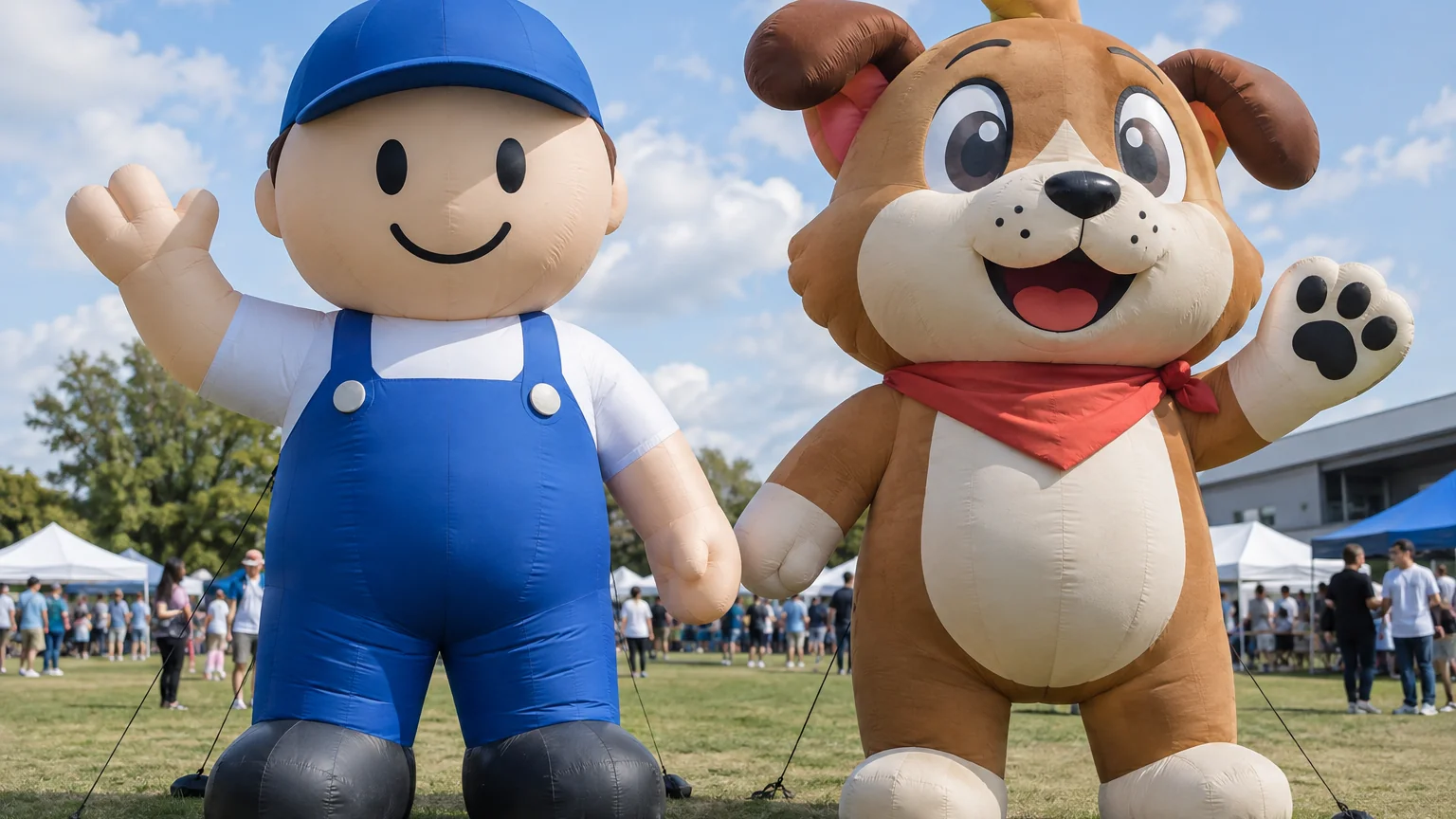
Unlike a stock ground balloon or a standard arch size, there’s no true shelf-ready inflatable mascot — every character-shaped inflatable requires some level of sculpting to a specific body form. What buyers usually mean by “off-the-shelf” is a generic humanoid or animal body mold the factory already has tooling for, recolored and repainted for your brand rather than sculpted from scratch. This is genuinely cheaper and faster than full custom sculpting, but it’s not free of investment — you’re still paying for print, color matching, and a review cycle, just not for original 3D sculpting work.
What Full Custom Sculpting Actually Buys You
Full custom sculpting means the factory builds new tooling matched to your specific character design — proportions, silhouette, distinctive features that make the mascot recognizably yours rather than a generic body shape wearing your logo. The extra cost pays for three things: the sculpting and tooling work itself, a longer artwork-approval cycle since there’s more to get right on a shape that’s never existed before, and a mascot that can’t be mistaken for a generic character at a competitor’s booth wearing different colors on the same stock body.
If your mascot is a genuine piece of brand IP — a character with an established design people already recognize — a generic stock body undermines the whole point. The recognition value only exists if the shape matches the character people already know.
When Stock Bodies Are the Right Call
A generic mold makes sense when the mascot itself isn’t a core brand asset — a one-off event character, a seasonal theme piece, or a supporting prop rather than your primary brand mascot. In these cases, a well-chosen stock body with strong color and print work reads perfectly well to an audience that isn’t scrutinizing the silhouette for brand accuracy. Budget-limited short-run events are the classic case where stock bodies deliver most of the visual impact at a fraction of full-custom cost and lead time.
When Full Custom Is Worth It
Full custom sculpting earns its cost when the mascot is a recurring, recognizable brand asset — something that appears across multiple events, seasons, or years, where consistency and distinctiveness compound in value over time. A one-time appearance doesn’t recoup a sculpting investment the way a mascot that tours dozens of events over several years does. If you’re planning a long-term mascot program rather than a single activation, the upfront custom cost amortizes across far more appearances than a one-off stock purchase would need to justify.
What Drives the Price Difference
Beyond the sculpting work itself, a few factors shift cost in both directions — see our cost breakdown guide for the fuller picture across the product range:
- Design complexity: intricate features (multiple limbs, fine detail, articulated-looking elements) add sculpting time regardless of stock or custom
- Size: larger mascots need more material and structural engineering to hold shape, independent of the mold decision
- Revision rounds: full custom typically needs more artwork-approval cycles before production, since there’s no existing reference shape to fall back on
A Middle Path: Modified Stock Bodies
Between full custom sculpting and an unmodified stock body sits a middle option worth knowing about: taking an existing body mold and modifying specific features — adding a distinctive accessory, adjusting proportions slightly, or customizing a head shape while keeping the stock torso and limbs. This costs more than an unmodified stock body but meaningfully less than full sculpting, and it’s often the right call for a mascot that needs some distinctiveness without the budget or timeline for building an entirely new form from scratch. It’s worth asking your supplier explicitly whether this middle path exists for your specific character design before assuming it’s a binary choice between the two extremes.
Specs and Ordering
Both paths use the same underlying construction: cold-air, blower-inflated PVC or coated fabric, CE-certified continuous-duty blower, OEM full-color printing. MOQ and sampling terms differ mainly in lead time — stock-body orders move faster through the approval stage, while full custom needs more time up front for sculpting and initial proof review. See our MOQ and sampling guide for what to expect either way.
Not sure which fits your mascot program? Browse our inflatable cartoons and mascots range, or send us your character design and we’ll advise whether it needs full sculpting or fits an existing body mold.