The brief
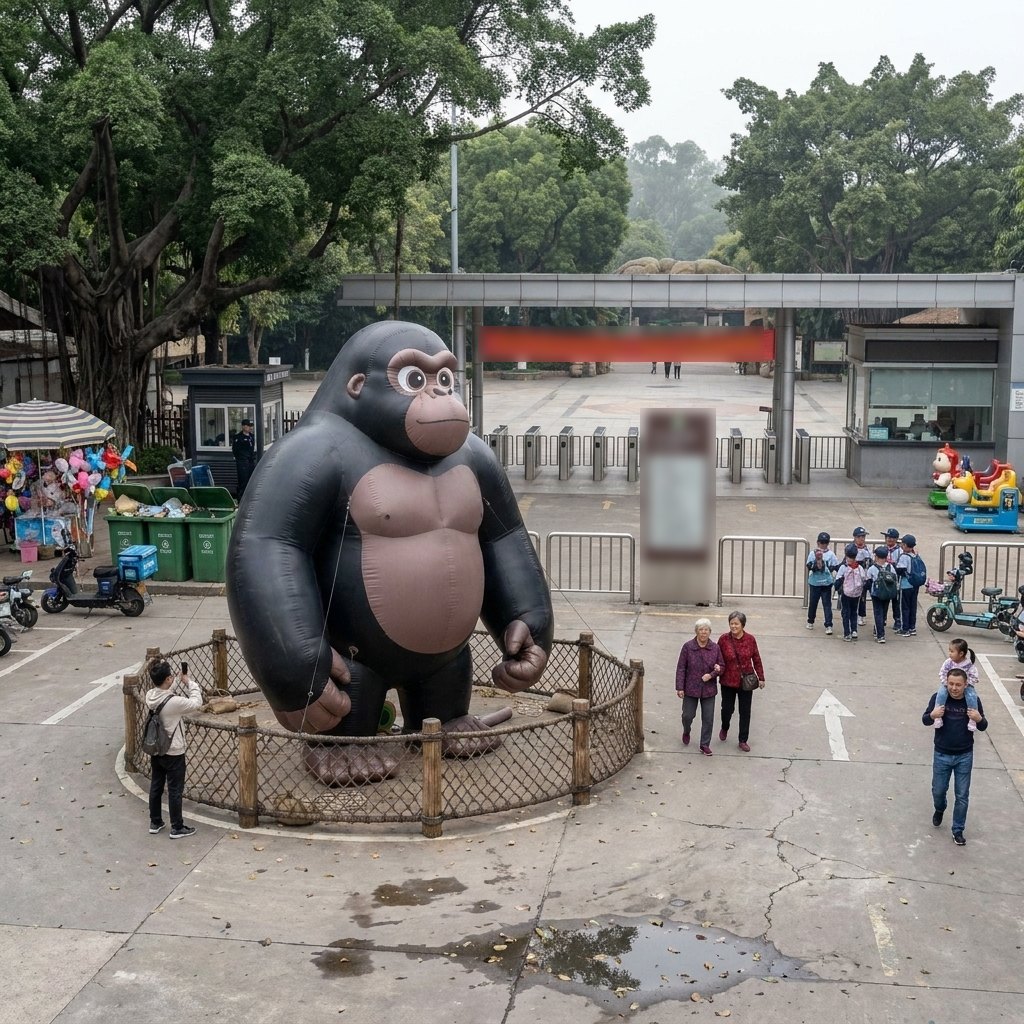
A city zoo wanted its entrance plaza to do more work. Visitors arrived through the ticket hall, looked around for a meeting point and drifted. The brief asked for a landmark that felt permanent, photographed well from the ticket line, and could survive a full summer outdoors — sun, wind and the afternoon storms the region is known for.
The meeting-point requirement is the one that shapes the design. A meeting point is not a sculpture: it is a thing people walk towards and stand beside, and the spot where they stand is the spot they photograph. The figure has to look right from the distance people approach from, and the ground around it has to be somewhere a family is willing to stop.
They were open on the subject. We proposed a gorilla: an upright figure with its arms at its sides so the silhouette reads from the car park, and tall enough that the fence line around it becomes the natural place to take a photograph.
Design
The 3D model was built with the stance as the first decision. A wide stance, a low centre of mass and a body that tapers toward the head keep the figure stable in wind; the pose is doing structural work rather than only styling work.
The chest, face, hands and feet were given separate tan panels to break up what would otherwise be a large black mass in photographs. This is the most useful decision on an outdoor figure in a dark colour: without the lighter panels, a black shape photographed against trees or sky loses its arms, its legs and its expression.
We rendered it into the client's own site photographs, at the height and position they wanted, so the zoo's team could judge how it would sit against the ticket hall before approving. Rendering into the real plaza rather than a neutral view is what makes the approval meaningful — a figure judged on a white background is never judged in context.
The proportions were kept soft and rounded rather than anatomical. A figure meant to be walked up to by children and photographed by families does not benefit from being anatomically correct; it benefits from reading as an animal that is approachable, which rounded forms do and detail does not.
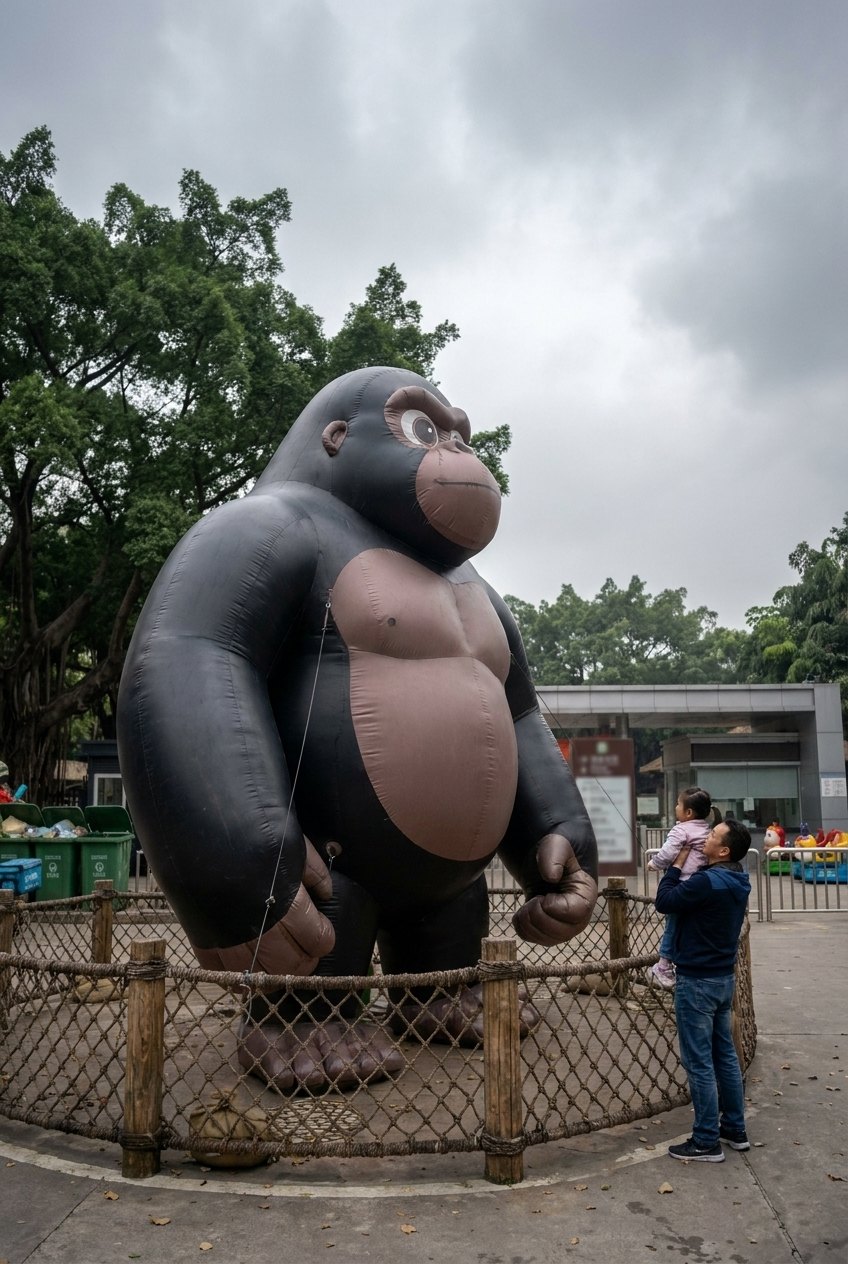
Wide stance, low centre of mass · 8 reinforced D-ring anchor points
Build
The body is sewn from heavy black PVC-coated fabric with folded, double-stitched seams. Heavy fabric matters more on a dark figure than a light one: the surface shows every wrinkle, and a light fabric on a large black shape reads as a bin bag rather than an animal.
The tan chest, face, hands and feet are printed panels with UV-stable inks. UV stability is what decides whether the figure is the same animal in September as it was in June — the tan panels are the part that fades first, and faded tan against black is what makes an outdoor figure look tired.
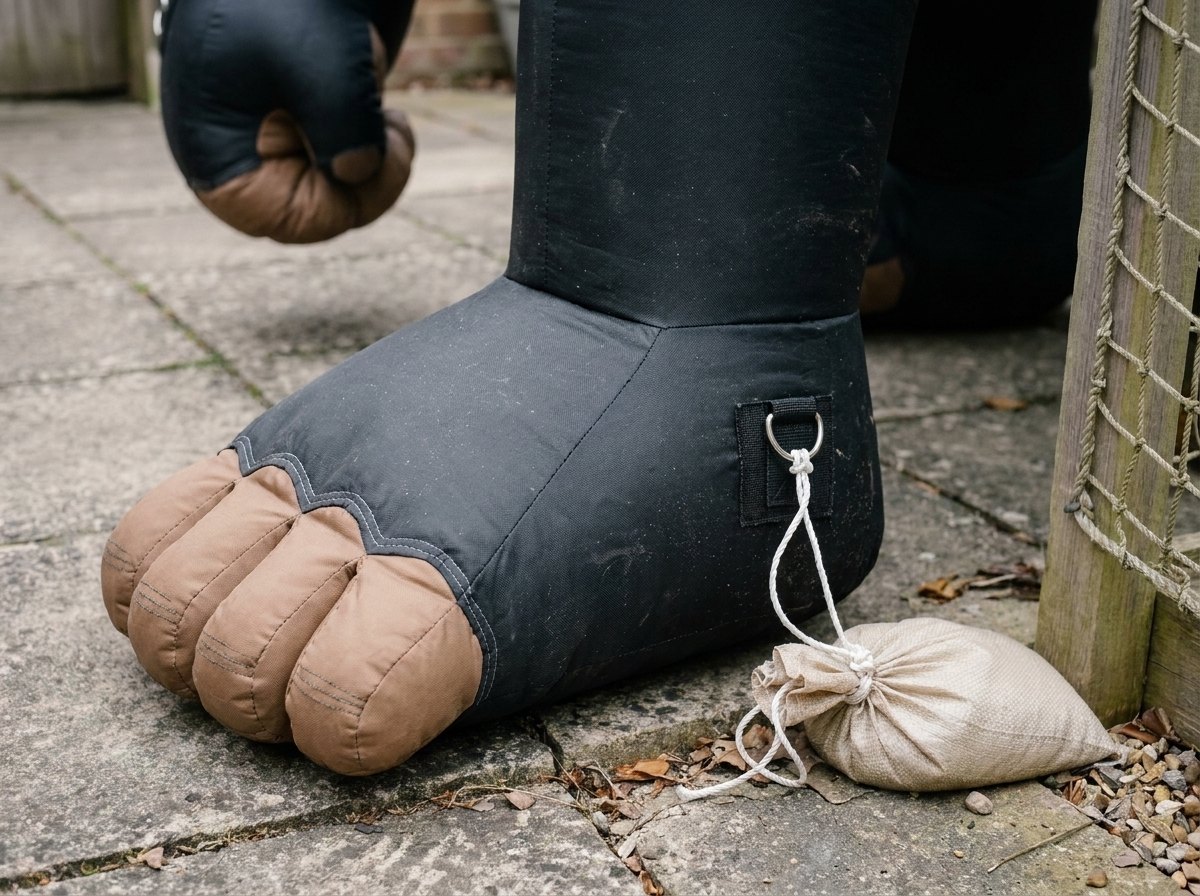
Eight reinforced D-ring patches are sewn at the shoulders, forearms and ankles to take guy ropes, and the blower sits in a weather-proof housing with a fabric inlet sleeve. The housing is the part clients underestimate: a blower standing in the open on a plaza is the first thing to fail in rain.
A long zip on the back lets staff drop the gorilla quickly before a storm — a request that came directly from the zoo's operations manager. It is the one feature on the piece that exists because of an operational problem rather than a design one, and it was the feature the client mentioned first afterwards.
Test inflation
The figure was inflated in the factory and checked for stance, seam tension and how the separate tan panels read against the black at distance. The panel check is done from across the hall rather than up close: the question is whether the chest and face still register as separate shapes from thirty metres, and up close they always do.
The test also confirms the anchoring points are in the right places. Guy ropes only work if they pull against the wind load rather than across it, and the shoulder and forearm patches were positioned so the ropes oppose the direction the figure actually leans.
Installation
Our crew set the gorilla on a paved area with a rope fence around it, rigged guy ropes to sandbags, and walked the zoo staff through the deflate-and-cover procedure. Setup took a morning; the briefing took twenty minutes.
The briefing is the part that is easy to skip and expensive to skip. The zoo's staff are the ones on site when a storm comes through at four in the afternoon, and a quick-deflate zip they have never used is a feature the figure does not really have.
Result
The gorilla ran for the full season and became the zoo's default meeting point — see you at the gorilla is apparently now a thing. That is the brief solved exactly: a plaza that gave visitors nowhere to gather now has a place that names itself.
Visitors photographing it from the fence line made it one of the most shared images of the park that summer, which is the second thing the client asked for and the harder of the two. A meeting point people photograph is a meeting point that promotes itself.
What we took from it
The lesson is that on a dark figure the lighter panels are not decoration. The tan chest and face are what make the silhouette legible and the expression readable, and on an all-black figure they do more for how the piece works than the modelling does.
The second is that operations decide whether a display survives a season. The quick-deflate zip and the weather-proof blower housing came from talking to the person who would be on site in bad weather, and they are the reason the figure was still standing in September.


