Custom Inflatable Costs: What Is Included in Each Quote?
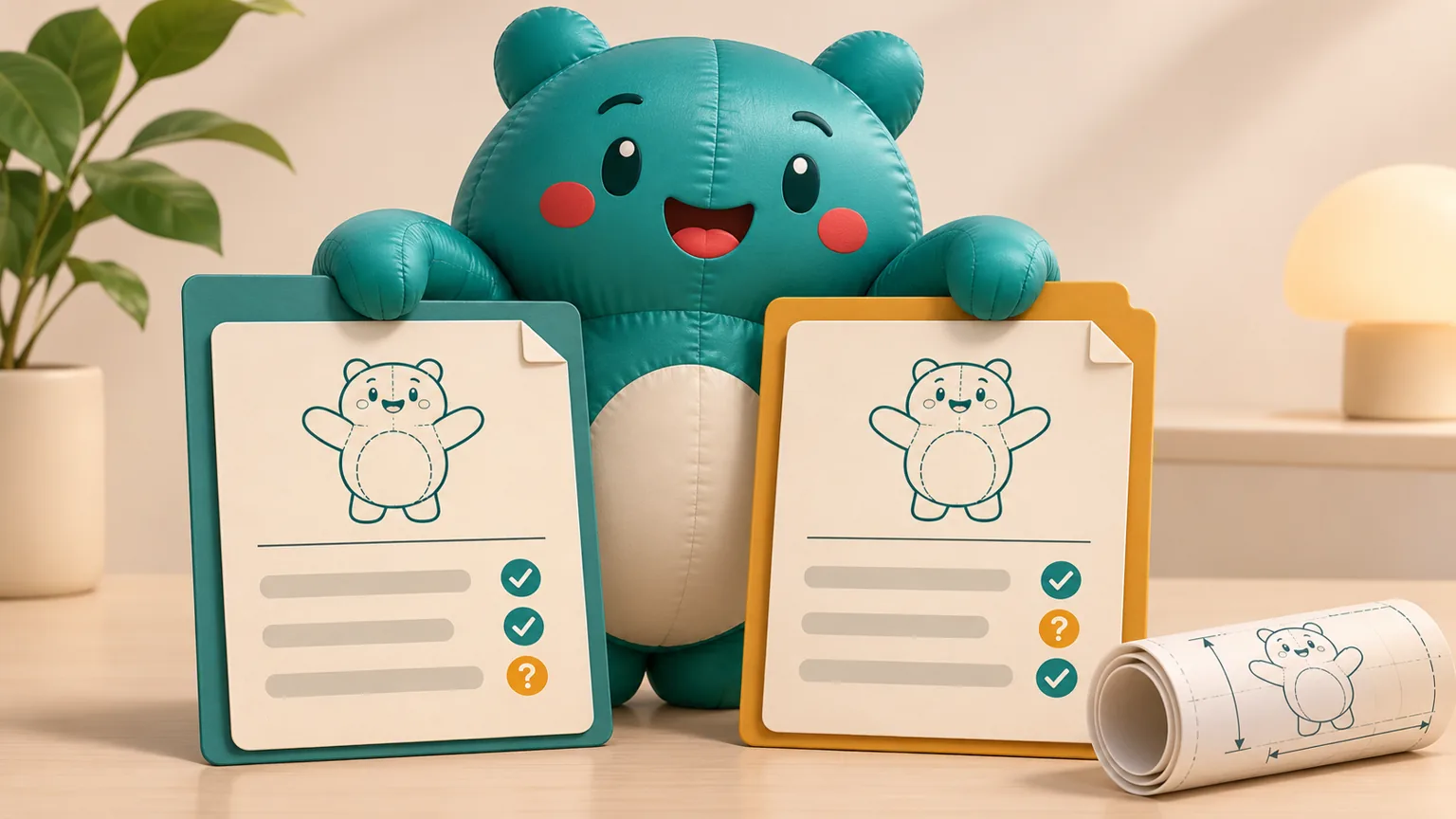
Two quotations can show the same mascot drawing and still cover different work. Before comparing the totals, establish what each supplier has actually included. A blank line leaves a question open; it does not establish that a service is free, unnecessary or missing from the eventual product.
Custom inflatable cost depends on the agreed design and commercial scope. Shape complexity and scale affect the work involved; artwork preparation, specified materials and finish, equipment and quantity can also change the quotation. These factors do not follow one universal pricing formula. A larger figure is not simply a smaller figure multiplied by height, and a drawing alone does not describe every task behind the finished item.
The comparison below follows one fictional mascot project from initial offers to written clarification. It contains no prices or real supplier claims. Its purpose is to show which lines become comparable and which differences still need a decision.
Keep the project fixed while comparing the offers
Assume a buyer has already sent the same mascot drawing, revision R3, to two manufacturers. Both purchase offers reference that revision, the same agreed dimensions, one unit and the same destination and delivery boundary. Neither offer is for rental. The proposed fabric and finish description also matches; if that description changes during clarification, the buyer must record the change rather than continue treating the configuration as identical.
This starts after quotations have arrived. If suppliers are still working from different requests, use the earlier guida al briefing di fabbrica to establish the common input first. Here, the task is narrower: identify the commercial scope behind two offers for that agreed input.
Offer A explicitly includes preparation of the three-dimensional production model and adaptation of the supplied artwork. It also names the blower proposed for this particular configuration. Offer B names the finished fabric figure, but says nothing about model preparation or a blower. It expressly excludes artwork adaptation. That wording does not yet reveal whether Offer B has a different approach, expects buyer-supplied work or simply needs clarification.
Read each line as included, excluded or unconfirmed
Use three statuses consistently. Included means the offer explicitly puts the identified work or item within its quoted scope. Excluded means it explicitly leaves that work or item outside. Unconfirmed means the available wording does not answer the question. Keep the supplier’s wording alongside the status so an internal summary does not become stronger than the evidence.
| Scope line | Offer A | Offer B |
|---|---|---|
| Production model preparation for R3 | Included | Unconfirmed |
| Adaptation of supplied artwork for R3 | Included | Excluded |
| Named blower for this configuration | Included | Unconfirmed |
These are three lines in a hypothetical comparison, not a standard equipment package or a promise about included design services. A project may use a different construction or equipment arrangement. The relevant question is what each offer says about the configuration being purchased.
At this stage, neither adding a guessed allowance to Offer B nor calling Offer A better value is justified. Model preparation might already sit within B’s figure line. Artwork adaptation might require a separate instruction. The blower might be omitted, included elsewhere or specified differently. Each possibility changes the comparison in a different way.
Keep delivery outside this exercise by holding its agreed boundary constant. If one offer later changes that boundary, flag it as a separate unresolved difference. The guida alla spedizione e al trasporto merce covers the delivery discussion; this table does not calculate a delivered cost.
Turn the uncertain lines into written scope
Send focused questions tied to the quotation reference and R3. For model preparation, ask whether the work is already included in the figure line. For artwork adaptation, ask what the explicit exclusion means for this order and request an updated offer if the manufacturer is to perform it. For equipment, ask whether the named blower configuration is included, excluded or replaced by another identified proposal.
In this fictional example, B replies that production model preparation is included within the finished-figure line. B then issues a revised offer that adds artwork adaptation to its scope. Finally, B confirms that the blower is excluded and would require a separate offer. Record these answers against the revised document, rather than leaving them as informal annotations on the first quotation.
| Scope line | B after clarification | Comparison with A |
|---|---|---|
| Model preparation | Included in figure line | Requested work now matches |
| Artwork adaptation | Included in revised offer | Scope now matches; total must be reread |
| Named blower | Explicitly excluded | Difference remains |
The first answer resolves an ambiguity without establishing a separate fee. The second changes the quoted scope, so the buyer must use the revised total and its stated conditions. The third turns uncertainty into a known exclusion; it does not make the two offers equivalent. No conclusion about which total is higher follows from these answers alone.
Suppose B instead proposes a different blower. That would be a configuration change, not merely a change from “unconfirmed” to “included.” Identify the alternative and obtain the relevant project confirmation before describing the equipment rows as matching. A shared label such as “blower included” is too broad to settle whether both offers describe the same item.
State what the clarified comparison establishes
For this example, model preparation and artwork adaptation now cover the same requested work in A and revised B. Equipment remains different: A includes the named blower and B excludes it. The buyer can report those findings, retain both document revisions and request a revised equipment scope if a matching offer is needed. Until that happens, the totals represent different purchase scopes.
A useful internal note is specific: “R3 model preparation and artwork adaptation confirmed in both offers; blower included in A and excluded in revised B.” It is more useful than “both quote the same mascot,” which hides the remaining difference. It also avoids treating an unanswered question as evidence of poor workmanship or an explicit exclusion as an undisclosed charge.
Matching scope does not verify finished-product quality or suitability for a particular site. Those questions need their own evidence. The later finished-unit photo review addresses a different stage of the project. For a specific custom mascot project, keep the agreed design revision and confirmed scope attached to the quotation discussion.
The result is a comparison that can be checked: two resolved work lines, one known equipment difference and a clear record of the revised offer. That is the basis for reading the prices accurately, without inventing missing costs or assuming that identical drawings mean identical inclusions.
Articoli correlati
 Guide all'acquisto
Repliche gonfiabili Open-Box: Posizione del coperchio, visibilità del prodotto e ingombro dell'esposizione
Leggi di più ↗ Guide all'acquisto
Riproduzioni giganti gonfiabili di prodotti: quali dettagli preservare o semplificare
Leggi di più ↗ Guide all'acquisto