


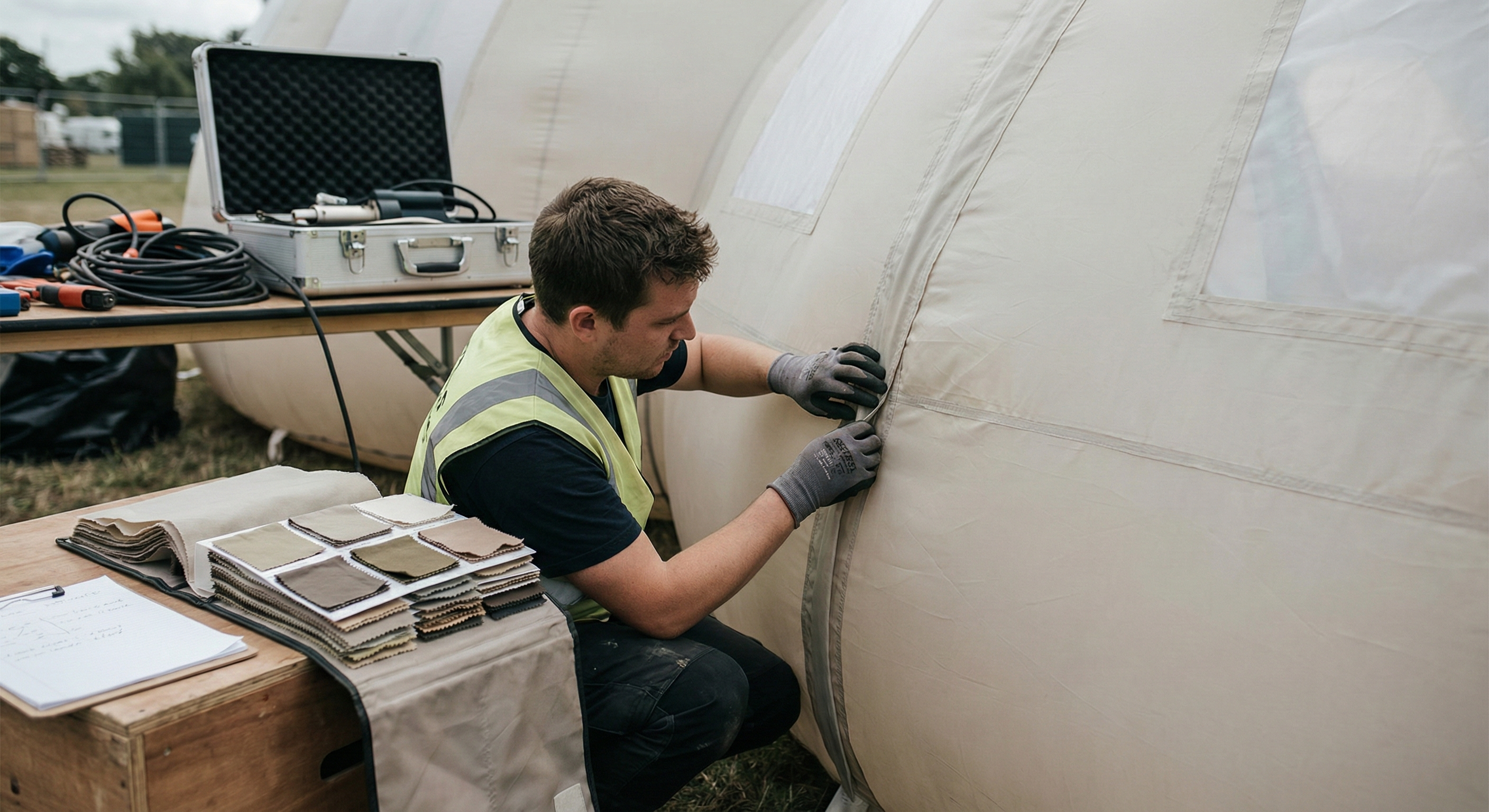
PVC-Free Inflatable Materials: Pros & Cons
In the world of large-scale inflatables, materials define everything—weight, feel, color depth, and lifespan. As brands move toward sustainability, PVC-free fabrics have emerged as a compelling alternative. But choosing them isn’t just a moral decision; it’s a technical one.
1. What PVC-Free Really Means
Traditional inflatables rely on polyvinyl chloride (PVC) for its flexibility and cost efficiency. PVC-free options replace the chlorine-based compounds with thermoplastic polyurethane (TPU), polyolefin blends, or recyclable polyester laminates. The result is a cleaner production cycle with lower emissions and easier recyclability.
2. The Benefits
- Eco Performance: No chlorine, no phthalates, reduced VOC emissions during manufacturing.
- Lighter Weight: Up to 20% less than PVC, improving portability and reducing shipping costs.
- Better Cold Flexibility: Performs well in low temperatures, maintaining elasticity where PVC may stiffen.
- Premium Surface Feel: Matte finish reduces glare, ideal for branding and photography.
3. The Trade-offs
- Higher Cost: 15–30% more expensive per square meter than standard PVC-coated fabric.
- Limited Color Saturation: Certain eco coatings absorb ink differently, affecting deep tones.
- Heat Sensitivity: TPU-based fabrics require tighter control during high-frequency welding or hot-air bonding.
- Shorter UV Lifespan: Without proper coating, they may yellow or weaken under long-term sun exposure.
4. Compliance and Certification
Premium PVC-free materials can still meet international standards such as EN71, EN14960, ASTM F963, and REACH. When specifying fabrics, confirm compliance with both safety and environmental standards. Many European malls and festival operators now prefer installations certified as PVC-free and REACH-compliant.
5. Design and Visual Impact
PVC-free doesn’t mean compromise. Modern matte or textile-finish TPU surfaces create a more refined aesthetic—especially under natural light. Brands seeking a “soft power” visual tone often find PVC-free fabrics align better with their environmental messaging and premium positioning.
6. Lifecycle and Recycling
Standard PVC often ends up in landfill due to chemical additives. PVC-free fabrics can be mechanically recycled into pellets or textile fibers. Some suppliers now offer closed-loop programs that reclaim offcuts and end-of-life materials for reuse in non-structural applications.
7. When to Choose PVC-Free
Consider PVC-free materials if your installation will be:
- Indoors or semi-outdoor with moderate UV exposure.
- Part of a sustainability-driven campaign or brand activation.
- Used repeatedly at trade shows or premium retail venues.
In Summary
PVC-free inflatables represent the next step in responsible design—lighter, cleaner, and visually refined. They’re not a one-size-fits-all solution, but when chosen thoughtfully, they balance performance with purpose.
General Inflatables offers PVC-free options engineered for modern brands—combining environmental responsibility with the same structural reliability and precision finish expected from professional-grade inflatables.


