


Wind Safety Guidelines for Outdoor Inflatables
Outdoor inflatables create instant impact—visible from a distance, dynamic in motion, and alive in the wind. But the same wind that gives them life can also pose serious risks if not properly managed. Wind awareness isn’t optional; it’s the foundation of every safe installation.
1. Understand Wind Speed Ratings
Every inflatable has a designed operating range. For most commercial displays, the safe threshold is up to 25–30 km/h (15–18 mph). Beyond this point, pressure loss, instability, or tearing may occur. Always confirm the tested wind rating from your manufacturer, and record it in your site plan.
- 0–20 km/h: Normal operating range—visual movement only.
- 20–30 km/h: Caution zone—monitor anchors and seams continuously.
- 30+ km/h: Stop operation—partially deflate or secure immediately.
2. Build Anchoring into the Design
Anchors are not an accessory; they are part of the structure. Calculate ballast or ground stakes according to the inflatable’s surface area and local soil conditions. A general guideline: each anchor should resist at least 160 kg (350 lbs) of pull for medium-sized units, more for tall or narrow models.
- Use galvanized steel D-rings and double-layer base tabs.
- Inspect straps and buckles before every installation.
- For hard surfaces, use water or sand ballast barrels evenly distributed around the base.
3. Monitor Conditions in Real Time
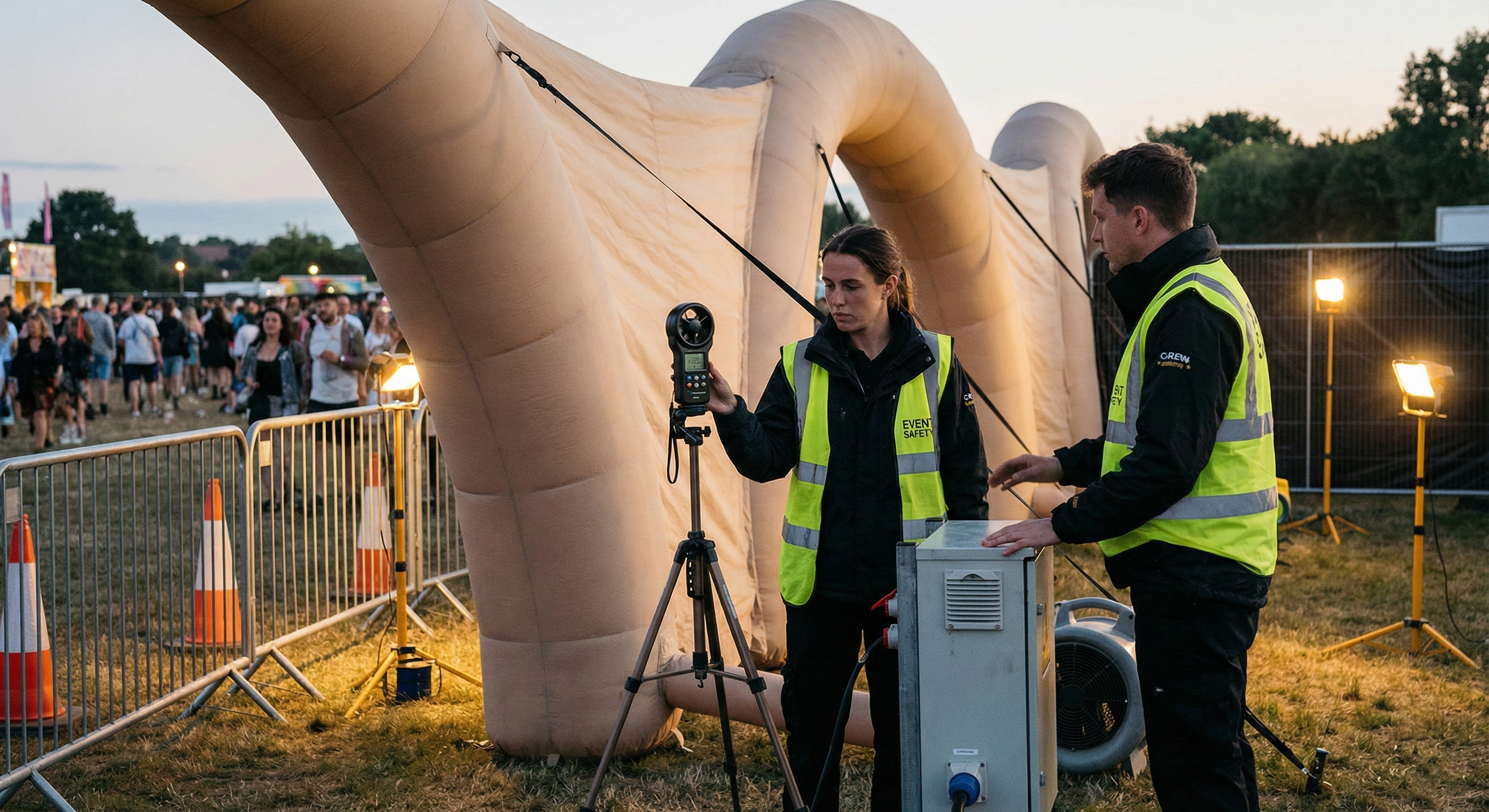
Wind is rarely constant. Gusts can double the average speed within seconds. Use handheld anemometers or portable weather stations to record live data. If gusts exceed limits, stop operation and deflate gradually—never wait until the structure begins to sway.
4. Position with the Environment in Mind
Site layout affects stability as much as weather does. Avoid installing near building corners, tunnel entrances, or areas where wind accelerates. Allow a safety buffer of at least 1.5 times the inflatable’s height around all sides to prevent collisions or vortex lift.
5. Use Emergency Procedures, Not Guesswork
Every event team should have a written wind action plan:
- Assign one person to monitor wind speed and make stop decisions.
- Train crew to deflate quickly using designated vents or zippers.
- Keep all power sources accessible for rapid blower shut-off.
- Never re-inflate until wind drops below safe levels for at least 15 minutes.
6. Inspection and Maintenance
Post-event checks are as important as setup. Examine anchor rings, webbing, seams, and zipper areas for stretching or abrasion. Replace worn components before the next use. Even certified materials (EN14960, ASTM F2374) degrade under UV and repeated stress if left unattended.
7. Communicate with Your Venue
Coordinate with venue safety officers early. Many municipalities require documented risk assessments and compliance with EN14960 (Europe) or ASTM F2374 (U.S.) before public operation. Present your wind plan, anchoring diagram, and test reports during approval.
In Summary
Wind safety isn’t about stopping the show—it’s about ensuring the show can go on. When engineering, monitoring, and response are built into your process, inflatables become reliable brand assets, not liabilities.
General Inflatables supports global brands with engineered designs, certified materials, and on-site installation teams trained for real-world conditions.


