Mehrere LED-Aufblasfiguren: Erstellen eines szenenweisen Beleuchtungsbriefings
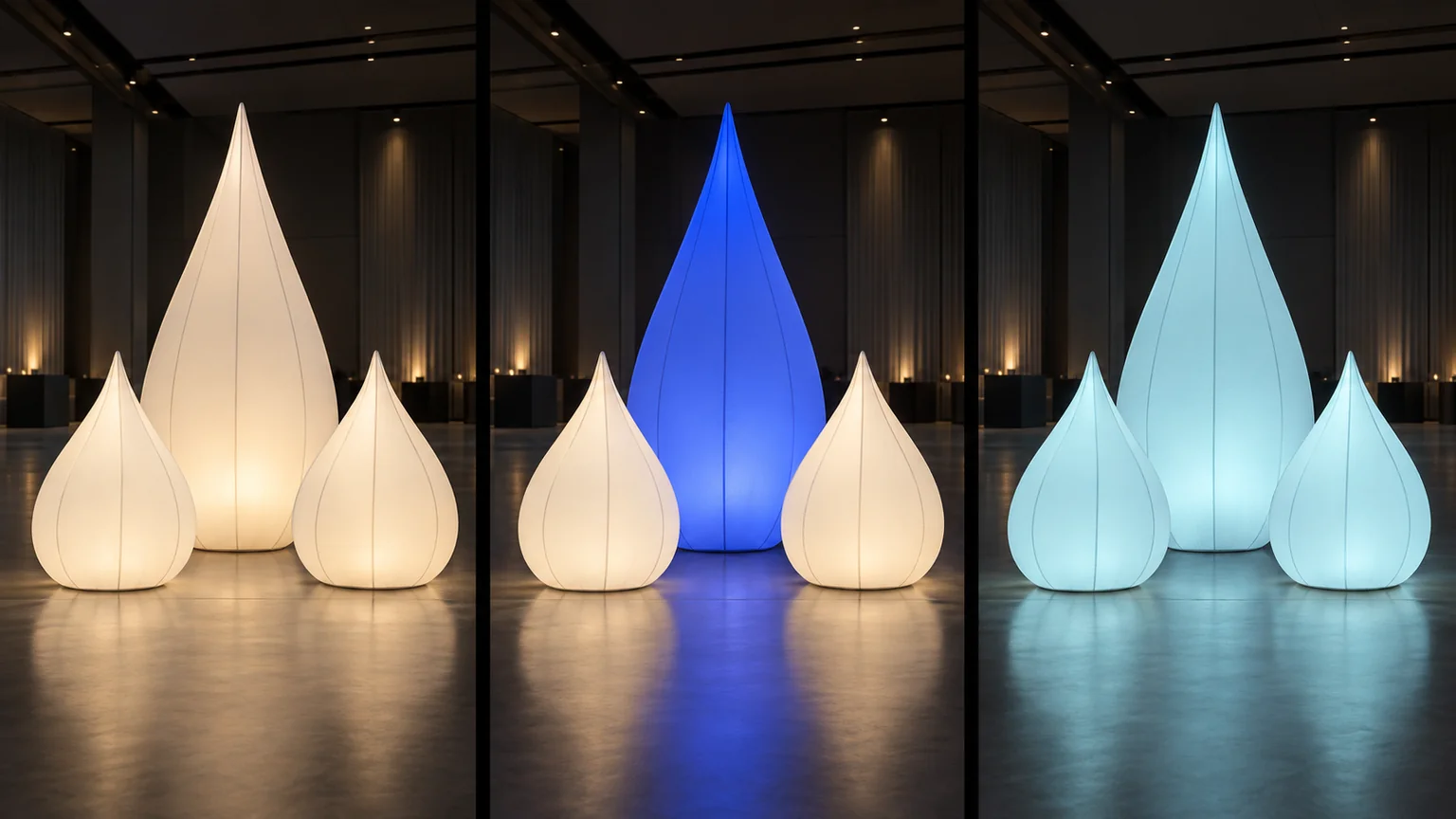
„Sie sollen gemeinsam die Farbe wechseln“ lässt mehrere Fragen offen. Zeigt jedes aufblasbare Element während der gesamten Veranstaltung die gleiche Farbe? Sollen zwei Eingangselemente die Farbe wechseln, während eine zentrale Skulptur ihr Aussehen beibehält? Ist die Änderung an einen Hinweis des Moderators geknüpft oder wird sie einfach für einen bestimmten Teil des Programms gewünscht?
Ein Briefing für mehrere aufblasbare LED-Beleuchtungscues sollte diese Beziehungen beschreiben, bevor jemand ein Steuerungssystem verspricht. Der nützliche Ausgangspunkt ist eine gemeinsame Aufzeichnung dessen, was das Publikum sehen soll, welche Objekte beteiligt sind und wann eine Änderung gewünscht ist. Die technische Machbarkeit bleibt eine separate Frage für den Lieferanten und das Beleuchtungsteam der Veranstaltung.
Das Cover ist eine Konzeptillustration von drei hypothetischen Beleuchtungsszenen. Es ist kein Kundenprojektfoto oder ein Beweis dafür, dass ein bestimmtes Steuerungssystem die dargestellten Änderungen erzeugen kann.
Definieren Sie, welches aufblasbare Objekt zu jeder Beleuchtungsgruppe gehört.
Give every proposed piece a simple reference on the layout: entrance left, entrance right and central sculpture, for example. Use those same references in the lighting brief. “The small ones” becomes ambiguous if the design later gains another small piece or the installation moves to a different room.
Then distinguish three creative requests. An all-together request gives every object the same intended state. A grouped request treats selected objects as a set while another set behaves differently. An independent request gives individual objects their own states. These describe the desired result; they do not establish that the proposed equipment supports it.
Für ein hypothetisches Eingangsdisplay könnten die beiden Türformen zu einer Gruppe und die zentrale Skulptur zu einer anderen gehören. Diese Gruppierung könnte konstant bleiben, selbst wenn sich die Farben zwischen den Szenen ändern. Wenn sich die Eingangselemente während der Enthüllung anders verhalten müssen, halten Sie diese Ausnahme explizit fest, anstatt sie in „synchronisierter Beleuchtung“ versteckt zu lassen.
Die angebotenen Optionen für maßgeschneiderte LED- und Leuchtaufblasfiguren einen Ausgangspunkt für eine Projektbesprechung bieten. Eine allgemeine Erwähnung von Farbwechsel- oder Steuerungsoptionen bestätigt keine unabhängige Steuerung, eine gemeinsame Taktquelle oder Kompatibilität zwischen jedem vorgeschlagenen Element. Bitten Sie den Lieferanten, sich zu der tatsächlichen Liste der Objekte und Gruppen zu äußern.
Write a scene matrix that shows the relationships
Keep the same objects across each row of the brief so the differences are easy to compare. A scene name alone, such as “opening,” is insufficient: it needs a requested appearance for each object or group.
The following is a fictional creative brief, not an equipment specification. The colours are descriptive intentions, subject to agreed references and confirmation. Every appearance and transition remains a request until the project team confirms what can be delivered.
| Eventszene | Eingangspaar | Central sculpture |
|---|---|---|
| Guest arrival | Hold warm white | Hold warm white |
| Opening reveal | Keep warm white | Change to blue, then hold |
| Photo interval | Change to pale cyan, then hold | Change to pale cyan, then hold |
This example reveals a requirement that a single colour reference would miss. The opening scene asks for one group to stay unchanged while the other changes. The photo interval asks both groups to finish in the same intended state. Those are different relationships, even if the same colours appear elsewhere in the programme.
Where an effect should continue changing, describe its intended behaviour separately. “Alternate between two agreed colours during the welcome segment” is more specific than “dynamic.” Record whether matching states are enough or whether the transitions themselves must align. Do not assume that two units reaching blue eventually satisfies a request for a coordinated reveal.
Use this matrix to define the sequence rather than to review surface quality. Questions about a gradient, a bright band or a visible seam belong in the LED inflatable design review. Keeping those comments separate makes it clearer whether the requested change concerns one object’s appearance or the relationship between several objects.
Describe the start, the change and the intended recovery
For each transition, state the preceding scene, the requested next scene and who will call the change. A programme time can identify a segment, but it does not explain whether the transition follows the clock or waits for a stage manager’s instruction. Have the event team identify the intended trigger and leave its implementation for technical confirmation.
Also describe how the transition should read to the audience. Should the new appearance arrive as a clear change or develop gradually? Does one group change before another? If relative timing matters, state that creative intention and ask the supplier and lighting team what demonstration would establish it. Avoid treating a reference video as a promise of achievable timing.
Record the opening state before guests arrive and the desired response if a cue is missed or the programme pauses. For example, the organiser might request that the last approved static appearance remain visible until the team gives another cue. That is an intention to assess, not an instruction to reconnect equipment, bypass controls or restart a system.
Lighting states and inflation operation must be distinguished. The glowing whale riverside case describes a single installation whose lighting and blower share a timer. It does not demonstrate independently controlled lighting across multiple units. Do not translate “dark scene” into “switch off the blower”; have the supplier explain the operating arrangement and its limitations for this project.
Get one agreed response to the complete scene brief
Send the layout references, group list and scene matrix together. Ask the supplier to identify which requests the proposed configuration supports, which need a change and which remain unconfirmed. The event’s lighting team should review how the requested transitions fit its own cue sequence and who will operate them.
Agree a demonstration that includes the relationship most likely to be misunderstood. In the fictional example, showing the central sculpture change while the entrance pair holds its state would address the grouped request. Demonstrating one unit cycling through colours would leave that question unresolved. The record should identify which units participate and what has actually been shown.
After a revision, update the same matrix and give it a clear version reference. If a grouped change cannot be supported, show the alternative across every affected scene so the organiser can assess the creative compromise. A supplier’s answer about one scene should not silently approve the rest of the programme.
An discuss a multi-piece illuminated display, send the proposed objects, venue layout, event segments and a first scene matrix. That gives the design and technical teams a concrete set of relationships to confirm before the lighting brief is approved.
Ähnliche Artikel
 Kaufberatung
Immobilien-Werbeartikel zum Aufpusten: Was man drucken sollte
Mehr lesen ↗ Kaufberatung
LED- und beleuchtete Aufblasbare Bögen: Verlängerung der Sichtbarkeit bei Abendveranstaltungen
Mehr lesen ↗ Kaufberatung